Category Archives: Learning

Is a switch to an MLS Academy better for my player’s development?

It’s that time of the year where families have to make decisions where they want their players to play for the 20-21 season. Unfortunately, with the recent announcement of the US soccer federation controlled Development Academy (DA) league suspending operations, there is uncertainty about where talented young players will play next season (and beyond). Some former DA amateur (non-MLS) clubs have already formed a new league called Girls Academy (GA), other former DA amateur (non-MLS) clubs migrated to the Elite Club National League (ECNL), the rest of the amateur clubs will try out the new MLS Academy league and as expected, all MLS academies will stay in the new league. That said, for the sake of this post, let’s call the next version of the MLS controlled league “DA 2.0” which is boys’/men’s centric.

ECNL Boys league

If your teenager is talented enough to play at the new DA 2.0 level (this is subjective based on who is assessing him/her) but hasn’t joined yet, this post may be for you. Let’s start by stating that as a league, the talent level in the former DA was likely higher than any other national league (at least on the boys’ side). Unfortunately, we cannot (and will not) make that same assumption with DA 2.0 since:

  1. It’s a new league, with a new organization presiding over it.
  2. MLS (the new organization presiding over it) has a ton of experience managing an adult league; however, no experience managing youth development leagues including non-MLS teams. There will be a steep learning curve.
  3. A significant number of important competitive amateur clubs parted ways with DA 2.0 and joined ECNL as soon as DA 2.0 was announced.
  4. DA 2.0 just opened the application process to recruit additional “elite level” clubs. The deadline to apply is July 17th, just over a month before the beginning of the first games.
  5. Most important of all, the pandemic has left very little time for trial and error with DA 2.0. The clock is ticking and very little information has been made public about it.
  6. Last but not least, DA already had its share of improvement areas which automatically become reasons to doubt DA 2.0 robustness in its inaugural season.

Also, it’s worth noting that historically, we have seen some unique individual talent who never set foot in the former DA league (Keaton Parks in Dallas, José Gallegos in San Antonio, etc.). Thus DA 2.0 will continue to not be an “all-best talent” league; however, the great news is that young talented players will continue to find alternate channels to rise to the top and become successful footballers.

In the end, we believe that the most important aspect of youth football development is finding a good/caring coach who fosters individual and team “growth mindset” environments where trust is the foundation of it all and one who creates a “winning” culture. If both of those are present, there’s no reason to seek greener pastures. In our opinion, seeking a more competitive (results based) league/club should be the last resort unless your player is bossing his/her current league. Whatever the reason may be, to each their own…and ’tis the season to look for greener grass.

Thus, as a decision to seek a move to the DA 2.0 (MLS or amateur club) becomes inevitable, there are several factors to take into account. Those typically involve player’s age, the player’s/family’s primary residence, gender, player/family aspirations, ancestry, etc. We will try to break down some of those factors in this post; however, there’s just too much to describe in one post.

Age:

If the player is under 14 years of age, there’s little benefit to jump on the DA 2.0 wagon. From the limited information available, DA 2.0 will have 5 age groups: U13, U14, U15, U17, and U19. The U13, U14, and U19 age groups are optional age groups for all participant clubs.

Thus, it’s possible that these are groups are non-existent in some DA 2.0 clubs (ex. Chicago Fire arbitrarily eliminated the U18/U19 team in the former DA league leaving players stranded looking for another club). Also, it’s entirely feasible that the lack of “mandatory” U13, U14 and U19 teams will force DA 2.0 club participants to inevitably play against local teams anyway to save on traveling costs as DA 2.0 level competition may be too far away. If that is the case, why make a jump to DA 2.0 to play against your former local club (ex. FC Dallas playing Texans 3-4 times a year). If there are local club alternatives at the U13, U14 age groups, we see minimal value to switch leagues/clubs. Instead, stay at your local club and use each opportunity when playing against any MLS clubs to play your best games. The notoriety gained by doing so will yield valuable exposure and MLS teams likely will come down knocking at important age windows. Both Johan and Jogo were recruited by FC Dallas doing exactly this.

If your player is about to be age eligible to any of the older age groups: U15, U17. It’s definitely worth exploring joining the DA 2.0. U15 is the age group when youth national teams are initially formed and international competition officially starts. It’s possible that membership to the DA 2.0 league continues to be the preferred path to youth national teams and thus the “recommendations/connections” by DA 2.0 (specifically MLS clubs) staff could prove invaluable.

On the other side of the spectrum, joining a different club (especially an MLS one) at the U18/U19 level presents ZERO benefits to a player/family. The new club team will usually be comprised of players who have been playing together for several years and the new player will likely feel out of place and spend most of the season playing catch up. Furthermore, if the U19 team is comprised of mostly High School (HS) seniors, they will tend to be more focused on their next life phase/agenda: 1. College football, 2. Professional football path, or 3. Neither. Club football development is typically placed in the back burner by staff as well. Player development stalls in this age group especially in the United States as not all U18/U19 players are ready to play in MLS; and this group of players is normally neglected by MLS sides. Likewise, the gap between U18/U19 players and MLS players is significant and playing opportunities -outside of college- are scarce (ex. U23 teams are not normal). As a result, unless it’s the only choice, switching teams at the U19 level could be VERY detrimental to football development and should be avoided at all costs.

To worsen the situation, at some MLS sides, their satellite campuses along with their solid reputation helps them recruit players throughout the year. Be ready for your player to be challenged when a satellite campus player arrives mid-season of the U19 year. Also, foreign-born players are more likely to arrive at the U19 age group due to FIFA regulations barring U18 and younger player international moves. Caveat: This player movement at the U19 level may be more prevalent at the FC Dallas setup given their reputation and multiple (over 10) satellite campuses

Geographic location:

Once player’s age has been thoroughly factored into the selection of a club, next comes “location”. There are many DA 2.0 clubs geographically scattered throughout the United States. If the player’s residence is near the training facilities of a DA 2.0 club, the odds of the player joining the desired club are magnified. The potential disadvantage of living within a radius from a DA 2.0 MLS club is a concept called MLS territories. Per MLS rules, a player/family who lives within 100 miles from the MLS stadium now “belongs” to that MLS club. Even if the player never plays for such MLS club, the club automatically owns his/her rights. For example, in our local market, if a Solar player, for whatever reason, wants to forego the opportunity to play for the FC Dallas academy and instead wants to play for the Columbus Crew academy, FC Dallas has to “approve” the move (there could a financial cost associated with this approval between MLS clubs depending on age) or the player’s family has to physically move to Columbus, OH for non-football related reasons.

Unfortunately (but maybe a good thing), not everyone lives in close proximity to a DA 2.0 club (see map below). However, in such cases, driving costs start to add up and bigger sacrifices need to be made by the player/family. On the other hand, a huge advantage of NOT living close to a DA 2.0 MLS club is that the player is not constrained by any MLS club rules and can join ANY (MLS or amateur) DA 2.0 club at will.
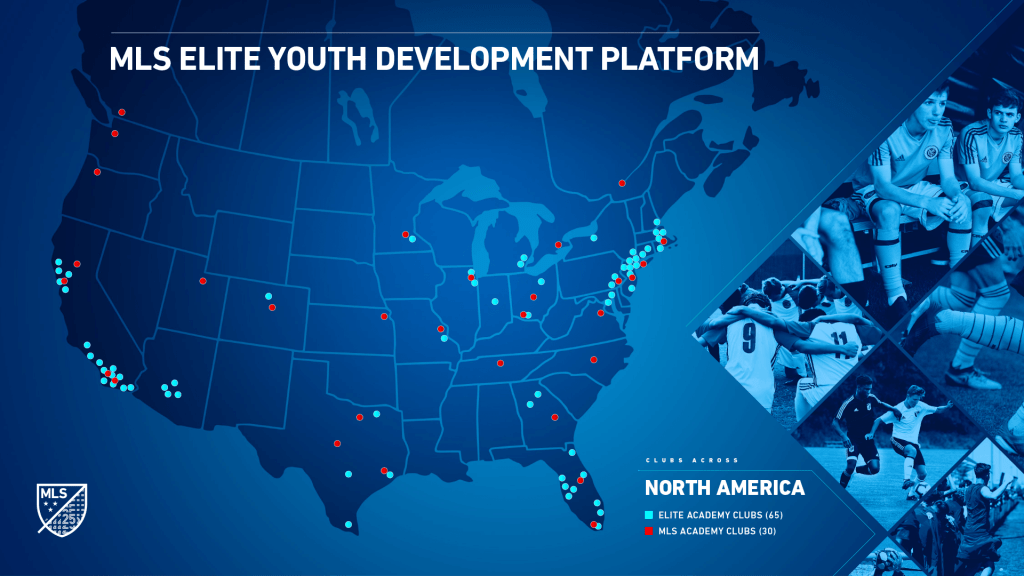
Geographic distribution of the new MLS League (aka DA 2.0)

Player’s/Family’s aspirations:

Know who you (player/family) are and have a vision based on your core values. Even while pursuing the player’s dream to a pro football career, some (probably most) parents prefer not to separate from their player at a young age. Letting him/her go live with a foster family may not be a viable option either. In some cases, a family move, albeit radical, could be a better alternative. Each family situation is unique and complex; there’s never any guarantees of success. Be realistic about your player’s talents and aspirations. There will always be a level of uncertainty with any life decision but being informed helps mitigate some of it.

Uncertainty:

With COVID-19 numbers fluctuating on a daily basis, there’s some speculation as to whether the DA 2.0 season will start in the fall or in 2021. At this point, it’s all uncertain. As of a few days ago, the MLS side Minnesota United FC announced the temporary suspension of their academy program citing impacts from the COVID-19 situation. The players in that market are being told to pursue different football paths, none of which include the MUFC academy, going forward.

Currently, what is certain is that any league in its inaugural season goes through some growing pains. Such will be the case for DA 2.0. If that adds uncertainty to your player’s/family’s situation, it may be best to sit on the sideline and let it mature for a year or two if you can afford it. Believe us, you won’t regret it and it’s possible, your player may continue to love the game in its purest form without the added stress about the uncertainty.

If you do decide to proceed with a move to an MLS club specifically, below you will find some advantages and disadvantages of joining an MLS club vs a non-MLS (amateur) club.

Advantages of joining an MLS academy:

Cost:

Most MLS clubs are low to no-cost for their “academy” teams; therefore MLS clubs pose a significant financial advantage over most amateur pay-to-play clubs which normally do not have a revenue stream through a professional team. However, there are some amateur clubs whose academy is low to no-cost such as Cross-Fire and Rise but they are part of the minority. Conversely, in the former DA, there were MLS academies that were pay-to-play (DC United and Minnesota United FC).

In the Dallas Forth Worth (DFW) area, the MLS side has both: FC Dallas youth teams (Juniors, Select, Premier) which are pay-to-play and low cost FC Dallas academy teams as part of their development model (see figure below). The many (over 200) FC Dallas pay-to-play teams serve a unique purpose: to subsidize the FC Dallas academy teams. This may or may not be the model at other MLS sides.
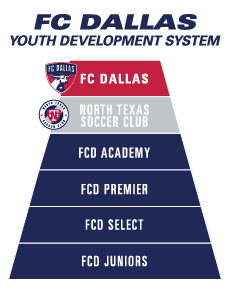
Some local parents are drawn to the FC Dallas name for their U13 and U14 players and unfortunately find themselves paying thousands of dollars a year for no additional developmental benefit (beyond first team discounted tickets and a permanent training ground). In the figure above, the bottom three categories are pay-to-play ($3k – $3.5k+ per year) teams normally higher than their local amateur club fees. The FC Dallas Academy category has minimal costs but it’s worth noting that it’s not easy to either: 1. Make the FC Dallas Academy teams or 2. Be promoted from any of the bottom three categories to the FC Dallas Academy teams. Honestly, if your player has spent more than two consecutive seasons in any of the bottom three categories, there’s almost zero chance he/she will ever be moved up permanently to the FC Dallas Academy team.

To be fair, the FC Dallas Academy category (or similar for other MLS clubs) is almost fully funded nowadays; however, it is very prohibitive in terms of flexibility to play other sports (school or not), and requires a significant amount of traveling with NO real added benefit at the early ages. In fact, the increased travel, burned out a lot of young footballers who eventually selected other mainstream sports by high school age. Thus, it is fair to say that the densest concentration of talent is not always playing for MLS clubs (for many potential reasons).

Talent:

There’s a possible misconception that the MLS clubs monopolize most of the local talent. While that may be very true in some geographic areas, it is not so much in areas like North Texas, North/South California, etc. DFW is so big and rich in football talent that one MLS team is unable to accommodate the abundance of talent in the area. Therefore, there are a multitude of very competitive DA, ECNL, classic/lake highlands league football clubs that have historically established themselves as great alternatives for development environments that are excellent (if not better) than FC Dallas. If one considers all age groups in any football academy, we agree that the MLS club should have a higher concentration of talent but a family should focus on the specific age group their player wants to join. Below, we analyze and compare a couple of age groups from local teams vs. FC Dallas:

Looking at recent statistics, in the just truncated 2019-2020 DA season, both the Solar U16/U17 boys and girls teams achieved superior results than the FC Dallas U16/U17 counterpart teams. One could argue that specific sample is an outlier, or that it supports our theory of a fairly talent distribution among clubs in our area, or whatever other pretext. We tend to discredit the outlier theory because in the previous season (2018-2019), both boys and girls Solar teams were crowned national champions in the same age group eliminating the corresponding FC Dallas U16/U17 teams in the process. This is not unique to North Texas only; California and Colorado are other markets where amateur academies are stronger than their MLS counterparts.

Training frequency:

MLS academy clubs train more frequently than amateur clubs. While FC Dallas has the resources to dedicate to daily training; other amateur clubs do not. Repetitions are essential for the more advanced players; however, the risk of burnout is always present. Normally on the boys side, MLS clubs will communicate with the player/family by the age of 15/16 as to whether they have any professional plans for the player or not. If they do have plans, the player should stick around and benefit from the more frequent practices and other perks (practice with the USL/first team, etc.) the MLS side has to offer. Otherwise, the player needs to evaluate if the “juice is worth the squeeze”. Will sticking around the MLS side with more frequent practices help him/her with other future options like college, playing abroad, etc. Would he/she rather forego sacrifices associated with playing for an MLS team and instead join an amateur club that allows him/her more flexibility to do other extra curricular activities (ex. play other sports in HS, discover other talents, etc.) and still be in a competitive team?.

Opportunities:

Development opportunities (ex. Generation Adidas -GA- Cup, Youth National Team -YNT- recommendations) at an MLS club are going to be typically better during the 17 and younger years than for amateur clubs. At the U19 level, players tend to mostly just go through the motions as they have either already secured college placement, reached some level of professionalism with the club, or are in the process of planning trials abroad as a path to professionalism. Indifference at the U19 age group is rampant especially from MLS sides. Locally, the inception of the NTX SC affiliate, has seen a focus shift from the U19 age group to the USL-1 side. There will only be a handful of U19 players who will benefit from opportunities such as higher level training but unfortunately, the majority of players not selected for additional development opportunities are left behind with little motivation to be in the program. The FC Dallas U18/U19 saw an exodus of key academy players this past season…

Thus, it’s at 17 years of age and younger where MLS clubs normally offer more exposure to national and international tournaments; those however, will come at a high cost whether the player plays for an MLS club or not. International tournaments are normally funded by parents exclusively in both setups. However, amateur clubs very seldom offer these opportunities as families are already shelling out a lot of money to pay for the academy team. Furthermore, MLS sides also offer exposure to YNT opportunities. However, with the federation announcing that most YNT age groups are frozen for the remaining of 2020, that may factor into a “rushed” decision to join (or not) an MLS team for the 20-21 season.

Disadvantages of an MLS academy:

Gender:

Historically, MLS academies have been gender biased towards boys/men. Some (ex. LA Galaxy) have gone as far as recently cancelling their girls/women academy program. Thus, if your talented player is a female and cost is not much of an issue, MLS sides may not be the best choice for a move. First, unlike the boys’/men’s side, MLS clubs do not offer a clearer pathway to professional fooball for girls/women. Also, most MLS clubs have very little experience overseeing girls’/women’s programs and see limited financial gain from supporting that program; that’s why most MLS sides de-prioritize their girls’/women’s program.

Also, your local market may offer better club alternatives than the MLS club. In the DFW market, Solar (and sometimes Texans, D’feeters, etc.) offers hands-down a more established growth environment and more competitive teams for girls/women than FC Dallas. See this past seasons’ results at the U17, U16, U15 levels. Also, see this recently published chart (you can go back many months or observe the same trend in multiple publications ex. Topdrawersoccer):
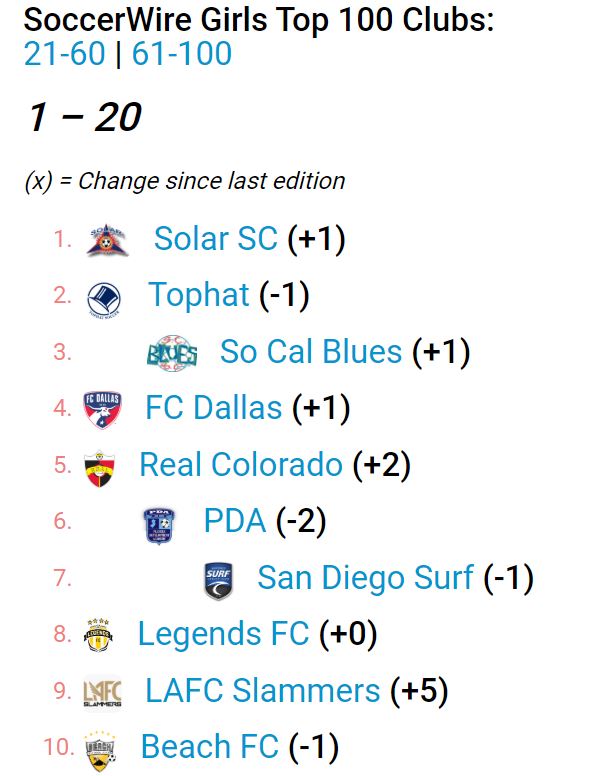
There’s also far more female players being called up from Solar, Real Colorado, Tophat and other amateur clubs to youth national teams than there are from FC Dallas and other MLS sides.

<p value="<amp-fit-text layout="fixed-height" min-font-size="6" max-font-size="72" height="80"><em>Not fully funded:</em>Not fully funded:

one common misconception about the FC Dallas academy teams is that they are fully funded and that is not the case. Depending on the age group, the FC Dallas academy teams have at least one mandatory international trip (Mexico) each year (to play friendlies) which costs over $1,500. Furthermore, each family is required to raise funds for these mandatory international trips. To be fair, these expenses do not remotely compare with the annual costs associated with joining any of the other pay-to-play local amateur academy clubs which at least cost over $3k just for coaching fees and uniforms (no international tournaments). However, if money is not as much of an issue to your family, try to stay in the pay-to-play amateur club (ex. Solar) for as long as possible if your player has any real chance of becoming a professional. Why is that? Read below…

Training compensation:

If your player has the talent to play professionally (this is very subjective), try to absorb the academy costs in a pay-to-play system for as long as possible (or seek scholarship opportunities) because once your player joins the MLS club, the club can claim the right to “very steep” training compensation. Training compensation is defined as the price tag on a player by the MLS club (on an annual basis) for having “developed” the player during the formative years. The compound amount of money piles up significantly over the years and it can become a deal breaker when a non-MLS club is interested in your player because the price tag is too high. Currently, this price tag is non-existent for most non-MLS (amateur) clubs. Read more about it here. Our recommendation is to shorten (if possible avoid) the MLS academy environment for as long as possible to minimize training compensation costs by joining academy amateur clubs (ex. Barca Academy, Solar, Cross Fire etc.).

Each decision to move to the new DA 2.0 league (MLS club or amateur club) must be carefully evaluated and thought out. There’s no one size fits-all solution and much less “perfect situation”; inexorably, sacrifices will have to be made by player and families. However, make the most informed decision by gathering factual information, talking to other parents, coaching staff, and most importantly, your own player. In the end, the decision should be made as a family with the player’s input being the most critical. Once a decision is made, don’t look back on it. Pursue it with a passion; “enjoy the ride” and something is to be gained out of ANY outcome.

Good luck and please reach out to us if you have comments/questions.

6000 visits and going strong

Thank you for your continued support. We are always striving to incorporate more educational material in a way that relies mostly on our own family experiences supplemented with new/fresh information available online. We understand that each family’s/player’s football journey is unique but having a repository of family-based football information available, at the very least, should serve as a point of reference.

We are glad to continue to receive emails, texts, phone calls, and social media interactions seeking guidance/validation about your own football journey. Keep the inquiries coming; we love helping families/players. We will always provide you with an objective point of view based on the nuances of our own journey and hopefully those will help build your own path (whichever that may be) in a more meaningful manner.

Carpe Diem !!!!

Fútbol sala: una herramienta de formación para los chavos

Cuando se habla de la formación de un futbolista, no existe una barita mágica que funcione para todos los jugadores. En términos generales, el desarrollo de cualquier aptitud en la vida require una dósis de talento natural, mucha práctica, pero lo más importante es un continuo deseo de superación personal. En el caso de nuestros chavos, el deseo de jugar fútbol nunca escaceó. En realidad, tan sólo tuvimos que encontrar formas creativas de exponenciar su pasión a través de variaciones del deporte de las masas (fútbol sala, fútbol rápido, fútbol de playa, 3 vs 3, retas callejeras, fútbol tenis, etc.). Hoy, escribiremos algo breve sobre el fútbol sala. El fútbol sala ofrece un sin número de variaciones del fútbol normal (fut regular) que lo convierten en una gran herramienta de desarrollo futbolístico y para ser sincero, también es súper divertido. Por mucho tiempo los chavos lo practicaron de forma simultánea al fut regular. No nada más les ayudó en su formación si no que también les permitió competir a un nivel muy alto desde temprana edad.

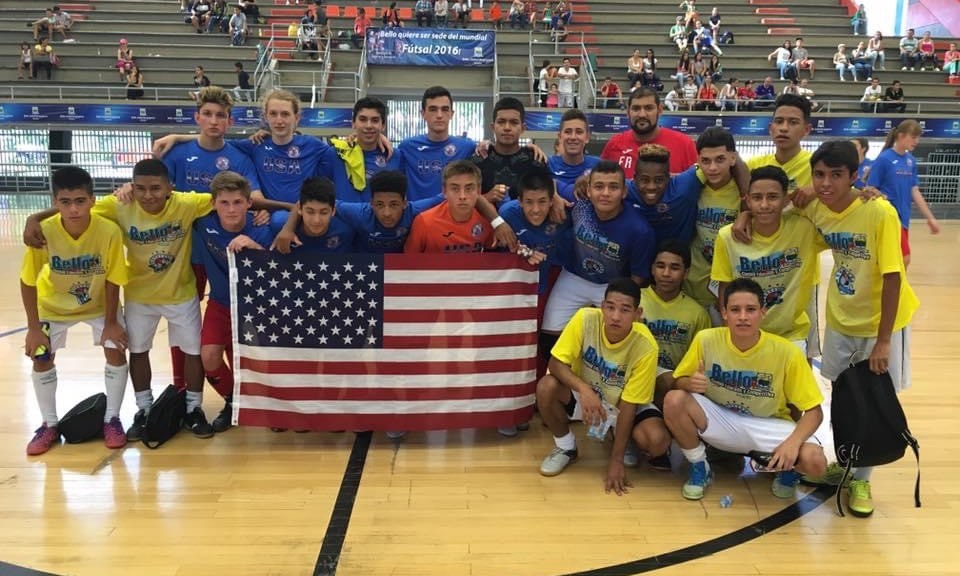
Equipo nacional de futsal de Estados Unidos. 07.22.15 (Medellin, Colombia)

Ventajas del fútbol sala

Conveniencia:

En Estados Unidos, el fútbol sala se juega en duelas bajo techo lo cual representa una gran ventaja sobre el fut regular debido a que las inclemencias del tiempo nunca son una limitante. Por esa razón, el fútbol sala se puede jugar todo el ano generando oportunidades adicionales para refinar el buen trato de balón. Además, nuestro pais es tan grande que hay muchos lugares recónditos donde escacean ligas competitivas de fut regular; en tales lugares, el fútbol sala puede que sea una alternativa ya que tan sólo se require una cancha de basketball y porterías hechas de PVC y muy pocos jugadores. El video de abajo muestra la presentación de un amistoso internacional jugado en Toronto, Canadá en Diciembre del 2015 (la temperatura ambiente al momento de ese partido era de 10 grados Fahrenheit). El partido se llevó a cabo sin inclemencia climatológica alguna.

Jogo representando a los Estdos Unidos en amistosos internacionales 12.26.15 (Toronto, Canadá)

Número limitado de jugadores

En otros países, se pueden encontrar canchas de fútbol sala adentro de escuelas y parques públicos. Estados Unidos todavía no se encuentra a ese nivel aunque nostros si hemos ubicado alguna que otra cancha libre en algunos lugares públicos. El fútbol sala se juega en canchas/duelas (bajo techo la mayoría del tiempo) con un máximo de 5 jugadores por equipo con cambios ilimitados. El número reducido de cambios inevitablemente se traduce en una mayor frequencia de toques de balón. Por eso, el desarrollo futbolístico se acrecenta durante los dos periodos de intensa acción.

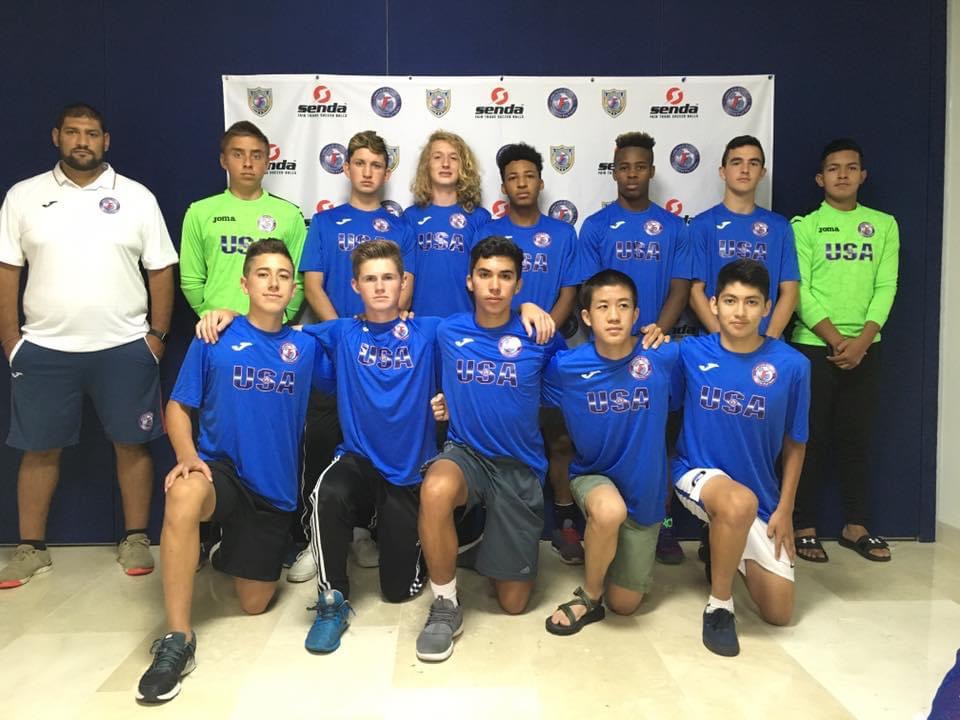
Cuadro titular en primer partido internacional 07.23.15 (Medellín, Colombia)

Espacios reducidos se traduce en toma de decisiones mas rápida

El tamaño reducido de las canchas de fútbol sala requiere una toma de decisiones más rápida. Esta habilidad ayuda a los jugadores cuando juegan en las canchas del fútbol regular donde se cuenta con más tiempo. De igual forma, la precisión de los pases incrementa debido a los espacios reducidos y también por eso se usa un balón más pesado.

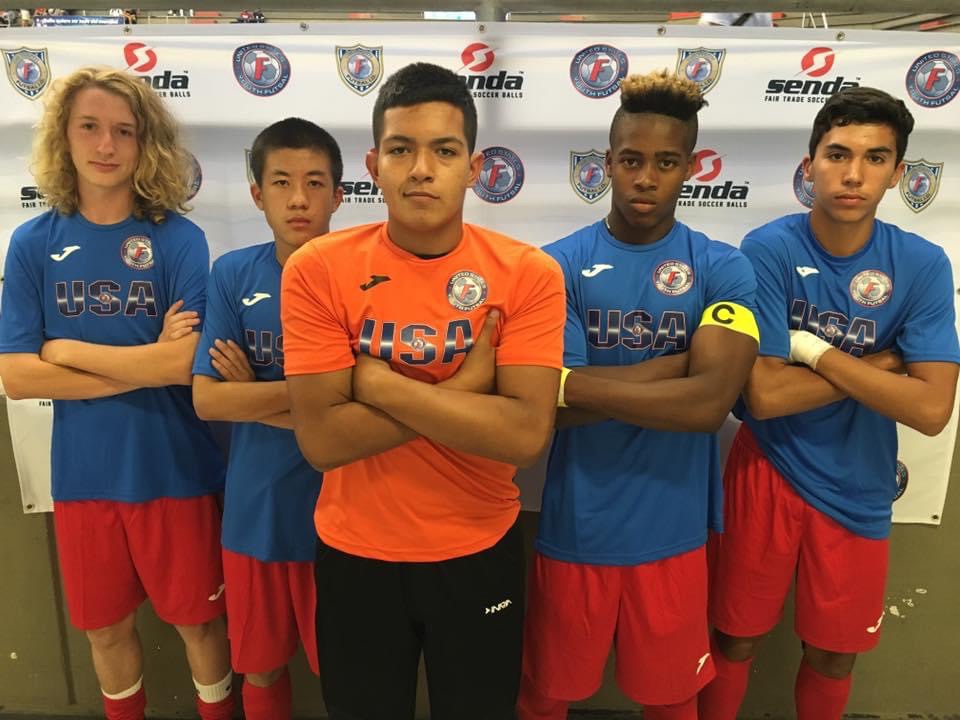
US Youth Futsal National Team tryouts 07.11.15 (Olathe, Kansas)

Mejor control/distribución debido al balon más pesado:

En el fútbol sala se usa un balón más pesado que inevitablemente requiere que los jugadores tengan un mejor control y distribución del mismo. Aprender a dominar un balón más pesado requiere muchas repeticiones y una aptitud única. Asi mismo, el fútbol sala fomenta toques con más partes del pie que el fútbol regular. La parte inferior y la punta del pie se usan de manera muy frecuente. También, todos los jugadores de “campo” están constantemente moviendose por toda la duela lo cual fomenta el apredizaje ofensivo y defensivo del juego además del toque de balón con las seis partes del pie. A pesar de que si existen posiciones fijas en el fútbol sala, los jugadores cubren toda la duela de manera estrategica ayudándoles a manejar ambos perfiles (izquierdo y derecho). Además, el movimiento sin balón es un gran beneficio del fútbol sala ya que es muy obvio cuando algun jugador se queda parado en una sola posición por más de tres segundos.

Jogo scoring a goal against an English team at the World Futsal Championships 12.28.14 (Blanes, Spain)

Juego puro que fomenta la creatividad:

El fútbol sala no es un juego dominado por los jugadores más fuertes, altos, ó rápidos. De hecho, la mayoría del tiempo, nuestros chavos jugaban con/contra jugadores mayores lo cual requería una habilidad mayor de toma de decisiones rápidas y técnica individual. Los partidos de fútbol sala son normalmente limpios y fáciles de arbitrear. Los equipos tratan de honrar el espíritu del juego al intentar meter la mayor cantidad de goles. A diferencia del fútbol regular, el fútbol sala fomenta la creatividad y estilo único. Los jugadores se pueden expresar libremente incorporando trucos en sus estilos de juego sin necesidad de violar ninguna regla del juego.

Las reglas del juego son sencillas:

A pesar de que el número de reglas del fútbol sala es menor a las del fútbol regular (ej: no existe el fuera de lugar, saque de banda, etc.), los jugadores de fútbol sala constantemente están pensando en ciertas reglas (ej. balón sobre la linea de banda, retraso de juego, regresársela al portero, etc.). La agilidad mental y la capacidad de reacción son aptitudes desarrolladas por el fútbol sala. En realidad, las pocas reglas, en lugar de complicar el juego, lo convierten en un juego muy entretenido.

Diversión:

Marcar goles es divertido; en el fútbol sala, es muy común anotar más de 5 goles por partido entre ambos contrincantes. De hecho, el tamaño de las canchas contribuye al dramatismo que acompaña los partidos ya que muchos se deciden en los últimos segundos. Los marcadores con muchos goles marcados permiten que los espectadores y jugadores gocen de una experiencia mayor. La confianza de los jugadores se eleva al marcar más que en el fútbol regular donde no se marcan tantos goles y no todos los jugadores tienen oportunidades reales de marcar.

Campeones nacionales de futbol sala U10 02.04.15 (Olathe, Kansas)

Confianza:

El fútbol sala es una deporte que aumenta el autoestima. Al menos aquí en los Estados Unidos, muchos jugadores empiezan sin saber mucho acerca del deporte pero pronto terminan dominándolo. Entre más temprano se empiece a jugar mejor. Desarrollar un jugador con una autoestima alta no tiene precio; la confianza después se permea a otros aspectos de sus vidas incluyendo: el campo, el aula de clases, y otras actividades extra curriculares. De igual forma, es muy común ver a las niñas jugar fútbol sala con niños que también sirve para aumentar la autoestima.

Desventajas del fútbol sala

Ignorancia/desconocimiento:

Algunos clubs/coaches chapeados a la antigüita, no congenian con la idea del fútbol sala. De hecho, algunos profes lo ven como un obstáculo formativo al fútbol regular. En algunos casos, la ignorancia juega un papel ya que es un juego desconocido en algunos países (ej. Estados Unidos). En otros casos, el miedo es infundado ya que representa una alternativa al desarrollo futbolístico de los jugadores. La ahora defunta liga de DA apoyaba al fútbol sala. Entendían muy bien su contribución e incorporaron al menos un torneo de fútbol sala por año. Desafortunadamente, dudamos que la nueva liga de MLS continue con esa tradición.

Jonathan Gomez: USSDA U13 futsal showcase: FC Dallas vs Lonestar 01.18.17 (Houston, TX)

Malos hábitos:

Hay una corriente de pensamiento que cree que entre más tiempo se juega el fútbol de sala, más dificil será la transición al fútbol regular. No existe suficiente información que corrobore esa hipótesis. Sin embargo, es cierto que mientras se juega fútbol sala, hay ciertos aspectos del fútbol regular que no se practican: saque de banda, cabezasos, tiros libres, fueras de lugar, etc. En nuestra opinión, ambos deportes pueden (y deben de) ser combinados el mayor tiempo posible para desarrollar los aspectos de cada uno.

Futsal: impact on our boys

When it comes to football development, there is no silver bullet that works for every player. In general, developing an aptitude for anything in life requires some innate talent, repetitions, patience but most importantly a desire to hone the skill (grit). In our boys’ case, the desire to pursue football was always present from the onset; then, we just had to find creative ways to organically nurture that passion via variations of the beautiful game (futsal, indoor football, 3 vs 3, beach football, street football, football tennis, etc.). Today, we will briefly write about Futsal or (Fut)bol (Sal)a which is where the name comes from. Our boys practiced it (concurrently with “outdoor” football) for several years; it not only aided in their football development in a fun environment, but also provided a platform to compete at a high level at an early age. For parents with young kids interested in football, you may find this very useful. BTW, thank you US Youth Futsal and City Futsal.

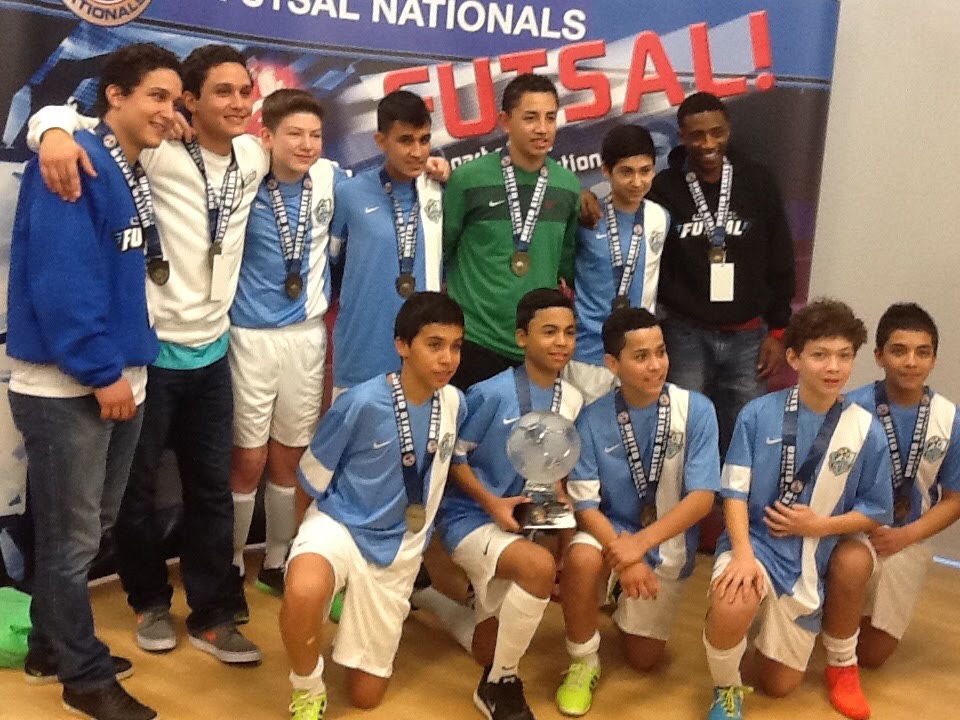
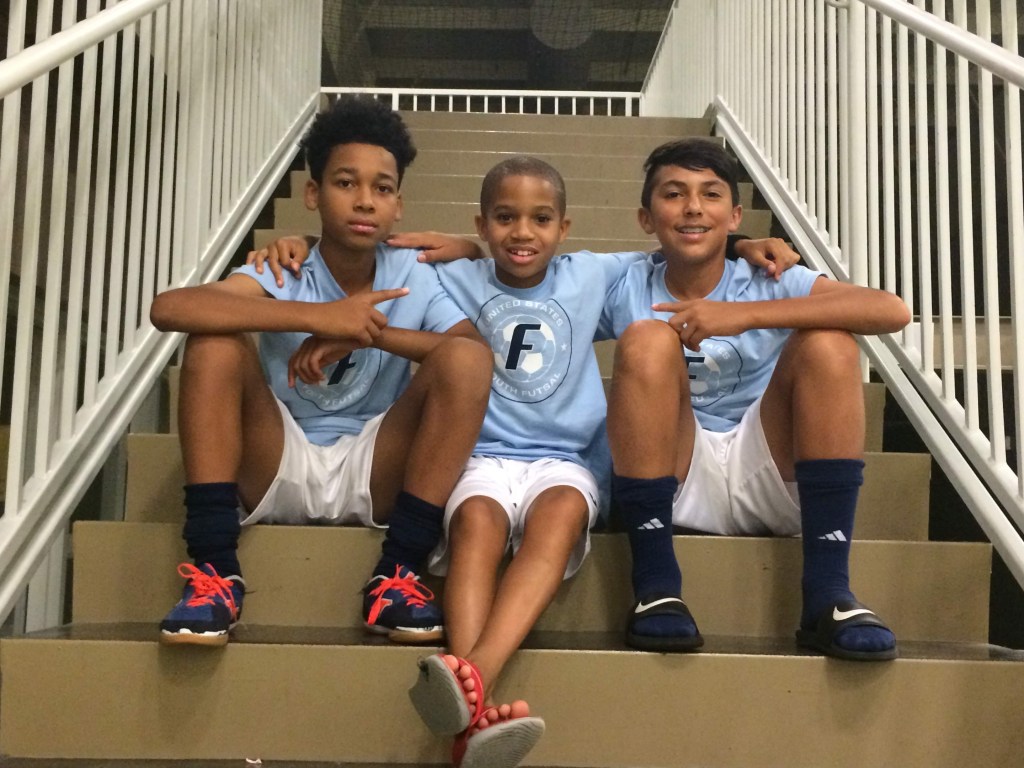
Over half of the boys who represented the USA in Toronto in 2015 in an international futsal competition have gone on to also represent the USA at different football YNT levels: Jeffrey Dewsnupp, Andrew Durkin, Evan Rotundo, Blake Pope, Kaïlé Auvray, and Jogo

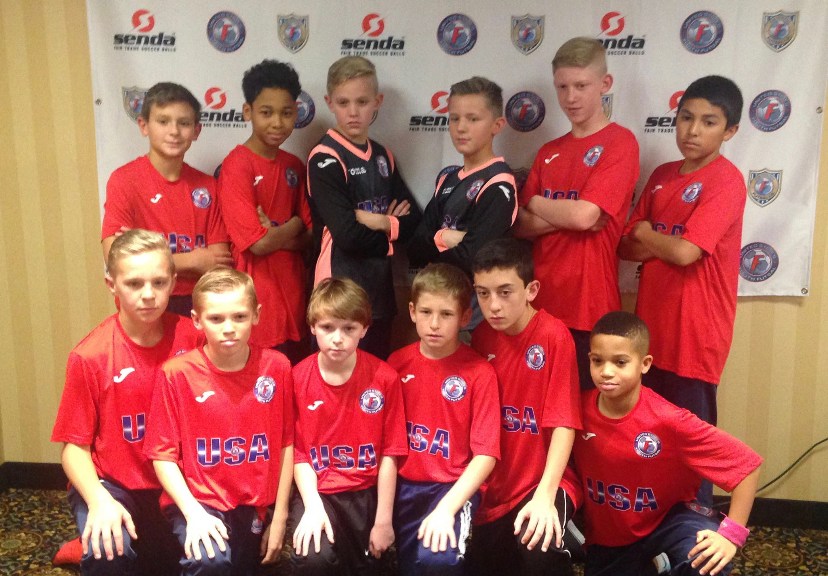
Before I dive into the details, let me explain the picture above. In the picture, the U12 futsal players represented the US in 2015 at an international futsal tournament in Canada. In 2019 (and prior), over half of the players in the picture have also represented the US youth national setup at the 2004 or 2003 level. Coincidence? Maybe. Among some of those in the picture are: Evan Rotundo (Schalke 04 – Bundesliga), Kaïlé Auvray (Lille – French Ligue), Blake Pope (Charlotte – ECNL), Jeffrey Dewsnupp (RSL – MLS), Andrew Durkin (Atlanta United – MLS), Jogo (Louiville City FC – USL-C). There are others players but my mind draws blank at the moment. Talent attracts talent from an early age.

Here are some benefits of playing futsal

Year-round competition:

In the US, futsal is played mostly indoor on hard surfaces. This poses a great advantage over outdoor football because inclement weather is hardly a factor; thus futsal can be played year round or exclusively during football’s offseason increasing repetitions (practice time). Also, our country is so large that there are remote places where regular/competitive football leagues aren’t present or abundant, futsal could be an alternative as it only requires a basketball court, two goals made out of PVC and very few players. The video below shows the introduction to an international friendly futsal game played in Toronto, Canada in December of 2015 (outside temperature was 10 degrees Fahrenheit) with the participants from the picture above.

Jogo representing the USA in international friendlies 12.26.15 (Toronto, Canada)

Small teams equates to more touches on the ball:

Other countries have futsal courts in schools and public parks. The US is not quite there yet. Futsal is played on small (mostly indoor) fields/courts with 5 players per team and unlimited subs. The smaller team size inevitably translates into more touches on the ball for all players involved (even the goalkeeper -GK-). In fact, the GK is one of the players who benefits the most as foot touches are increased and sometimes the GK just becomes another field player. Thus, the football development is magnified throughout its two fast-paced and intense halves.

Johan representing the USA in international friendlies 07.26.16 (Medellin, Colombia)

Tighter spaces requires faster decision making:

The small courts require faster decision making by the players which translate really well onto outdoor football fields where players have more time to make a decision. Similarly, with smaller spaces, the precision of the passes has to be enhanced which is part of the reason for the heavier futsal ball.

Better ball control/distribution due to heavier ball:

Futsal uses a heavier ball which forces players (GK included) to have better control and distribution of it. Regulating the weight of the heavier ball requires repetitions. Futsal encourages touches with more parts of the foot than regular football. Also, since all field players are constantly moving up and down the court playing offense as well as defense, touches with different part of the foot are frequent. Specifically, touches with the bottom of the foot and the toes are encouraged. Let us be clear, there are fixed field positions in futsal; however, players tend to roam the entire court and in the process learning how to use both feet (strong and weak) equally. Last but not least, movement off the ball is a huge benefit learned at an early age. A player standing idle in the same spot for over 3 seconds is spotted easily.

Jogo scoring a goal against an English team at the World Futsal Championships 12.28.14 (Blanes, Spain)

Cleaner game encourages creativity:

Futsal is not a sport dominated by the strongest, tallest, fastest players; in fact, most of the time, our boys played with/against older players which magnified the need for quicker decision making and most importantly technical skill. Futsal games are normally very clean and easy to officiate. Teams are there to try to score as many goals as possible. Unlike regular outdoor football, futsal encourages creativity and flair. Players are able to express themselves incorporating tricks into their games styles w/out breaking any rules.

Johan playing up with City Futsal National Champions (99s and 00s) 02.04.14 (Olathe, KS)

Rules are simple:

Although the rules in futsal are fewer than in outdoor (ex. no offside, throw-ins, etc.), players in futsal are constantly thinking about them (ex. ball on the line in a kick-in, delay of game, passing it back to the GK, etc.) and abiding by them which is not the case in outdoor football. Most outdoor football players just play the game especially at an early age. Mental agility and quick decision-making are aptitudes developed by futsal. These rules, far from making the game more complicated, make it more fun.

Johan Gomez: USYFNT U16 soccer: USYFNT vs Itagui 07.27.16 (Medellin, Colombia)

Fun:

Scoring goals is fun; it’s very typical to have futsal games where at least 5 goals are scored between the two teams. Not only that, the small courts make for many dramatic games decided in the last seconds of the match. High scoring games make it very enjoyable for the fans and the players involved. Ultimately, the players’ confidence is boosted by their ability to score or assist more often than outdoor football.

Johan representing the U14 US national futsal team 07.31.15 (San Jose, Costa Rica)

Confidence:

Futsal is a confidence booster. Here in the US, everyone starts off not knowing much about the sport but quickly learns the game. The earlier a player starts the better. Having a confident player is priceless; the confidence then permeates to other aspects of their lives including (but not limited to): the pitch, the classroom, and any other extra-curricular activities. Similarly, it’s very common for girls to play futsal with boys and that is also another confidence booster for girls.

One of the girls in the video below, grew up playing futsal, 3 vs 3, with Jogo. She now is (if not the best), one of the top three 2004 US YNT prospects and a candidate to play up in the upcoming U17 Women’s WC.

Jogo playing futsal tennis with Jaedyn Shaw

Unisex and friendships:

Unlike regular football, futsal leagues are very much unisex especially at the younger ages. The friendship bonds both of they boys formed playing futsal have helped them become better players. They continue to push each other all the time as some of them pursue a professional path. Jogo does a good job at staying in touch with most futsal players especially those he often sees at YNT camps. Three amigos pictured below:

Quimmie Ordoñez (FC Cincinnati), Kailé Auvray (Lille), and Jogo (Louisville City)

Inexpensive sport:

In other countries, futsal is free to play as the courts abound in public parks. In the US, it’s not free but it’s not crazy expensive. For starters, there’s no one year commitment, and the uniforms are dirt cheap. If you can, join the local league or play youth pick up futsal games as often as possible. In our case, we would help the boys either join an existing team(s) and/or form a team to join the summer and winter leagues. This activity resulted in additional exposure which ultimately led them to be scouted for international competition.

National and international tournament/friendlies

Futsal is a FIFA (football world governing body) sanctioned sport. As such, it has different levels of competitions. In our case, both of the boys started at the local futsal place and worked their way to represent the US in multiple competitions around the world. Futsal provided a platform to see places and compete against traditional futsal countries in North, South, Central America and Europe.

Johan and Joel Bustamante played for the USYFNT 07.29.16 (Medellin, Colombia),. Note: From that relationship Johan invited Joel join the FC Dallas Academy and they also got to play outdoor football together. They continue to be best friends as they both play in Europe.

Here are some disadvantages of playing futsal

Ignorance:

Some old-school football clubs/coaches do not support it. Some may even see it as a hindrance to football. In some cases, ignorance plays a role as it’s not a popular sport in some countries (US mostly). In other cases, the fear is driven by just having an alternative to football development. The now defunct DA league supported it, they started understanding its value and incorporated at least one futsal showcase tournament per year. Unfortunately, we honestly doubt that the new MLS youth league will continue that tradition.

U14 futsal showcase FC Dallas vs Lonestar 02.06.16 (Dallas, TX)

Bad habits:

There’s a school of thought that believes that the longer futsal players stick with that sport, the harder the transition to football will be. There’s no data to support that hypothesis. However, it’s true that while playing futsal, some aspects of the outdoor game are neglected/not practiced: throw-ins, headers, free-kicks, offsides, positioning, etc. As a result, we recommend that both sports be played concurrently until it’s no longer feasible.

In the video below, you will see Rodrygo Goes (Real Madrid first team player and Brazilian sensation) doing some drills before his Santos FC futsal team faced a City Futsal all-star team that included Johan in Dallas. That game was played on June 29, 2014. In Rodrygo’s case, futsal definitely didn’t hinder his development. Futsal is popular in many countries like Brazil where players like Ronaldinho, Neymar, among others practiced it without compromising their ability to play regular football.

Brazilian powerhowse Santos FC futsal team with current Real Madrid super star Rodrygo Goes (07.23.14)
Rodrygo Goes visited Dallas in 2014 to play a tournament at City Futsal. Johan had the pleasure of playing against him in the championship game.

Debut de Jogo en USL-1… decisión complicada

Era un noche de Sábado y la familia Gómez se encontraba gozando de un merecido descanso en Frisco; Jogo había salido momentáneamente para ir a traer su ropa sucia de su casillero en el estadio de Toyota. El calendario marcaba Mayo 25 del 2019 cuando de repente recibimos un texto del director de la academia del FC Dallas. Honestamente, la hora y el día eran un poco raros pero nada únicos ya que la comunicación del club siempre había sido unidireccional, y nada ortodoxa. En esta ocasión, el club tenía un vacío que llenar (una oportunidad) y una urgencia de comunicarse con nosotros ya un poco tarde en la noche.

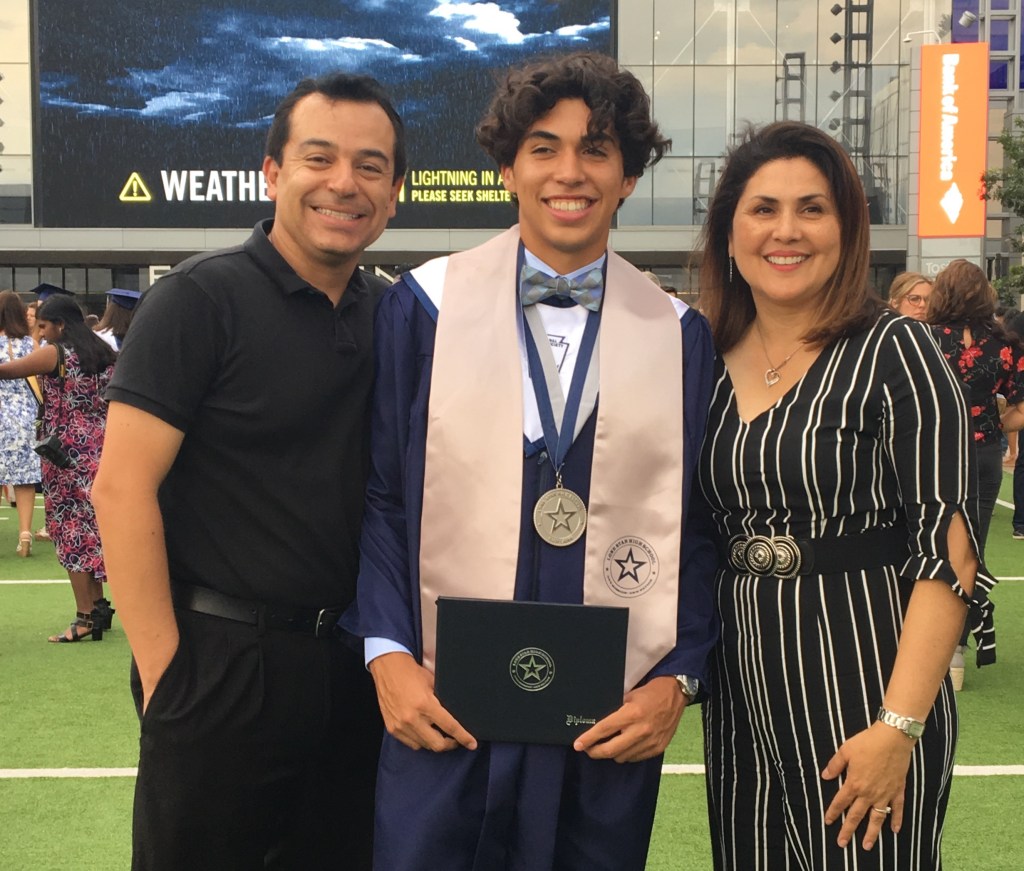
El susodicho texto era una indagación sobre la posibilidad de permitir a Jogo jugar un par de partidos fuera de casa con el nuevo equipo filial de USL-1 North Texas SC en Toronto (Miércoles, Mayo 29) y en Virgina (el Sábado, 1ero de Junio) contra Richmond Kickers. Todo sonaba de maravilla con excepción de que la graduación de Johan de la preparatoria se sobreponía con el segundo juego. La graduación (y la pachanga que habíamos planeado por meses) estaba programada para el Sábado, 1ero de Junio y esperabamos casa llena de ambos lados de la familia. La invitación involucraba dos juegos fuera de casa ya que el equipo no regresaría a Frisco entre juegos asi que la decisión se tenía que tomar para ambos partidos ó ninguno de ellos. La ironía del asunto consistía en que debido a que el lateral izquierdo titular de NTSC también se graduaba de la prepa se le presentaba esta oportunidad a Jogo. ¿Qué debía de hacer Jogo? Se requería una decisión con poco tiempo para pensarse.

Cuando Jogo regresó del estadio, le dimos las noticias. Como era de esperarse, se alegró muchísimo hasta que se acordó de la graduación de su hermano. Esta fué una de las decisiones mas complicadas que haya tenido que tomar Jogo. No sólo tendría que faltar a un juego decisivo de DA contra un gran equipo de Solar (a la postre campeón nacional), si no que también tendría que perderse la oportunidad de ver a familiares, amigos, y compañeros de equipo que acompañarían a Johan en su graduación. De hecho, fué una decisión que tomó por si sólo. Es importante para deportistas jóvenes entender que en su trayectoria (en este caso futbolística), este tipo de decisiones difíciles/sacrificios son muy comunes.

Jogo ausente en la graduación de su hermano en el STAR 06.01.19 (Frisco, TX)…se venía la tormenta (ver anuncio atrás)

Toda la familia apoyó su decisión y a su debido tiempo le informamos al director de la academia. Un par de días después, Jogo se encontraba volando con el equipo hacia Toronto, Canadá.

El resultado desafortunadamente no fué el deseado (una derrota 2-3); era el primer marcador adverso de la temporada. A pesar del resultado, el equipo había jugado bien y nuestra familia estaba agradecida con el Profe Eric quien había depositado su confianza en Jogo y lo dejó jugar 90 minutos y también a sus compañeros que lo apoyaran para que debutara exitosamente. Después del partido, había que reagruparse y enfocarse en el partido contra Richmond dos días después.

Alineación del juego Toronto vs North Texas SC 05.29.19. Imagen cortesía de North Texas Soccer Club

El juego en contra de Richmond se sobreponía con la graduación de Johan así que no lo pudimos ver en vivo. El resultado fué una contundente victoria de 3-0 y el equipo recuperó la confianza.

Alineación del juego Richmond vs North Texas SC 06.01.19. Imagen cortesía de North Texas Soccer Club

Jogo había jugado dos partidos sólidos. Sin embargo, después de ambos partidos, no sabíamos si a Jogo se le seguiría pidiendo acompañar al equipo ó no. En realidad no importaba, Jogo había cumplido otra meta en su corta carrera y de paso había ayudado al equipo a salir del atolladero. Uno de los recuerdos más memorables del viaje fué su novatada acompañada por la canción de “Old Town Road“. Gracias North Texas SC y FC Dallas por la oportunidad.

El equipo celebrandole la “asistencia de la asistencia” a Jogo del unico gol de la final. 10.19.19 (Frisco, TX). Atención a la cara de Dan Hunt

Understanding GRIT in an athlete’s life

I was recently invited to take part in one of our youth national team coaches’ new projects. As I was exploring their material, I stumbled upon this post. The blog publication attempts to explain grit/mental toughness and how to develop it. In essence, if you want to increase your chances of success in life -including sports- one has to develop a growth mindset. The earlier one adopts that type of mentality (ex. mamba), the less reliance is placed on factors that are outside of one’s control (ex. innate talent).

Wikipedia defines grit as “a positive, non-cognitive trait based on an individual’s perseverance of effort combined with the passion for a particular long-term goal or end state (a powerful motivation to achieve an objective)“. Please spend a few minutes listening to psychologist Angela Duckworth define grit in the Ted talk below. Then, try to relate it to your own situation (or your young player’s)

Grit: The power of passion and perseverance

If you don’t have an additional ten minutes to read the blog above, here is a quick summary:

Define what grit/mental toughness means to you

We all have different goals and objectives in life. Make sure yours are SMART. Specific, Measurable, Achievable, Relevant, and Time bound. First, capture your SMART goals by writing them down. Next, start working on them; sometimes sharing them with others will elevate your own accountability level and will help you measure progress. It’s normal for young athletes to require assistance articulating their own goals. Once they reach certain age (or maturity) complete autonomy is expected.

As an example, during these times of no team practices. Our children have found creative ways to train most days. In addition to their physical training, one of the boys supplements his training by running about 5 kilometers/day at least 5 days per week. Each run should be done in the same course as the previous run as the completion time must be better than all the previous occurrences. This is part of a bigger goal he has.

Build grit in discrete portions

Grit does not have to be necessarily developed against extreme adversity. In fact, it’s best if it isn’t. Start by growing grit in your terms. Aim small miss small. In your daily lives, push yourself out of your comfort zone doing something simple or small that directly impacts your SMART goals/objectives. Faster growth occurs when we are outside of our comfort zones.

Develop a growth mindset by getting used to challenging yourself. Something as easy as going to sleep 15 minutes earlier because your goal is to sleep 42 hours/week. Understand that grit and mental toughness are traits that need to be carefully nourished. In the end, it’s all about developing and then maintaining the habits. The habit of continuous improvement equates to a growth mindset.

On a personal note, 7 years ago, when the idea about this family website was presented to us by my younger sister, I found many reasons to postpone its inception (mostly lack of time or so I thought). She insisted that we had so much to share with others and that it’s the least that we could do. Long story short, she’s no longer with us but we ended up following her advice. Thankfully, last year, we finally decided to push ourselves outside of our comfort zones and started this site in a non-native language. Now, we can’t stop writing and helping others. It’s become a self-rewarding family project that has impacted other families. We are constantly inundated with communication (texts, emails, and calls) from parents asking us for footballing advice. Also, we now see other families starting similar online (Twitter, YouTube) family projects as a result of our initiative: #theGomezway. The seed has been planted, now, it’s time to “pay it forward”.

Build strong habits and don’t depend on motivation

Grit and mental toughness are more about cultivating the needed habits to reach your goals. Developing consistency eliminates the need for sporadic motivation or courage (ex. going to the gym). If you create the correct habits to go to the gym, you will never need additional motivation (ex. a partner to work out with). Strong habits (especially an open growth mindset) are the basis for future success especially in athletes.

During these down times, the boys have been working everyday on some of their improvement areas. They work out and push each other hard, but fortunately, they do not depend on each other’s company for continuous improvement. They know they will be together for a short period of time and after they return to their respective new homes, their objectives will remain the same.

Recently, one of Johan’s Chumchat’s guests Will Swinney (Dabo Swinney’s son) summarized it best when he said:

Your thoughts become your words; your words become your actions; your actions become your habits; your habits become your character and your character becomes your destiny

Will Swinney

In closing, learn how to have a growth mindset. This is ONE way to develop grit or mental toughness. It all starts with the way we perceive the world. Have you ever wonder how listening to a single song has the power to change our mood? Our minds are very powerful. Make “continuous change” the norm in your daily lives and take control (or at least influence) of your success now.

BTW, this week’s chumchat video didn’t have any guests but the boys had a good time “reviewing” previous guests Instagrams accounts. It’s a funny episode. Give it a listen.

Chumchat: Season 1 Episode 16. Roasting Instagram accounts

¿Debería Johan regresar a los EE.UU?

El tan sólo pensar en tener que tomar una decisión es complicado, aún más lo es tomarla. El sábado pasado por la tarde (la mañana de nosotros ), la Federación Portuguesa de Fútbol finalmente tomó decidió dar por terminada la temporada para todos los grupos de edades sub-19 y menores.

Sin embargo, el personal técnico solicitó a Johan que se quedara en Porto durante los meses de abril y mayo. El objetivo principal de esa solicitud fue que él (y algunos compañeros de equipo) entrenaran una vez que el departamento de salud portugués levantara todas las restricciones relacionadas con el coronavirus. El club quería evitar que el descanso prolongodo no tuviera efectos adversos en los jugadores que regresan el siguiente año. No hay duda de que Johan ama a Porto (la ciudad y el equipo), pero con los números de COVID-19 subiendo exponencialmente a diario, podríamos decir que había una parte de él con la esperanza de regresar a casa. Johan acató la decisión del club con cierta incertidumbre sobre su futuro, pero estaba entusiasmado con la posibilidad de volver al campo y potencialmente practicar con el primer equipo … pero fue ahí cuando se vino una montaña rusa emocional.

Sólo unas horas más tarde (sábado por la noche, hora de Porto), y con la situación de COVID-19 empeorando por minutos en todo el mundo, los directivos de Porto decidieron cambiar de opinión y permitir que todos los ciudadanos extranjeros viajaran de regreso a casa lo antes posible.

Irónicamente, la decisión que Johan había aceptado tan titubeante unas horas antes (de permanecer en Portugal durante dos meses más) ahora se estaba diluyendo con la posibilidad repentina (ahora no tan remota) de finalmente volver a casa.

Nos llamó de inmediato con la noticia. Para ser sincero, Claudia y yo no estábamos preparados para el cambio de opinión tan rápido del club. Cuando nos preguntó si queríamos que volviera a casa, no pudimos darle una respuesta bien pensada y objetivar, de hecho, impulsivamente dijimos: “por supuesto”. Sin embargo, de repente, teníamos más preguntas que respuestas, porque queríamos hacer la debida investigación y evaluar si el viaje era incluso factible (y seguro). Y así, la montaña rusa emocional continuó.

¿Habría todavía vuelos desde Europa a EE.UU?

Tratamos de contactar por teléfono inmediatamente a un representante de servicio al cliente de American Airlines. Para sorpresa, no pudimos encontrar uno y tuvimos que esperar horas antes de recibir una llamada. La angustia de Claudia aumentaba por no encontrar vuelos disponibles. Traté de mantener la calma (estaba funcionando en realidad) pero para aumentar la angustia, una vez que recibimos una llamada, el representante de AA algo cansado (tal vez frustrado) nos informó insistentemente que AA no tenía vuelos programados a Estados Unidos (o México) hasta la primera semana de mayo. Nos integramos sin quererlo inmediatamente a la realidad en la que vive hoy el mundo. Ahora, nuestra familia estaba siendo afectada directamente. Sin embargo, no estábamos en posición de rendirnos, así que seguimos buscando otros vuelos en todas partes.

¿Podría Johan volar en otra aerolínea? en cual? Sería riesgoso?

Probamos todos los sitios de viajes conocidos (varias aerolíneas) y sólo pudimos encontrar dos vuelos en la próxima semana más o menos. Un vuelo saldría el lunes (30 de marzo) y otro el martes (31 de marzo), cada uno con 4 paradas y tomando más de 3 (sí 3) días para llegar a casa … no era el más seguro.

En cuanto al tiempo, ambos estaban lejos de ser convenientes también, pero en un aprieto, eran opciones factibles. Sin embargo, ninguno de los vuelos iba a funcionar. Johan necesitaba hacerse cargo de la mudanza regular de “verano” como parte de la lista de cosas por hacer antes de salir de Porto ya que no regresaría hasta fines del verano.

Reservar uno de los vuelos anteriores le daba un tiempo extremadamente limitado para ocuparse de esa lista. El desafío no era tanto acelerar las tareas pendientes; el principal obstáculo era que casi nadie en Porto FC estaba físicamente disponible para ayudar, por lo que se quedó solo para pensar y ejecutar decisiones creativas.

Enfrentando con poco éxito inmediato los vuelos aunado al creciente estrés que esto le estaba causando a Johan (y a nosotros), decidimos dormir para tomar una decisión final sobre su regreso a casa y luego hablar sobre eso el domingo por la mañana.

Finalmente, se tomó una decisión

L noche del sábado fue muy larga. Ninguno de nosotros pudo dormir evaluando diferentes escenarios. No hubo una decisión “correcta”. Después de un análisis cuidadoso (acompañado de oraciones), nos dividimos en una decisión el domingo por la mañana.

Mientras que Claudia y Joana insistían en traerlo a casa, Mike y yo pensamos que lo más prudente era que se esperara en Porto durante al menos un par de semanas hasta que, con suerte, la situación mejorara. Llegó el momento de compartir una decisión con Johan. La llamada telefónica fue dura, la voz se quebró con fuerza. Mientras compartía mi decisión lógica y bien pensada con él, escuchó atentamente:

Mientras articulaba mis pensamientos, estaba tratando de imaginar su decepción, lo que se me hacía más difícil ser elocuente … En mi cabeza, todo tenía mucho sentido, pero de alguna manera, no me sentía bien. Por un lado, Johan definitivamente estaba más seguro al quedarse en Porto. Vive con su compañero de cuarto y a ambos solo se les permite salir a comprar alimentos (la cafetería del club está cerrada). ¿Qué tan arriesgado puede ser? El riesgo asociado con ir a la tienda y volver a la casa era mínimo. Por otro lado, su bienestar mental al permanecer en Porto hasta cuatro meses adicionales iba a estar aprueba.

Tan pronto como terminé de darle a conocer la decisión de no ir, Johan, no dijo mucho, pero se notaba que estaba molesto, realmente molesto. Tampoco lo escondió mucho. Esta era la segunda vez que “la situación” había jugueteado con sus sentimientos en vano. Mientras colgábamos, mi ansiedad seguía de un lado a otro. ¿Acabábamos de perder la oportunidad de traerlo a casa por meses adicionales?

¿Se quedaria atorado Johan atorado en Porto hasta el comienzo de la temporada 2020-2021 (Agosto)?

Habiendo tomado esa decisión, yo personalmente dormí mejor el domingo por la noche. Ese no fue el caso de Claudia; Algo no estaba bien. Sus instintos maternos encontraron todas las razones para cuestionar la decisión. Debo decir que tenía algunas preguntas que me hicieron reflexionar. De alguna manera, encontré una justificación lógica para cada uno de ellos … hasta que se hizo la siguiente declaración: “Prefiero que se enferme aquí con nosotros, que allá“. Eso me llegó muy hondo. Por un momento, solo pude imaginar esa situación y el sentimiento de impotencia y tal vez de culpa. En ese momento, todo el razonamiento que había hecho las últimas 36 horas salió se diluyó. Johan volvía a casa a toda costa.

Una vez más, a encontrar vuelos

El FC Porto ha sido increíblemente comprensivo este año con nosotros. Y una vez más, no decepcionaron. Colaboramos y con sus recursos, encontramos una manera creativa de reservar un vuelo de 4 escalas. No me pregunten cómo lo hicimos. Las probabilidades de que la logística funcione a la perfección no están precisamente a nuestro favor; aún así, necesitábamos apresurarnos. El viaje de regreso a casa comenzó hoy (hora de Porto)…

¿Cómo te preparas para un vuelo de 2 días (que normalmente se lleva 10 horas)?

Una vez que se confirmó la reservación, Johan tuvo que actuar rápidamente. Estas son algunas de las cosas que Johan tuvo que hacer antes de viajar.

Objetos personales:

1.- Su televisor, mini-refrigerador y guardarropa tuvieron que guardarse en un lugar seguro para el verano, ya que no volverá al mismo apartamento la próxima temporada. Normalmente, el club se encargaría de esto; sin embargo, nadie está físicamente disponible en estos días, por lo que fue difícil coordinarlo. Johan guardó todas sus cosas, las aseguró y las dejó en su departamento actual. Hay un riesgo asociado con esto.

2.-Equipaje: Debido a las múltiples escalas y cambio de aviones para su vuelo; la posibilidad de perder / retrasar el equipaje en tránsito era extremadamente alta. No era aconsejable viajar con el equipaje facturado, ya que eso podría hacer que Johan perdiera los vuelos de conexión. Johan tuvo que encontrar un servicio de equipaje internacional que garantizara que sus pertenencias personales para el verano viajaran de manera segura a los EE. UU. (En aviones separados)

3.- Dinero: Viaja con una cantidad adecuada de dinero, ya que no se garantiza que los cajeros automáticos funcionen. La cantidad es suficiente para las emergencias necesarias: hotel, alquiler de autos, comida y otros gastos de viaje en caso de que esté atrapado en alguna de las ciudades de conexión.

4.- Hidratación: Dado que no habrá servicio (mínimo) de alimentos / bebidas en ninguno de los aeropuertos (e incluso a bordo del avión), se ha hidratado como loco estos últimos días.

5.- Comida: Igual que lo anterior, empacó bocadillos que le durarán varios días los de su viaje.

6.- Embajada: Llamó a la embajada para pedirle consejos de viaje casi a diario. Fueron muy útiles; pero extremadamente cautelosos (casi pesimistas) a la hora de viaja.

7.- Suministros: Desinfectante de manos, guantes, mascarilla, vitaminas etc.

A la hora de la redacción de esta publicación, Johan se encuentra en su primera escala en Zurich, Suiza (incluso más lejos que Portugal). La primera de 4 escalas. Pequeños pasos… Dios mediante, aterrizará en Dallas, mañana por la noche (tarde). Aunque es poco probable, puede que sea puesto en cuarentena en el aeropuerto dependiendo de sus síntomas. Si asi fuera, ya nos enfrentaremos a un desafío diferente pero “juntos” (como familia) al fin…

Sabemos que tenemos mucha gente creyente en nuestra audiencia. Les encargamos unas plegarias para que nuestro hijo llegue a casa sano y salvo. No nos importaría que nos tuviesemos que poner en cuarentena como familia. Simplemente, ya lo queremos en casa. Ojala y a salvo. Hasta la próxima.

Mateo 6:34
No se preocupen por el día de mañana, porque mañana habrá tiempo para preocuparse. Cada día tiene bastante con sus propios problemas.

Johan’s home, now what?

First of all, we would like to acknowledge and thank the outpouring of love and support we have received the past couple of days from folks all over. It’s been pleasantly overwhelming and much appreciated and it’s in moments like these that our bonds become stronger. We can’t thank you enough. If we haven’t gotten back to you personally, we will very soon. It’s been a physically, and emotionally draining week.

BTW, some of you have inquired about Jogo. Yes, he is away from us but doing really well (emotionally, mentally, and physically). He’s been busy wrapping up his online high school classes. LouCity has taken excellent care of him; we are in constant communication with their staff and they have been nothing short of amazing. Sure, we are not worry-free by any means but he is well-taken care of and “within” a driving distance should he need us. The time to see him again will come soon but that will have to wait…especially now. Anyway, here is where the Gómez’s are now on this Palm Sunday…

Late last night, Johan safely arrived to Dallas Fort Worth (DFW) international airport after multiple stops in Europe and the US. He left Porto on Friday and made it home on Sunday (looong trip). As excited as we were to welcome him, we needed to take extreme safety measures to ensure his well-being and of those around him. Kudos to my sister-in-law who is a nurse by profession and led the way in the protocol to follow upon his arrival at the airport. The key to a successful “welcome” at the airport was preparation.

The preparation

We were always very optimistic that the flight would turn out a success. However, that was only part of the trip. There were a lot of unknowns as soon as he landed in DFW and we needed to be ready for the worst-case scenarios. We had to be certain that once he made it out to the terminal and/or home, his (and ours too) safety would be paramount.

  1. Attire: We prepared a new set of clothing (including different shoes) for Johan so that he’d change into that right away at the airport. Short of taking a shower at the airport, the point of doing that was to isolate and seal all his personal belongings ASAP (including his carry-on bag). This included providing a brand new set of gloves and mask. Johan’s only request was “just don’t make me look like a clown with your selection of clothing”. I’m not sure we achieved that but at least he was safe.
  2. Cars: We also prepared two cars to take to the airport, one car would be used by him to drive himself back from the airport and use for the next 14 days while the other would transport the rest of us safely back home.
  3. Medical attention: We found a medical facility that would see him upon his arrival to DFW. Given his flight arrival hours and his uncertain symptoms, we arranged a virtual visit for him in addition to any medical attention he would receive at the airport.
  4. His bedroom: We permanently moved Joana downstairs. Johan would remain in his room upstairs at least for 14 days regardless of his symptoms (or any state mandates). If need be, he would have access to the entire second floor gradually. Needless to say, Joana was ecstatic to move rooms closer to us.
  5. Supplies: We stocked up his room with supplies that we thought he’d need for the next 14 days including some food/water, medical and personal hygiene. That also included disposable silverware to avoid the possibility of infection. BTW, Johan and his pet turtle “Buddy” will have a lot of good conversations in the coming days. Chumchat with Buddy next?
  6. New home rules: It’s hard to tell Joana that she won’t be able to be close to Johan for the next 14 days so we basically told her that we are all in separate quarantines. Johan stays upstairs and we stay downstairs. New house rules effective immediately. Only one person delivers food to Johan: Mom.
  7. Family: We had “surprise” plans to go visit family next weekend. Those plans will now take second priority.

With all the precautions above, the time came for him to land in DFW and we made our trek out to the airport.

The arrival:

Johan was exhausted from a flight that literally lasted 36 hours. The initial welcome was somewhat strange. In fact, what I’m about to describe is very unorthodox and in some ways comical. Pick up the bits and pieces that are useful especially if you need to travel soon.

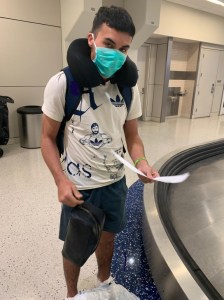
Johan right after his 36 hour trek with quarantine paperwork he was handed at the airport

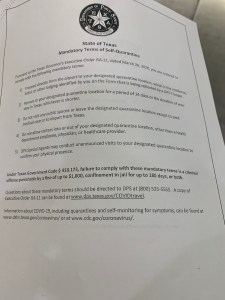
First of all, even though all of us made the trip to the airport, I was the only one who got off the car(s) to “welcome” him at the terminal. Yes, as soon as I saw him, I wanted to hug him but that wasn’t going to happen. Instead, the welcome consisted of a set of delineated instructions for him to follow before going home. Apparently, he had been given a similar set of instructions (6 pages) after landing by DFW airport personnel. See below:

State of Texas Mandatory Terms of Self-quarantine (page 1/6)

I took three 13 gallon trash bags with me to the terminal. Since we asked him to change clothing at the airport, the first empty bag was to put his current garment. The second empty bag was to put his carry-on bag. The third bag had a slew of clean/new things. Clean clothes, shoes, new mask, gloves, car keys, money, etc. (a la Chapo Guzman).

Johan after changing clothes at the DFW airport 040420

Transportation:

Johan had some initial concerns about driving back home because he was so tired, jet-lagged, it was late at night, cold, dark; and let’s be honest, he doesn’t really drive in Porto. However, it was imperative that he drove home by himself. We led the way home at a speed of 50 mph and since it’s a ghost town out there, 25 minutes after we took off from terminal E’s garage, we were home. As soon as he arrived home, he put away the trash bags in the garage and everything was ready for his medical consultation.

Adhering to social distancing in a cold, empty parking garage

Medical consultation and feast back home

He proceeded to his room and his medical consultation lasted about 30 minutes. He was only asked a few questions regarding his trip. In Atlanta, he was medically screened meticulously because of his trip origination (and layovers); he was asked about his whereabouts for the last 2 weeks. However, since he was experiencing no symptoms, they said there was no need to test him at this point. They emphasized that we need to monitor him closely for the next 5 days.

As soon as that finished, he took a prolonged, relaxing (accompanied by Drake’s music) bath. After that, we then had “food” (dinner/breakfast) ready. He had requested a home-cooked meal so Claudia went all out and made him Mexican street tacos. He devoured 10 delicious ones. As he wrapped up the food up in his room, we finished watching Season 4 of “Money Heist/La Casa de Papel” and went to sleep right after that. We were all very exhausted but happy, really happy.

Condiments not pictured here

This morning we all woke up very late to face day #1 of our quarantine. So far, we are all symptom-free but it’s only been a few hours post exposure. We had a healthy and delicious omelette each.

First breakfast: Omelette

As we are getting ready for our “Palm Sunday” virtual service, I remembered that my sister (avid church goer), who has always shown an unconditional support for the boys, had interviewed Johan just the day before he left Porto. At the time, she didn’t really know that Johan would be traveling back home. We sometimes limit that type of information to try to shield family members from stressing out about our uncertain football related adventures (Jogo also found out last minute…thank you Mike). J/K

The pre-flight interview:

Below, you will find an interview that my sister Blanca, journalist by profession, did with Johan. Kudos to her, who worries sick about our boys, when honestly she has bigger fish to fry. Credit where where credit is due; she is the master-mind of this website. We love you sis. BTW, happy birthday tomorrow. You are a special kiddo. I don’t tell you that enough. As for the short interview below, beware, the interview is in Spanish.

Johan’s interview prior to his trek across the pond

The promise

In our culture, it’s very customary to make promises (mandas); they a type of religious offerings. When making a manda, an individual calls on a saint to bring his or her case to God so that he can intervene and solve a problem. Mine was a bit different but I did make a promise to myself that if Johan made it home safely, I would shave my head, so that’s coming up later today…..thanks again for all the love an support; we hope you continue to find value in reading us. Until next time #theGomezway

Should Johan return to (the) US?

Making the decision was emotionally draining but executing it is proving to be full of suspense and uncertainty; this is how it all went down…

Last Saturday afternoon (our morning), the Federação Portuguesa de Futebol (Portuguese football federation) finally made the decision to end its season for all age groups U19s and under. However, Porto’s technical staff requested Johan to stay put for the months of April and May. The main objective behind that request was to have him train once the Portuguese health department lifted all restrictions related to the COVID-19 pandemic. The club wants to prevent adverse effects from having a longer “off season” for the returning players. Johan loves OPorto the city, Porto the club, and football but with the COVID-19 numbers climbing exponentially daily, it was obvious there was a part of him hoping to come home early. Inevitably, he accepted the club’s decision with some hesitation but excited at the chance of getting back on the field and potentially practice with the first team…and this is when the emotional roller-coaster began.

Just a few hours later (Saturday evening Porto time), and with the COVID-19 situation worsening by the minute, FC Porto’s ownership decided to change their mind and advised ALL foreign nationals to travel back home ASAP. Ironically, the decision Johan had so hesitantly accepted a few hours prior (to stay put in Portugal for two additional months) was now being reversed with the resurrected (now not so remote) possibility to come home at last. He called us immediately with the news. To be honest, Claudia and I were not prepared for the quick change of heart by the club. When Johan asked us if we wanted him to come home, we couldn’t give him a rational, well-thought out, objective answer; instead, we impulsively said “of course”. Suddenly, we had more questions than answers but we owed it to him to do our due diligence and assess whether the trip back home was even feasible (and safe). And so, the emotional roller-coaster continued.

Were there flights even coming to the US from Europe anymore?

As soon as we hung up with Johan, we immediately called an American Airlines (AA) customer service representative. To nobody’s surprise, we couldn’t get a hold of one and had to wait hours before receiving a call back. Meanwhile, Claudia’s anxiety was increasing by the second as we couldn’t locate flights. I tried to keep my cool (was occupied working actually) but to our dismay, once we received a call back, a somewhat jaded (maybe frustrated AA rep) vehemently informed us that AA had NO scheduled flights back to the US (or Mexico) until the first week of May. We were quickly integrated into the reality the world is living in. Now, it was impacting our family directly. However, we were not about to give up so we kept searching everywhere for other flights.

Could Johan fly in another airline? if so, what would that entail? Was it safe?

We tried all known travel sites (multiple airlines) and could only come up with two flights in the next week or so. One flight would leave Monday (March 30th) and another one on Tuesday (March 31st) each with 4 stops and taking over 3 (yes 3) days to make it home…not the safest. Time-wise, both were far from convenient too but in a bind, they were doable options. However, neither flight was going to work; see, Johan needed to take care of the regular “summer” move to do’s list prior to leaving Porto since he wouldn’t be back until late in the summer. Booking one of the flights above, gave him extremely limited time to take care of that list. The challenge wasn’t so much expediting the to do’s; the main obstacle was that hardly anybody from FC Porto was physically available to assist so he was left alone to master mind and execute creative decisions. Faced with little immediate success for flights and the mounting stress this was causing on Johan (and us), we decided to sleep on making a final decision concerning his return home and then talk about it Sunday morning.

At last…a travel decision was made

Saturday night was really long. Neither one of us could sleep assessing different scenarios. There wasn’t a “right” decision. After careful analysis (accompanied by prayers), we were split on a decision Sunday morning. While Claudia and Joana were adamant about bringing him home, Mike and myself thought the most prudent thing was to have him wait in Porto for at least a couple of weeks until hopefully the situation improved. The time to share a decision with Johan came around. The phone call was hard, voice-cracking hard. As I was sharing my logical, well-thought out decision with him, he listened attentively,

As I articulated my thoughts, I was trying to imagine his disappointment which made it more difficult for me to be eloquent.. In my head, everything made perfect sense but somehow, it did not feel right. In one hand, Johan was definitely safer staying in Porto. He lives with his roommate and both are only allowed to go out to get groceries (club cafeteria is closed). How risky can that be? The risk associated with going to the store and back to the house was minimal. On the other hand, his mental well-being by potentially staying in Porto up to four additional months was going to be tested. As soon I finished relaying the no-go travel decision to Johan, he said little but was upset, really upset. He didn’t hide it either. This was the second time “the situation” had fiddled with his feelings to no avail. As we hung up, my anxiety continued to be rampant. Had we now just lost a chance to bring him home for additional months?

Would he be stuck in Porto until the beginning of the 2020-2021 season (August)?

Having made that decision, I personally slept better Sunday night. That wasn’t the case for Claudia; something was not right. Her maternal instincts found every reason to question the decision; I must say, she had some thought provoking questions. Somehow, I found a logical justification for every one of them…until the following statement was made: “I’d rather have him get sick here with us, than over there“. That hit me really hard. For a moment, I could only picture that situation and the feeling of helplessness and perhaps guilt. At that point, all the reasoning I had done the past 36 hours went out the door. Johan was returning home at any cost.
Claudia kept playing the beginning of this song when we were split on a decision

Back at it finding flights

FC Porto has been amazingly supportive this year with us. They did not disappoint this time. We collaborated and with their resources, we found a creative way to book a 4 layover flight. Don’t ask me how we did it. The chances of the logistics working seamlessly are not in our favor; even so, we needed to make a run for it. The journey back home began earlier today (Porto time)…

How do you prepare for a 2-day (potentially longer) flight? (that normally takes 10 hours)

Once the booking was confirmed, Johan had to act quickly. Here are a few of the things Johan had to take care prior to traveling.

  1. Personal belongings: His TV, mini-fridge, wardrobe had to be stored in a safe place for the summer as he will not be back in the same apartment next season. Normally, the club would take care of this; however, nobody is physically available these days so it was hard to coordinate. Johan boxed up all his stuff, secured it and left it in his current apartment. There’s a risk associated with this.
  2. Luggage: Due to the multiple layovers and change of planes for his flight; the possibility of losing/delaying the luggage in transit was extremely high. It was not wise to travel with checked-in luggage as that could cause Johan to miss connection flights. Johan had to find an international luggage service that will ensure his personal belongings for the summer travel safely to the US (on separate planes)
  3. Money: He is traveling with an adequate amount of money as ATM’s are not guaranteed to be functional. The amount is enough for needed emergencies: hotel, car rental, food, and other travel expenses in case he’s stuck in any one of the connection cities.
  4. Hydration: Since there will be no (minimal) food/beverage service at any of the airports (and even onboard the plane), he hydrated like crazy these past few days.
  5. Food: Similar to above, he packed up snacks that will last him for multiple days of his journey
  6. Embassy: He called the embassy for travel advice almost daily. They were very helpful; but extremely cautious (almost pessimistic) about traveling nonetheless
  7. Supplies: Hand sanitizer, gloves, mask, vitamins, medicine, etc.

As I write this, he’s in his first stop in Zurich, Switzerland (even farther than Portugal). The first of 4 stops. Baby steps….God willing, he will land in Dallas, tomorrow night (late). Although unlikely, he may be quarantined at the airport depending on his symptoms. At that point, we will be facing a different challenge but “together” (as a family) at last…

We know we have a lot of prayer warriors in our audience. Please pray that our boy makes it home safely. We don’t care if we have to quarantine ourselves for a while. We want him home. Preferably safe. Until next time.

Matthew 6:34
Therefore, do not worry about tomorrow, for tomorrow will worry about itself.  Each day has enough trouble of its own
Little Johan – 18 months old

Portuguese Quarantine

It’s nothing short of weird being quarantined in a foreign country. Foreign-ish. I don’t really like to use that excuse anymore because I feel like I’m really well adapted, plus Portugal reminds me a lot of Mexico. It gives me comfort sometimes when I’m out and about and certain parts of the city are identical to Mexico. The first couple of days went by so slowly, it seemed like it was a week’s worth of time packed within one day. Our apartment is a good size but I share a room with someone and even just a few days in, I already felt like I was losing my sanity. Thankfully, there was a first team player who happened to get loaned out about a month ago. He happens to be an Argentinian who gets along very well with my also Argentinian roommate. Long story short, he left us his car and his house. We packed up our stuff to stay for a couple weeks minimum and headed over to the crib. It’s looking like it’ll be about a month until we go back to training and that’s if everything goes well. The countdown’s on.

2020-04-21T17:12:00

  days

  hours  minutes  seconds

until

Back to Training (Supposedly)

As I’m writing this, we’re about 23 hours in and this is about as good as quarantine gets. Space away from roommate, space to do my own thing, FaceTime friends and family without overlapping conversations as my roommate screams while playing Fortnite. It’s been really nice. I had forgotten what it’s like to have a little space to breathe. Yesterday we headed to the supermarket, masked up, to stock up on groceries since the only downfall of this is that we’ll have to cook. Thank God that people in Portugal haven’t resulted to panic buying like some people in the states have. I would honestly have no food to live off of if that was the case. The cafeteria where we usually get our food from at Casa Dragao, is closed right now. All my teammates have gone home, and my national team teammates (most) that play in Germany or England got to head back… without having to quarantine upon arrival, so I’m a little jealous. Shout-out Leo (Sepulveda) if you’re reading this, because it’s way worse in Spain and he hasn’t been able to go home so I can’t even complain. He’s been helping me by telling me what to stock up on and what to cook and stuff. That’s the bro. We stocked up on groceries and I cooked my first meal in a while. Easy to make spaghetti. Simple, healthy and always filling. Haven’t cooked in a while and honestly, forgot how much I hate cleaning up after and washing the dishes. That night, I went to sleep kind of late but woke up early the next morning to do the workout Porto sent us, plus, I want to keep my body on the same training schedule time-wise as we’re usually on. I was only going to spend about an hour out there but ended up staying for two because I got a hold of the ball. I could have stayed outside forever with the ball honestly, especially now that there’s nothing to do.

Johan fiddling with the ball 031820 (Porto, Portugal)

After, I finished with some stretches to make sure the legs don’t tighten up too much. I’ve struggled with my hamstring lately so I’m using this time to really take care of it, especially when we’re just sitting around, your muscles tend to tighten and tense up so it’s always good to do light stretches to increase flexibility. Highly recommended for any athlete, and you can do them while watching TV or doing nothing now that you’re in quarantine.

I’ve really been enjoying the space I have compared to normal, but it’s no secret I’d rather be home right now. I talked to the people in charge here but they don’t want to let me go until a date is given for return to play so we’re waiting on the federation to say something. I doubt they’ll let me go back, so kind of just have to deal with it. It sucks because, although I wouldn’t necessarily be able to go out with my friends, at least I would be in my city and with my family. Also, I don’t want to be stuck here if things get worse and it’s summer. Then, there would really be no point in me being here. I have a good relationship with the doctors here due to my past injury and they’re constantly checking up on my mental state, and I’ve never struggled with that (thank God, but if you do struggle with that reach out to someone) but it is weird being here and not playing with the team.

The World’s Most Unforgettable Smile

By the way, at time of writing it’s Ronaldinho’s 40th birthday, he’s one of the greatest of all time and helped a lot of us fall in love with the game with that contagious smile. Let’s honor him by watching some of his greatest moments. Oh and go subscribe to my podcast on YT, Spotify, and Apple Podcasts. Also, follow us on insta @chum.chat . We’re honestly pretty good for a trio of 18 year old. Give it a listen… you probably have nothing better to do.

Our latest EP and Interview with Las Vegas Raiders and Clemson legend WR Hunter Renfrow
Follow our Spotify!!

Click below to retweet