In its first year of existence, we have reached 10,000 visits on our site. Thank you for the continued support to our family. As we embark on yet a new journey with our daughter, we are always striving to incorporate more educational material in a way that relies mostly on our own family experiences supplemented with information readily available online.
We understand that each family’s/player’s football journey is unique but having a repository of family-based football information available, at the very least, should serve as a point of reference that we wish had been available when we started our journey. We want to continue engaging with you via emails, texts, phone calls, and social media interactions. Keep the inquiries coming; we enjoy helping families/players and will always provide you with an objective point of view based on the nuances of our own journey and hopefully those will help build your own path in a more meaningful manner. #theGomezway
BTW, enjoy the most recent Chumchat interview with Thomas Roberts. For those of you who may not know, it’s a podcast that Johan and friends have which is sports (mostly football) centric. In the third season coming up, they will have more footballers making their way to Europe.
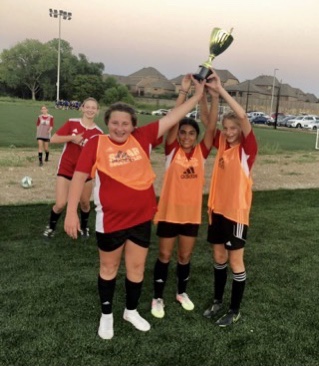
Last week we were observing Joana’s final football practice of the year. Since most players were already out for the holidays, the session consisted mostly of 3v3 play with players from other teams participating. The girls seemingly had a blast and it brought back so many memories. It then became tempting to write about 3v3 as a football development tool like we did with futsal.
Just like other tools which include indoor soccer, private training (i.e. Coerver), Olympic Development Program (ODP), “the wall”, street football, beach football, football tennis, etc. they all have their unique usefulness. In the future, we may also write about those. Today, we will be writing about 3v3 and its advantages and disadvantages as used extensively by our boys.
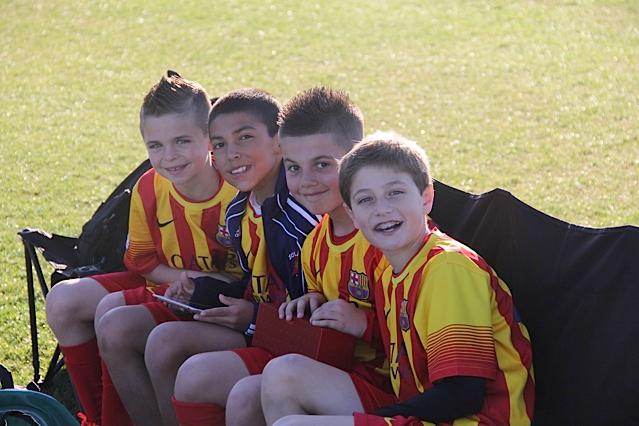
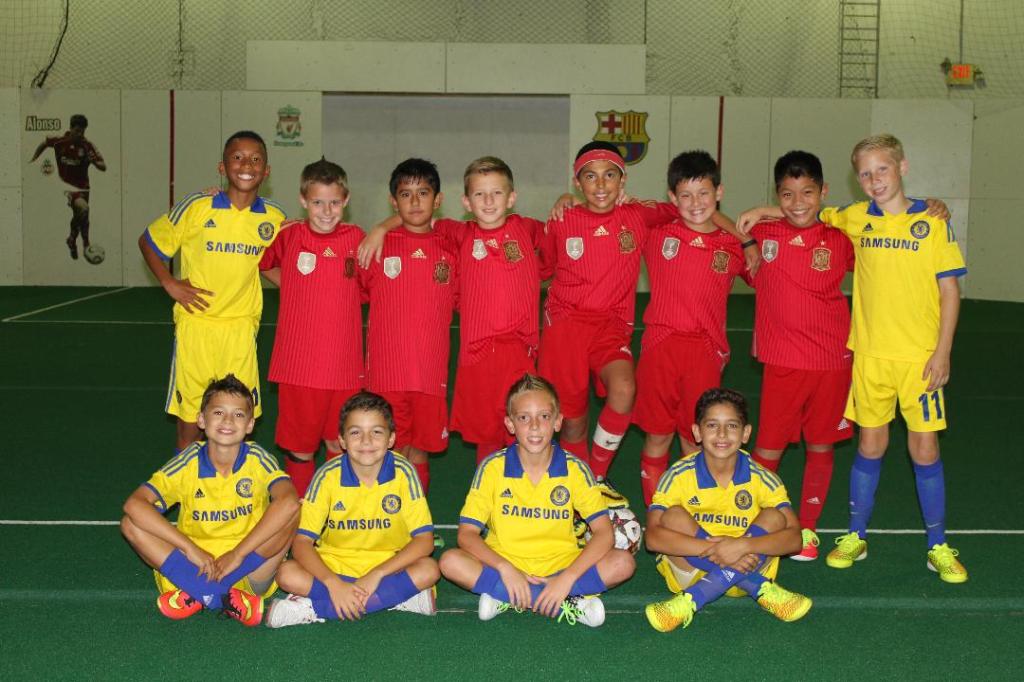
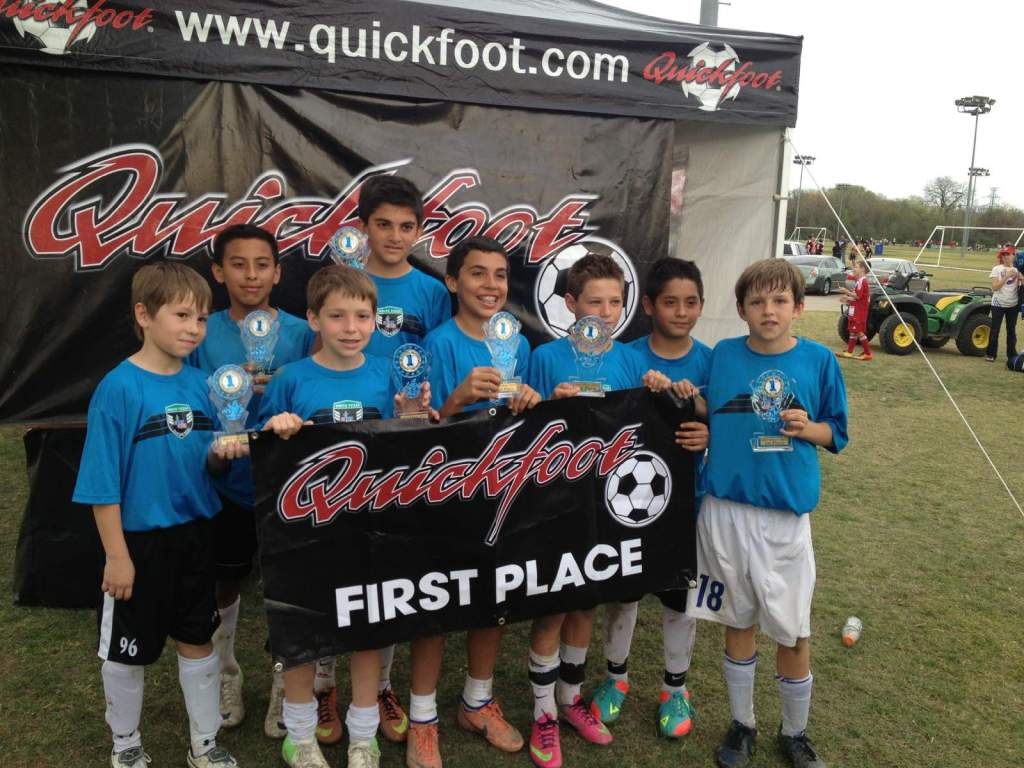
For those unfamiliar with 3v3. It’s a small-sided variation of football where 3 players take on the opponent’s 3 with no goalkeeper. For a better definition including its rules, check 3v3 Wikipedia’s page. It’s the fastest growing form of the sport in the United States. Our boys played small-sided A LOT (concurrently with “outdoor” football, futsal, etc.) for several years; it not only aided in their football development in a fun environment, but also provided a platform to compete at a high level at an early age. For parents with young kids interested in football, you may find this post useful. BTW, thank you Quickfoot, Kick it 3v3, Live 3v3, and many other organizations. We had a blast and the memories are countless.
He’s been “Jogo” for over a decade -la bola siempre al diez- 01.19.13 (Orlando, FL)
The start
The year was 2010 and we knew that one (sometimes two) practices a week at Solar for Johan were not enough to quench his football thirst. His desire to knock the ball around was just too frequent. We had played, coached and officiated the game all our lives; ironically, we had never coached 3v3 competitively (only rec.). It seemed fun so we said, “what’s the worst that could happen?”. And on we went to participate in Quickfoot’s 3v3 at Keller High School. We coached both Johan’s 4v4 and Jogo’s 3v3 with very little preparation and picking players from their current club teams. The outcome? Johan’s team won while Jogo’s earned second…the seed was planted from then on.
Orlando
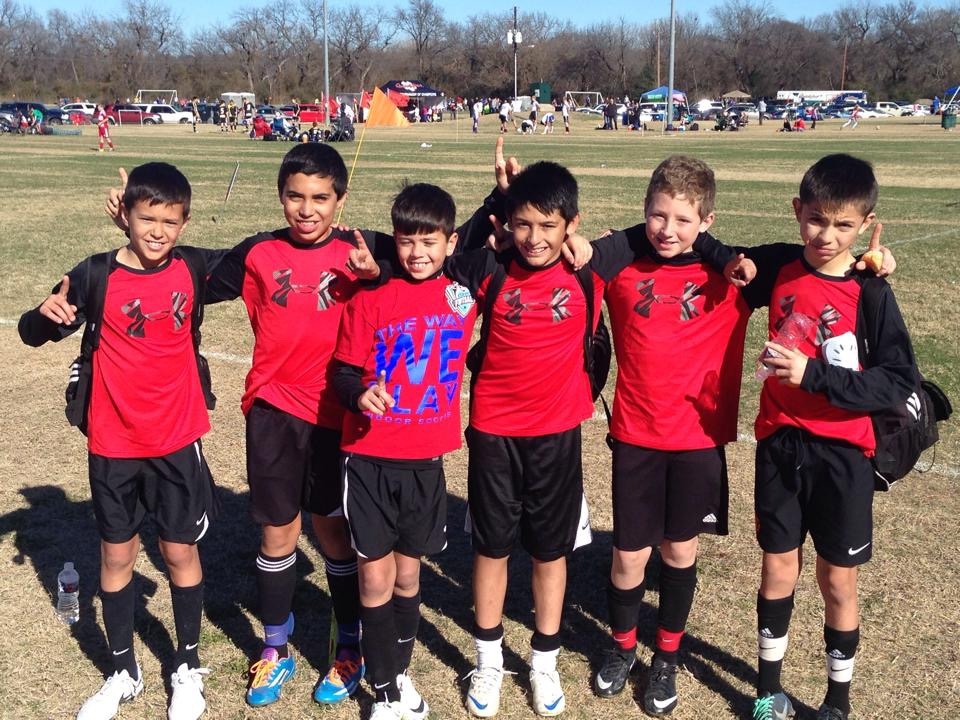
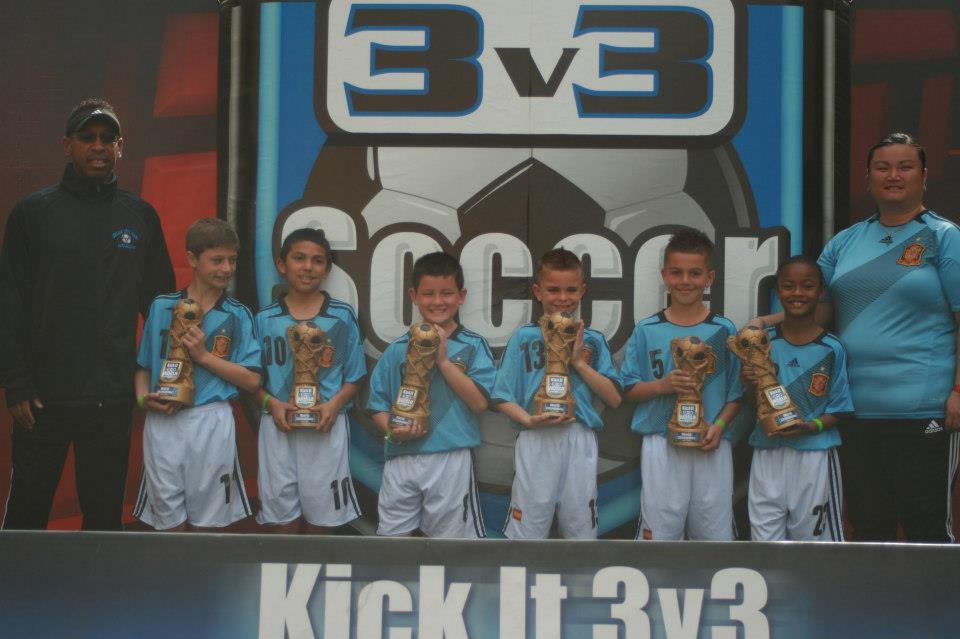
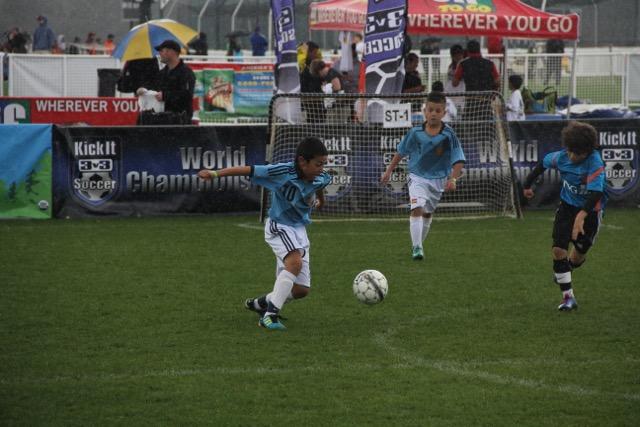
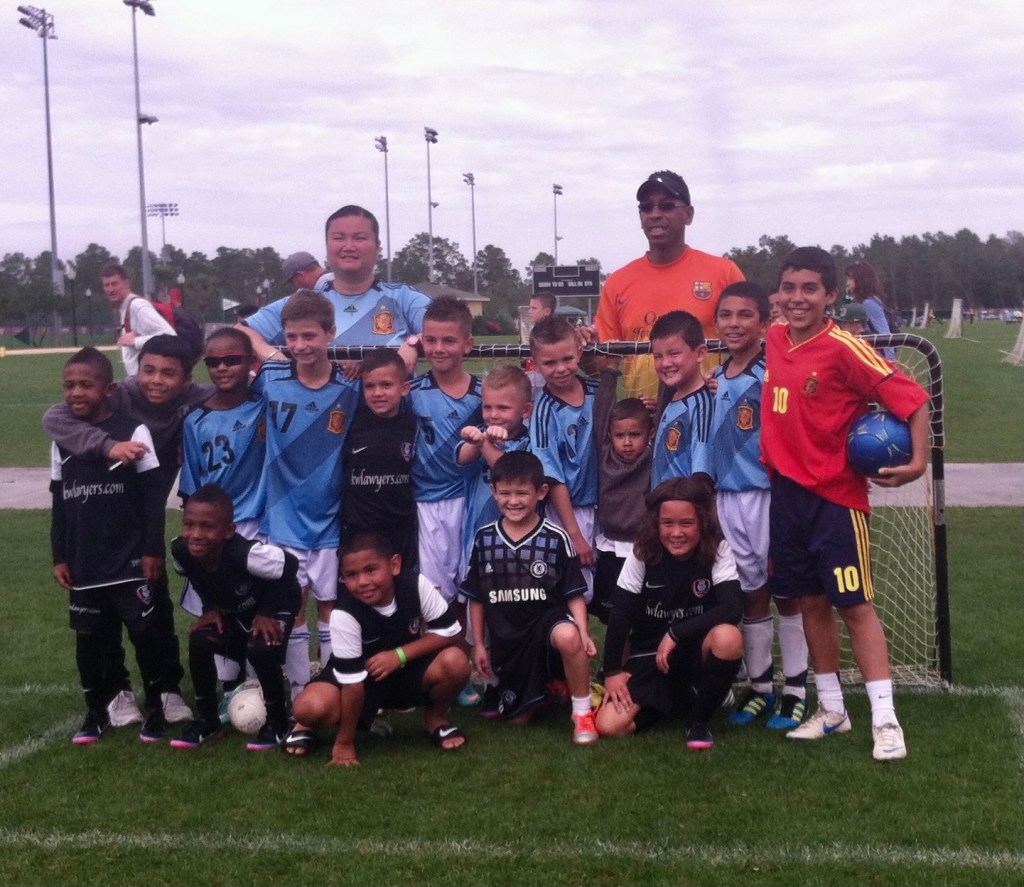
The tournaments in Texas became frequent and the competition was excellent. It gave us an adequate amount of preparation, and confidence to want to take our teams to higher level competitions. We participated at the national level in Orlando three times. Jogo’s team (MOB) went on to win the 3v3 national championship in 2013, our team (La Banda) won third place in 2014 and (MOB) reached the quarter finals in 2015 playing up. Johan’s team only participated once and took 3rd place in 2014. We had the pleasure of meeting many future YNT players at these 3v3 competitions.
Oftentimes, positive results build confidence and perpetuate a love for the game and that’s what we achieved with that group of boys. As of now, every single one of them will be playing college soccer or playing football professionally. We will always be very proud of this group of players and grateful to their parents for allowing us to coach them. We built something special together which has transcended the football field. That said, here are few things we learned along the way…
Advantages
More touches on the ball
Smaller rosters naturally translate into more touches on the ball. We typically carried 5 or the maximum-allowed of 6 players to maximize time on the ball. All players had about the same technical and tactical level and played an equal amount of time.
Technical aptitude and tactical awareness
Technical aptitude is enhanced by the amount of repetitions generated by smaller rosters. Specifically, muscle memory in a competitive environment is gradually developed to the point of normalcy; it ultimately leads to higher confidence and creativity on the ball. For example, if you have a player who likes to dribble, 3v3 has a ton of space for them to hone that technical skill, become proficient at it, and try out new skills.
Even though it’s a small sided competition, players are tasked to cover a lot of ground which teaches them accountability: play offense and defense simultaneously. The game requires constant decision making by the use of imaginary geometric triangles on the field to figure out ways to outnumber the opponent in order to create scoring opportunities. Players not only learn tactical (positional) awareness but also movement off the ball which can be extrapolated naturally to a normal size football field.
Cost
Of all the football development tools, 3v3 is probably the least expensive and the one that requires the least time commitment. It’s typically half of a day worth of short-duration games (normally in the offseason and a Saturday) which is also very fun-packed for players and parents. Sometimes the out of town tournaments could last two to three days but those would normally take place over a holiday weekend and the cost is not significantly higher.
In Texas, there is plenty of strong competition; thus traveling is not necessary and costs can be kept to a minimum. However, if there is a strong desire to compete elsewhere or the “harshness” of the winter prevents outdoor play, there’s always 3v3 indoors.
Year-round competition
The game is versatile and can be played indoors too. Most of our competitions were outdoors but we certainly enjoyed playing indoors as well. The indoor 3v3 tournaments were sometimes played in basketball gyms, indoor soccer fields, or futsal courts (3v3s led us to discover futsal at City Futsal). The tournament experience with family and friends was unparalleled; those football bonds are still strong to this day.
Collin Smith and Jogo playing against each other in an indoor 3v3
Friends/Family
We loved having the opportunity to play with players from other clubs. We now reminisce about those times via pictures and clips.
Not only were the tournaments good opportunities to socialize with other families but great bonding times where we created a lot of our own family memories.
Memories
More than the football aspect of the entire experience, the boys will always cherish memories with friends, family, teammates, opponents and most of all, the fact that we got to coach them. Those 3v3 memories will live in our hearts forever.
MOB WC 3v3 Champions , Orlando, FL(01.19.13)
Style and drip
Just like the players wanted to express themselves on the field via their football, they loved selecting their “drip” (and team name) regularly. We mostly stuck to two uniforms per tournament. All were replicas of the original jerseys and purchased via a Chinese supplier for less than 25 dollars for the entire kit. They were very affordable and allowed us to wear different kits like the professionals. That was another cool reason for playing 3v3. The kids could emulate their idols and personalize their jerseys. Jogo became well known as Jogo via his jerseys but let’s not forget that the original Jogo was Johan.
Disadvantages:
Ignorance/Fear
Johan’s first coach at Solar was completely against 3v3s. We always assumed he felt threatened by the possibility of losing players at these events as 3v3 teammates normally belonged to different clubs and inevitably parents socialize. It became difficult to request permission to participate in 3v3s even during off weekends as Johan’s Solar coach frowned upon it. He was an older coach too but we felt this truncated his 3v3 development to a degree.
Similarly, there are parents who think that football development tools such as 3v3s and futsal are NOT adequate for goalkeepers. That couldn’t be any farther from the truth. Jogo played futsal with what would have been one of the U17 MNT goalkeepers (U17 MNT WC was recently cancelled): Jeff Dewnsup whose footwork was phenomenal for his age. This was probably one of the characteristics that gave him national team visibility. Both Johan and Jogo played 3v3 with numerous goalkeepers whose footwork improved as a result of the competitions. Truth be told 3v3 can become addictive.
Addiction
3v3s are very addictive. They are high scoring ordeals which could be decided in the last second of the game. They cannot get any more American than that.
There are parents who want to compete in them all the time and there’s nothing wrong with that level of involvement. However, at some point it could create a conflict with club football and other life activities. As long as your family knows how to manage the experience and you have a club coach who supports it, go for it. The 3v3 coach may want to define a style of play and shuffling players due to their unavailability makes it challenging to gel as a team. We were fortunate to have 6 very committed families for several years who were as crazy as we were about it.
There are many tools to build and improve a player’s football development. Each one serves a unique purpose. There’s no silver bullet to develop a footballer; there are however, many ways to nurture the love of the game by “making it fun”. As you reflect on your achievements for 2020 and plan for your kids activities for next year, consider incorporating 3v3s into their pool of available activities. You won’t regret it.
On a personal note, we will conclude this post wishing everyone a better year than 2020. For the Gómez’s, it’s was a challenging year in many regards but a blessing in others. We’ll be re-capping the year in a future post. For now, let’s be hopeful, patient, positive and most of all, safe. As always, reach out to info@thegomezway.com for comments, questions, etc. Thanks for reading us and happy 2021. #theGomezway.
2020 has brought a plethora of unfortunate events around the world; most were caused by the pandemic. Sports have been impacted in a global scale: no Olympics, no Wimbledon, no Tour de France, closed doors sporting events, football leagues getting canceled/shortened, etc. From a football viewpoint specifically, the silver lining is that 2020 became an excellent year for young American football players as they have cemented American football credibility in front of an avid football watching world.
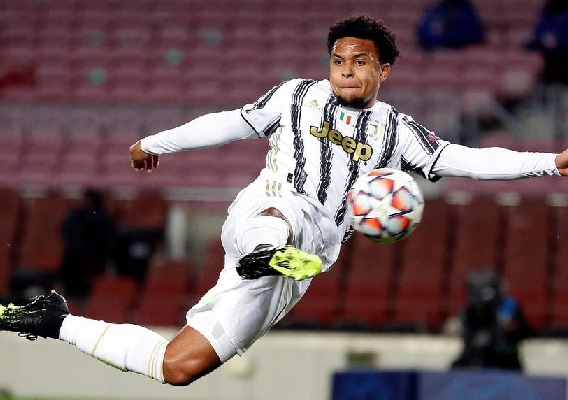
Weston Mckennie, Barcelona (0) Juventus (3), Barcelona, Spain (12.08.20)
Young American players continue to become very attractive investments for European clubs. Back in the US, that enhanced credibility has had a ripple effect on domestic clubs, coaches, scouts, agents, and specifically high-school-age football players. Now more than ever, they all see a new opportunity. Young footballers with European playing aspirations, vehemently believe their dream of becoming a professional player is within realistic reach. Similarly, fringe high-school-age young players whose aspirations may be exclusively domestic (USL, MLS) are hesitant to pursue “soccer” in college following their HS senior year.
For some families, the decision to potentially forego a college “soccer” scholarship (either partial or full) and delay a college education to pursue the professional football dream is too risky, costly and not an option. On the other hand, for other families, it’s the most logical (and only) step forward as time is of the essence for young footballers. There is however, a third group who are indecisive and perhaps this post is geared towards them. Is a gap year following high school (HS) worth pursuing in order to persuade/dissuade them one way or the other? Below are some aspects to consider.
Physical/Mental
Some HS-age players may neither be physically/mentally ready for the rigors of college soccer or football professionalism. In college, competing against players up to four years older may not be the easiest transition. The physical/mental gap choosing the professional route may be similar in age but wider in experience and maturity.
Thus, having the player take a gap year to continue his development before embarking on the next endeavor could be very advantageous. After all, what’s wrong with bossing the game around for an additional year while building the player’s confidence? Well, it depends. So long as their game continues to be carefully nurtured, and evolving during the gap year. In the process, other opportunities could also become available.
Increased opportunities
Indecisive families who are not yet convinced about the college path and whose MLS or amateur club has not shown them a satisfactory path to football professionalism may opt to take a gap year to explore additional options that could result in new opportunities. Among those options are:
Join the professional domestic market (USL) with an academy contract to maintain NCAA eligibility
Attend domestic/international trials in different markets/clubs to set realistic expectations and for self-evaluation
Practice and play in a semi-pro league to maintain NCAA eligibility, network, and gauge other football options in parallel
Continue playing at the current club to maximize exposure to professional agents and college scouts/coaches
Switch to a different non-MLS club (domestic or international) or vice versa (if not playing for an MLS club) to increase exposure to professional agents and college scouts/coaches
Join a play football abroad (England, Spain, Germany, Italy) gap year program while earning college credits
2020 saw a dramatic increase of local gap year participants. In hindsight, the trend may have stemmed from a shorter 2019-2020 season which caused players to miss out on important youth tournaments such as Dallas Cup, GA Cup, DA/ECNL Showcases/playoffs, National League, etc. It wasn’t just missing out on participation in those tournaments but also the corresponding experience and exposure to professional agents/scouts/college coaches/etc. In most cases, players did not get a fair opportunity to draw enough interest from colleges or the professional ranks which incentivized them to take a gap year. Below you will find examples of recent local U-17 MNT pool players who are pursuing a variation of the five categories above:
Bailey Sparks and Josh Ramsey left their longtime Solar club to give the USL-C (Sporting Kansas II and San Antonio FC) market a try respectively. Similarly, Kevin Bonilla returned from a short stint at the University of Portland to join USL-1 North Texas SC during his gap year
Seth Wilson who once played for the MLS FCD academy went on a series of international trials. However, COVID may have temporarily cut his trials short during his gap year
At present, Kevin, and Seth, have joined a local semi-pro league (La Roja League) for the winter along with many college players currently home for the break to remain active
Cesar García, scheduled to join SMU soccer in the fall of 2020, is now back at the MLS FCD academy to increase his chances to professionalism or academia during his gap year
Players like Johan Guereca and Riley O’Donnell left the longtime Solar academy powerhouse to search new opportunities at FCD academy in their last year eligibility
There is no solution that fits all. Each player is building their own path and we are all learning from each other. For most families, the ideal scenario could be to secure a college “soccer” scholarship during the senior HS year and prior to taking a gap year. This option allows a fallback plan in case one of the alternatives above (or others) does not materialize. If you are fortunate enough to secure a soccer college scholarship, be honest and transparent with the college staff about professional intentions.
Financial
Once/if a scholarship is secured and if professionalism does not become a viable option during the gap year, attend college with the scholarship and earn a life-lasting academic degree while still playing college soccer.
Sometimes a pathway to football professionalism will open up while playing college soccer: Reggie Cannon, Brandon Servania, Brecc Evans, etc. to name a few. After all, there are plenty of colleges or entire conferences (ex. Big10) which “guarantee” the athletic scholarship for life as long as the footballer leave the college for “a bona fide reason”. Do your research, there could be some caveats for this guarantee to apply. However, if you can make it work, the financial impact on your family could be significant.
Current club situation
Amateur clubs (ex. Solar, Texans) offer limited options to football professionalism. Staying a gap year at an amateur club may only increase opportunities to a wider gamut of college choices and not necessarily to football professional pathways. Taking a gap year to switch to play a full year at the U18/U19 level with an MLS club could be very attractive but risky nonetheless. You can read more about this possibility in a previous post. If a switch is made and the MLS path at the U18/U19 level doesn’t work out, keep in mind that the MLS club also limits the player contractually in terms of other domestic opportunities that could be pursued during the gap year. Some MLS clubs are very restrictive not allowing the player to trial with other clubs (domestic or internationally) even though the MLS club does not have any plans for such player. Amateur clubs will be more open to that possibility as they don’t have a path to professionalism.
On the other hand, if the player has been part of an MLS club and said club has not “shown any signs of a professional plan” by the time the player turns 16, the player is serving a unique purpose in the club: filler player. The family may want to explore other possibilities outside the MLS club immediately. Maybe one reason to stay with a prestigious MLS academy is for the college exposure; however, amateur clubs are not only less strict on pursuing parallel professional alternatives but offer more college showcase possibilities since they are family-funded.
Age
if there’s an aspiration to play in Europe at the U19 level as a stepping stone to a first team debut and the player is turning 18 years of age after the start of their HS senior year, it is not worth taking a gap year. The post September 1st (international transfer window deadline) birthday by itself complicates that possibility and staying an additional gap year further delays the move to a European market.
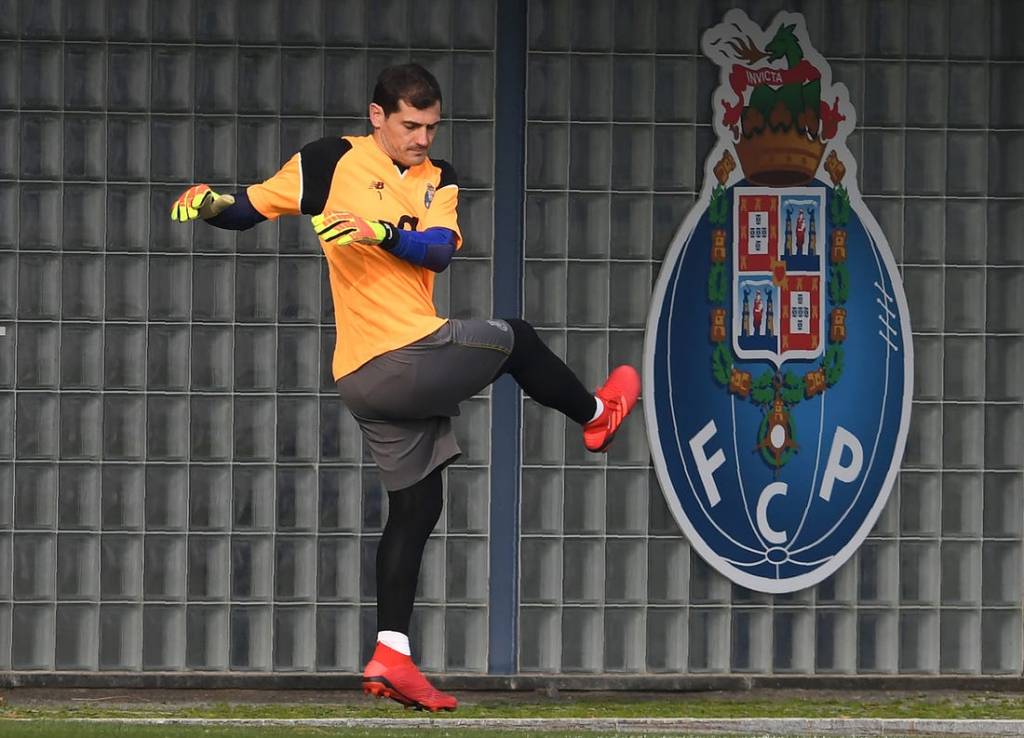
Foreign nationals (especially unproven young Americans) in Europe without a EU passport will find more scrutiny being recruited for a U23 or “B” team than for a U19 side. Goalkeepers (GKs) can find an easier pathway to a U23 or B team than a field player; however, the path to a regular-minutes first team usually takes longer for GKs. Historically, there have been a few exceptions: Casillas.
Football positions
Player positions matter when it comes to taking a gap year. Offensive players tend to have a faster route to professionalism than defensive players. A GK may very well be better served going to college right after HS and complete a degree in 3.5 years. GKs tend to have longer careers and very few become starters for first teams before the age of 22 (a college degree can be pursued during these years). Going to college immediately after HS will hardly impact their professional football aspirations. In fact, playing college, combined with a local league during their school breaks will keep them active year round. A similar reasoning could be drawn about defenders who tend to have longer careers than offensive players.
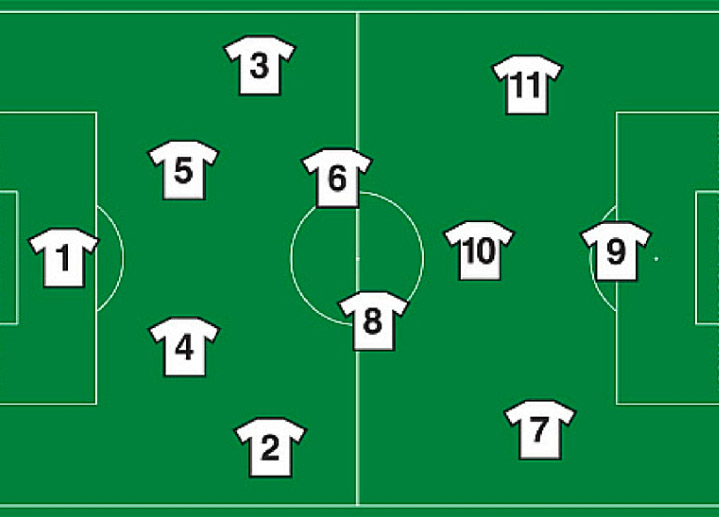
Football positions by number
In addition to gaining additional football experience and potential opportunities, with some planning and motivation, families/players can benefit from a gap year to save money, travel, volunteer, or do all of the above. Just be sure to have a plan around the objectives to be achieved during the gap year and adhere to them. In the end, whichever road you take, a gap year is the ideal time to think about short-term and long-term goals. Just make an informed decision, have no regrets, and enjoy the ride.
Lastly, this month we will likely reach the 10,000 visitors mark. We want to take an opportunity to thank you for reading us hoping that you continue to find our posts useful. As a token of appreciation, the first 10 readers to fill out & submit the form below will get a free Nike Men’s dri-fit shirt. Winners will be contacted via email. Thanks for your continued support. #theGomezway
I will preface our family status by addressing the elephant in the room. It’s been a shocking past couple of days for the football world since Maradona’s passing. There’s nothing we can say that hasn’t been said already. He was a polarizing figure off the field but he earned the respect of most of us on the pitch.
From a football perspective, his legacy will live with us forever and we are grateful our eyes witnessed his God-given talent. Living in Mexico City in 1986, his impact on me was exponentially magnified; however, I first laid eyes on him in 1982 with Brazil robbing my attention most of that WC.
His life becomes more remarkable when you read his autobiography. I first read it 20 years ago when it came out. I’m giving it a second read now and truly recommend it if you have some spare time over the holidays. You will understand a lot of his decisions and learn some about his preferences:
Maradona started off as a defender. He appreciated the ability to see the whole field and the additional time to make decisions. (soccer IQ)
He had 7 siblings living in Fiorito. He had a very humble upbringing but always surrounded by a close-knit circle of friends and family (failure was not an option)
He acknowledges his comfort with the ball stems from spending 4-5 hours daily from a very, very young age (unstructured repetitions and muscle memory)
The worst day of his life…the day he learned he was not part of Argentina’s 1978 WC squad to be played at home. This was the reason he “only” played 4 WCs (setbacks fueled him)
The “Hand of God” goal was not the first one of its kind he ever scored (gamesmanship)
Why did he often wear two watches when he traveled? (loyalty)
I could go on and on about him but onto family matters…as the show must go on…
Joana:
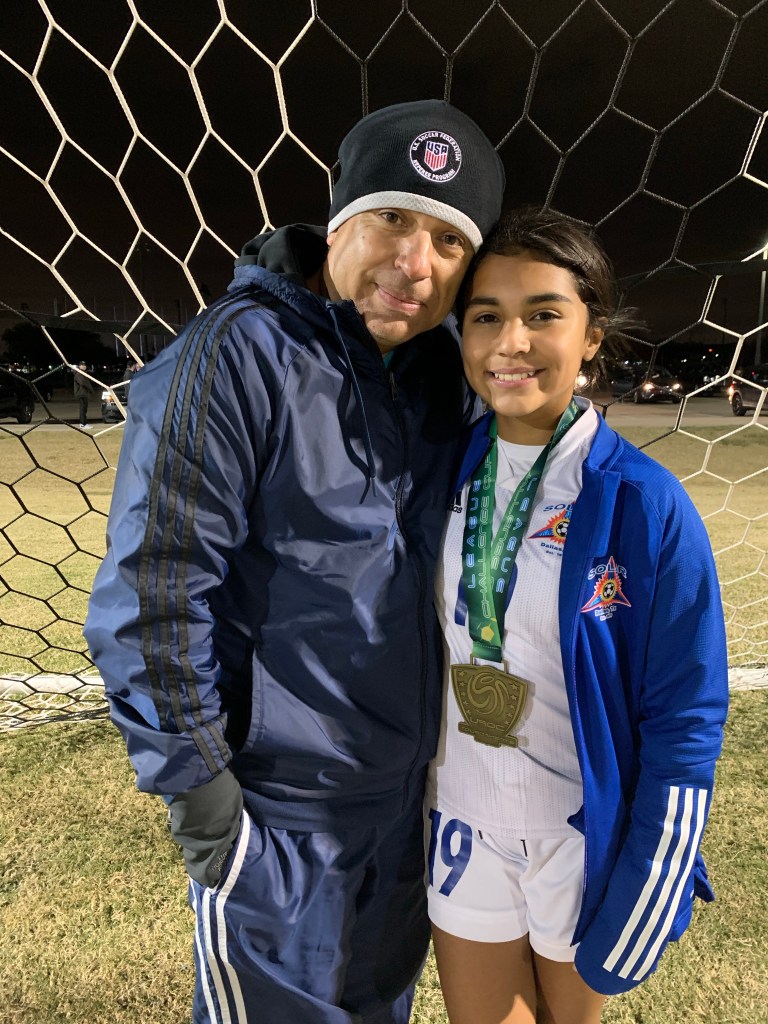
Solid crescendo performance helping your team win another tournament. You improved on technical and tactical aspects of the game that you had been honing.
Joana honing skills during the break (11.25.20). Look up!!!
To us, the progress was the real win as we know game results are circumstantial. We loved the total control you displayed of effort and attitude. So proud of you mamita!!!
Joana and I after the final game. 11.22.20, (The Colony, TX)
Johan:
Due to the international break, Johan had the past two weekends off but participated in training with the first team. Good stuff on both of the scrimmages. Continue seizing the opportunities and getting all the available playing time. Baby steps. We now move on to actual games.
Jogo:
Successfully and safely left Denmark and has finished a new quarantine. He continues to train with/against top competition and most importantly, staying healthy, and in shape during the long off-season. The objectives of the trip are being met.
Thanksgiving:
Yesterday was the first of its kind where we didn’t have the boys with us. Considering we spent the last one in Portugal, it was somewhat expected. We are grateful for what God has given us. Can it be better? Sure. It can also be worse so we are extremely lucky to have health especially in uncertain times.
2019 Thanksgiving 10.24.19 (Oporto, Portugal). Jogo with a football at his feet even during dinner…
Scuffed podcast:
We don’t listen to Adam (and Greg) weekly but we listen regularly. They have excellent football material for US football fans; however, it’s not always geared towards player parents. This episode has a good bit of educational material as it relates specifically to Caden Clark’s journey. Jogo is great friends with Caden and it’s good to go full-circle on a lot of stuff. Furthermore, it’s validation that we are doing some things well, and perhaps others, not so much. Give it a listen if you want to learn more about:
Additional training: mental speed, hip mobility, ball control, center of gravity
Playing for a non-MLS club
Developing the love for the game
Encouraging decision making, mistakes, and losing the ball
Opinion on strength coaches
etc.
Note that all journeys are different but it’s always good to know what other families are doing in the pursuit of the dream and HOW they are doing it. After all, this is what this blog is about.
When an opportunity arises for a teenager to play football away from home, there are very few parents who can afford to drop everything and accompany the player in such pursuit. We continuously hear that young footballers and their families sacrifice core family experiences to “chase the football dream” away from home. The narrative behind those sacrifices typically involves generic terms/phrases such as family, friends, finances, education, and an overall support system normally provided by a place called “home”.
But what does that mean? Well, it’s all relative; see, moving within the United States beats having to relocate to another country and that will be part 2 of this post. Similarly, moving within the same state beats moving across time zones. For now, let’s talk about the Gómez’s most recent experience.
Earlier this year, we embarked on a new football adventure and as prepared as we thought we were thanks to Johan living in Portugal and after having both boys live an hour away in Frisco for years, Louisville threw a few curve balls at us.
School:
Jogo has always been a solid student (what can we say as his family right?). Well, he regularly takes AP classes, is learning a new language and overall holds himself to a high standard academically. In his first move to Frisco, he went from a Christian learning setup to a secular one. As expected, the quality of instruction at the FC Dallas mandated schools was significantly lower but ultimately free of charge. On the bright side, those schools were more diverse in many aspects and we loved that. Jogo made the best of his time there and to be honest, he suddenly had access to other extracurricular activities that his small faith-based school didn’t have. Unfortunately, he was not allowed to participate in any of those due to football training restrictions.
Back in February of this year, he moved to Louisville, Kentucky which forced him onto an online high school setup due to practice times. Remote learning as a sophomore wasn’t ideal but it’s what the circumstances necessitated. While we are very satisfied with the online setup our family found for Jogo; it’s less effective than onsite learning which is what empirically works best. However, COVID ultimately changed a lot of learning platforms this year for everyone. In hindsight, one could argue that Jogo had a head start with remote learning when it came to self-paced education.
As most of you know by now, most online learning setups involve a ton of work for parents. In our case, we have an adequate amount of time to devote to that activity but not every parent does and thus, consider that time commitment if going this route. Jogo is thriving at school with an online setup but the motivation to do academically well isn’t ever going to stem from the team staff and much less from his classmates like it was at the FCD’s brick and mortar schools. Sometimes Jogo has to dig deep and be extra resourceful to stay on top of his academics whose activities don’t always align with LouCity football activities. Consider the player’s self-motivation (grit) aspect carefully when choosing an online setup. Similarly, the high school social aspect is lacking in a remote-learning environment as important events such as PROM, and a regular graduation will never take place for Jogo…other more banal activities he’s missing out on are attending football games or simple stuff such as just sitting down to eat with his non-football friends in the school cafeteria on a daily basis…
Food:
Jogo has to cook everyday. While it’s a very useful life skill; it could be very time consuming and of course something to factor into a decision by the family. We are fortunate enough that Jogo has enjoyed the culinary arts from an early age. Mom enjoys cooking and teaches him remotely (makes videos) so it has never been a chore for Jogo. He finds cooking very therapeutic. However, as a teenager, eating three (or more) daily meals could be a financial blow for the parents of a young player who doesn’t find cooking appealing, has a limited desire to learn or for a player who dislikes grocery shopping as eating out gets expensive quick.
Jogo grocery shops about twice a month and it has proven to be logistically challenging where he lives in Louisville. We thank his roommate, LouCity’s Chaplain, and Uber as without them, it would be extremely difficult to purchase food (hot or cold). Be aware of transportation needs as you embark on a new football adventure for your teenager. Will a car be needed? Is there public transportation? Louisville has public electric scooters (Lime) which are fun and practical rides for short distances but just like eating out, using them gets extremely pricey quick.
Transportation:
When Jogo moved to Louisville (and up until now), he didn’t take a car with him. We made that calculated decision because the apartment where he stays is near the training facilities and Lynn family stadium. Both are within a walking/biking distance from his residence but sometimes the weather inclemency make it difficult to do either. As a result, he rides with his roommate or other teammates for football related activities. This however, poses a challenge as there are times when he has to be at the training facilities or stadium earlier/later than his roommate/teammates so he must hike. The additional exercise is great for a young athlete given Louisville beautiful weather; however, 2020 has brought some unique social-political nuances to several US cities, among them Louisville, which make walking a questionable choice and living so close to downtown Louisville hasn’t exactly been a blessing.
We need to find Johan’s car some use; it’s been literally parked for 18 months collecting dust
Socio-political environment:
As most of you know, Louisville has been severely impacted by socio-political events in 2020. At times, it was worrisome to have our then 16-year old son be within walking distance from all the daily protests (which sometimes turned violent), police presence (blaring helicopters, curfew enforcing activities, etc.), and everything that came with those events. As a family, we prayed and hoped for the best especially when Jogo had to walk through some of it on his way to/from football activities. We learned a lot from the past few months.
One would think that common sense can keep somebody safe but that’s not always true. Jogo’s inexperience and “look” sometimes kept us up at night as he navigated through a new city. We understand socio-political protests and demonstrations are somewhat random but there are cities (even countries) that are historically more prone to those events than others. Do your homework and make a holistic decision for your player. The player’s safety -on and off the field- when making a decision to go play away from home should be paramount.
Health:
Other safety uncertainties (not unique to Louisville) that 2020 brought with it were health concerns. As if having your teenager a thousand miles away wasn’t enough, COVID happened. To be fair, we are somewhat thankful for it as it kept people off the streets in downtown Louisville (well, to an extent). Jogo started undergoing frequent COVID tests, and LouCity’s medical staff did what it could to keep everyone safe. Jogo did an excellent job at staying in his “bubble” and not having a car helped a lot. All of a sudden, other medical aspects of his health turned secondary but they shouldn’t be neglected.
It’s never ideal having your teenager miss doctor’s checkups. I mean, going to see the family doctor, dentist, chiropractor, optometrist isn’t really the same when one is a thousand miles away from home with no car and limited support from the people around you. Make sure you do your research and locate medical staff for your player near the location where he’s staying. Jogo’s location in Louisville proved to be a bit too difficult to locate nearby medical staff (outside the team’s) for our insurance carriers so when he returned home recently, we immediately took him to every possible doctor since he needed to embark on his next opportunity.
Jogo at the Newark airport
In summary, there will be many sacrifices that a family and player will have to endure to pursue any dream with professional aspirations…professional sports just happen to start at an earlier age. In the end, any life decision will involve some level of risk; however, make it a calculated risk by trying to remove as much uncertainty as possible AND more importantly remove it from the player’s already full plate. The players need to focus on “on the field” stuff as much as possible.
Ask questions, talk to current/former players, young player’s parents and definitely team staff. Know that in the end, there’s no unique way to “chase the dream” and everyone’s path is unique. Understand that each person will give you their version of their truth and you as a family will have to consume, process, and make a decision based on that information. We hope that blogs like this one continue helping football decisions for the betterment of the sport.
Please reach out to us if you ever want to know more about any of our experiences and the paths we are pursuing for our kids. We don’t write every detail of our experiences for obvious reasons and there’s more that meets the eye. We are always happy to help: info@thegomezway.com. Until next time. #theGomezway
Chumchat
The chums continue producing quality content for the football community. This week’s guest is QPR’s Charlie Kelman. He’s not only a clinical U20 MNT pool striker but also a very humble teenager. Although he never played for the FCD touted academy, he has a great relationship with FCD current and former players. In the podcast, he was asked about “the game” where he scored 4 goals against the FCD’s pre-academy team after being turned down by FCD staff to join the academy. He also talks about his aspirations, dream club and as every other guest on the podcast defines success in a very family-oriented type of way.
The summer international window closed this past Monday and we continued witnessing an increased exodus of American-developed youth footballers signing with European clubs around their 18th birthday. American-developed footballers are gradually opening doors to the next generation and thus have become very attractive to European clubs as their ROI could be huge and the risk is extremely low. That said, in this post we are not analyzing the various reasons for this trend. Instead, we are going to try to contrast some of the advantages and disadvantages if player/family is ever faced with the choice of signing with a small vs big club (in Europe). Ultimately, it’s very situational but below are some aspects to consider:
Advantages of a bigger club
The name of a big football club can be very attractive to start a European career (especially for youngsters); after all, who wouldn’t like to be part of a regular Champions League participant club? It’s important to note that the club name and its reputation were not built overnight. These are clubs who have been in existence for over a century. For comparison, MLS clubs have been around for 25 years and thus are in their infancy when it comes to name and reputation. Even those MLS clubs which have established partnerships with big European clubs have been very intermittently successful placing players abroad.
Money/budget
Bigger clubs frequently have a larger spending budget and thus pay very generously even for a U19 player. However, it is often said that it’s the second professional contract the one that really matter$ but we also know that young players/families oftentimes seek immediate remuneration due to the immense sacrifices getting a player to Europe. It’s also important to note that some of these American footballers/families are giving up upward of 150k in college scholarship money to play in Europe so they want to maximize earnings ASAP. A higher salary is of course only one perk and there are a ton of other benefits that come with signing with a bigger club.
Individual competition:
Thicker wallets allow bigger clubs to sign more international players at every position. A higher density of international players usually translates into more competition. To be clear: The club is ONLY going to sign an international player who surpasses the talent they can find domestically. If your player thrives with top-notch competition, they will not only love positional competition at the big club but also love the team competition faced by playing in higher profile tournaments as a team.
Team competition:
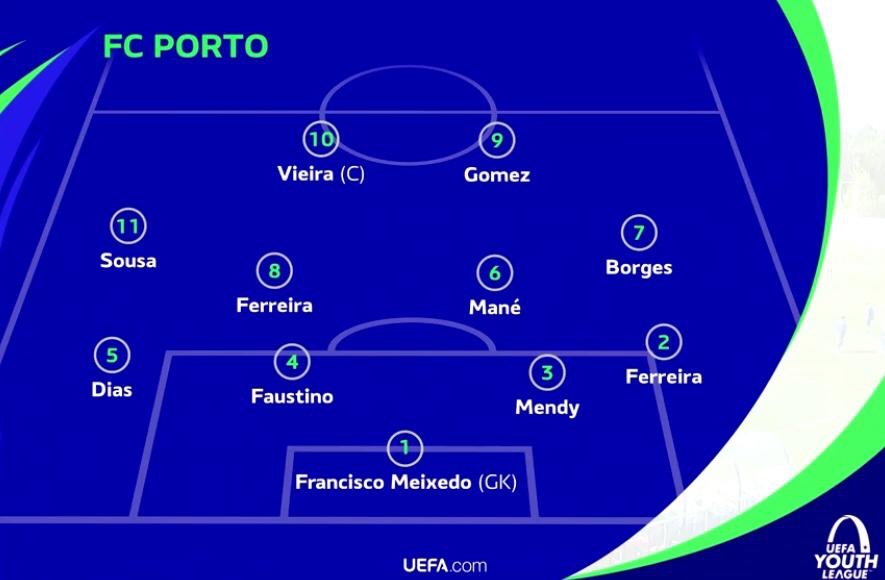
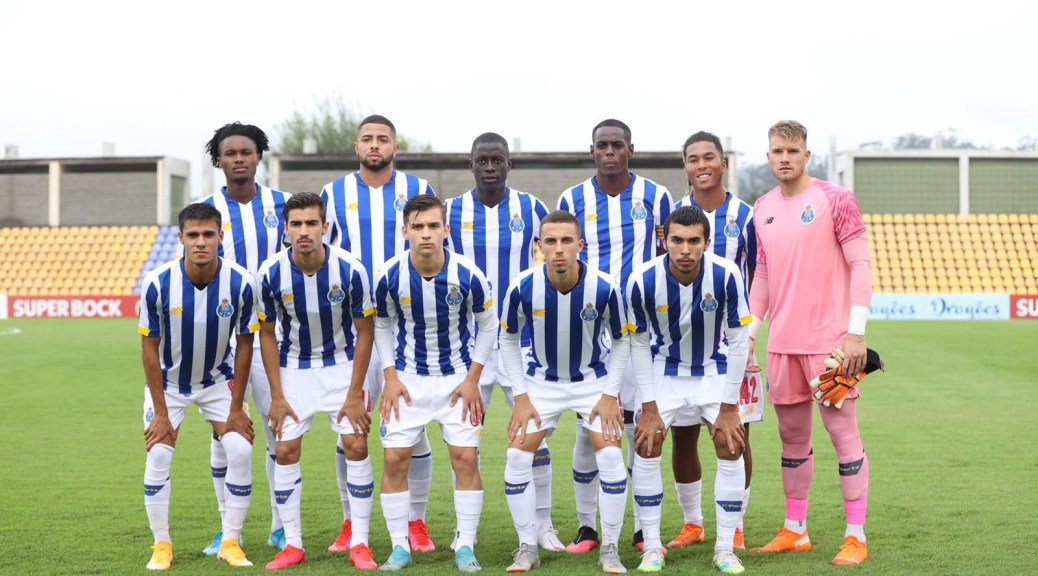
A lot of the bigger clubs have U19 teams who regularly participate in the UEFA Youth League. It’s a version of the Champions League but for U19 players. Johan participated with 2019 UEFA Youth League Champion FC Porto. He had the time of his life. The 2019 UEFA Youth League tournament is where Gio Reyna gained the most exposure playing with Dortmund U19’s and all of us can see where he is at now.
Exposure:
Playing for a big club is not for everyone; a lot of eyes are normally on the player not just during important tournaments but even during practices. Not all players can sustain this type of pressure in a foreign cut-throat environment.
Coaching:
Bigger clubs tend to have larger available staff: Coach, Assistant Coaches, Dietician, Doctor, Psychologist, Trainer, Translator, Team Manager, Equipment Manager, Media Team, etc. If this is important to your player, it should not be taken lightly. Having a supporting staff dedicated to the player’s needs could be a deal breaker for players who are living by themselves, thousands of miles away, in a different culture and for the first time.
Language classes:
Integration/assimilation of the new club/culture is extremely important. Bigger clubs tend to have resources to dedicate to foreign players. Johan was taking Portuguese classes at least once a week his first year. Although he’s not yet fluent in Portuguese, he can read, and speak Portuguese pretty well. His team and cultural integration has been a success due to this perk and obviously because Portuguese is very similar to Spanish.
Watching games remotely:
For the families back in the states, it’s of utmost importance feeling closer to their player. Bigger clubs can achieve some level of closeness via their social media platforms. Some clubs actually have dedicated English-only social media platforms (Porto does not). Others have an application that allows family and friends to watch all games: U19, B, and senior team. At Porto, we are fortunate to watch most of Johan’s games and we are very grateful to the club for that perk.
Administrative:
Bigger clubs have dedicated staff to do very specific tasks. They have personnel to take care of player/family trips back home, legal matters, housing, etc. This type of assistance is invaluable when going to a new country for the first time. During the start of the pandemic, FC Porto’s travel staff seamlessly worked with us to bring Johan home safely among a lot of uncertainty. Also, most bigger clubs have law firms available to answer legal issues such as visa, payroll, taxes, etc. Visa problems for players are inexcusable from the club’s and/or agent’s perspective. No player should ever have to go through what Christian Cappis recently had to endure.
Advantages of a smaller club
The name and reputation of a football club has a lot of weight on players and parents when making their first pro-contract decisions. It’s difficult to turn away an initial opportunity with a big club but statistically, smaller clubs offer immediate playing time which is extremely important to the physical and mental development of young footballers. There’s no worst feeling for a player playing abroad (or domestically) than getting NO playing time. Similarly, some clubs exist to promote players to the first team and then sell them. That would be a good player player/family strategy to seek a bigger club for the second (or later) contract.
Money/Budget:
A smaller club has a more limited spending budget; their ability to pay a “competitive” salary is limited. Some small German clubs only pay what’s indispensable and necessary to live while playing for a U19 side. For some families, this could be a big factor as they try to justify bypassing a hefty college scholarship back home with an uncertain start of a European career. For other families a smaller initial salary could be a blessing in disguise.
Less individual competition
A smaller budget limits the club’s ability to bring an abundance of players which means less competition for your player. By sheer numbers, less competition translates into potentially more playing time AND learning to play multiple positions. Ultimately, this could signify a faster path to a first team debut.
Team competition:
In Germany, at the U19 level, there’s a competition called Pokal which is a competition among mostly teams from the Bundesliga and Bundesliga 2. It’s a national “tournament” with less competition, pressure, and exposure than a UEFA Youth League tournament but competitive nonetheless. Some American-developed players may thrive more under this type of environment with less exposure and pressure.
Pressure:
Having played for Bayern, Dortmund, Barcelona, Real Madrid, Chelsea, Manchester City/United, Benfica, Porto, etc. is a great resume builder for a youngster. However, those are very competitive environments not apt for every player’s development. It’s very cut-throat. Most players need the security of playing week in and week out and thus signing for a smaller club can be more beneficial.
Administrative:
Smaller clubs have fewer staff members that “do-it-all”. Sometimes, this expedites generic transactions wherein those tasks can face delays/red tape in bigger clubs. Knowing the right staff at a smaller club can expedite a mundane task such as shipping stuff from/to home. We have recently struggled with shipping “stuff” back and forth and to be fair, most of it is due to the pandemic.
In the end, whichever club your player ends up signing with, enjoy it. It’s a HUGE deal. The first one is very memorable but statistically, very few youngsters ever stay with the team they first signed with. There will be more signing opportunities. Everyone’s path is very unique. Seek, build, and enjoy your own journey. The aspects of life learned through this journey are bigger than football. That can never be understated.
By the way, if you have 20 minutes give Chum Chat a listen. This week’s guest is another US developed prospect heading to Europe sooner than later: Dante Sealy. Get to know him a little better. Until next time #theGomezway
It’s important for families and young players to understand that football is an emotional (sometimes draining), volatile endeavor. One day, you are enjoying victory at the top of the pinnacle and the next you are tasting the sourness of defeat. Patience and persistence are key resilience characteristics to prevail. In our case, one could argue that we were well-prepared for adversity since Johan spent most of last season (thousand of miles away from us) injured. Honestly, the recent volatility we experienced wasn’t as dramatic as described above but let’s be honest, last week was far from ideal for the Gómez’s…
FC Porto B had their first game of the 2020-2021 season last week and we were happy that Johan made the 18 (celebrate small victories, right?); unfortunately, he didn’t get to play. FC Porto B giving up an early goal, and playing an important away game didn’t help his cause either. He’s strong mentally and understood it to be a tactical move given the flow of the game. Meanwhile, at LouCity Jogo received some “game management” minutes in their “do or die” victory against St. Louis. He looked really energetic and daring in his short cameo and should have had a goal. LouCity is in a hot streak and honestly, why change something that is currently working.
Making the best out of the minutes 09.12.20 (Louisville, KY)
The third Jogo fared a little better and played one of her best games having an assist but her team lost in a lopsided defeat by a sister club team. Ironically, Joana’s team had previously dominated that same team a week earlier (volatility). That’s the way the game goes sometimes. As a family, we moved on and prepared for the next opportunities to rebound and that’s exactly what happened this past weekend.
“One’s best successes come after their greatest disappointments” – Henry Ward Beecher
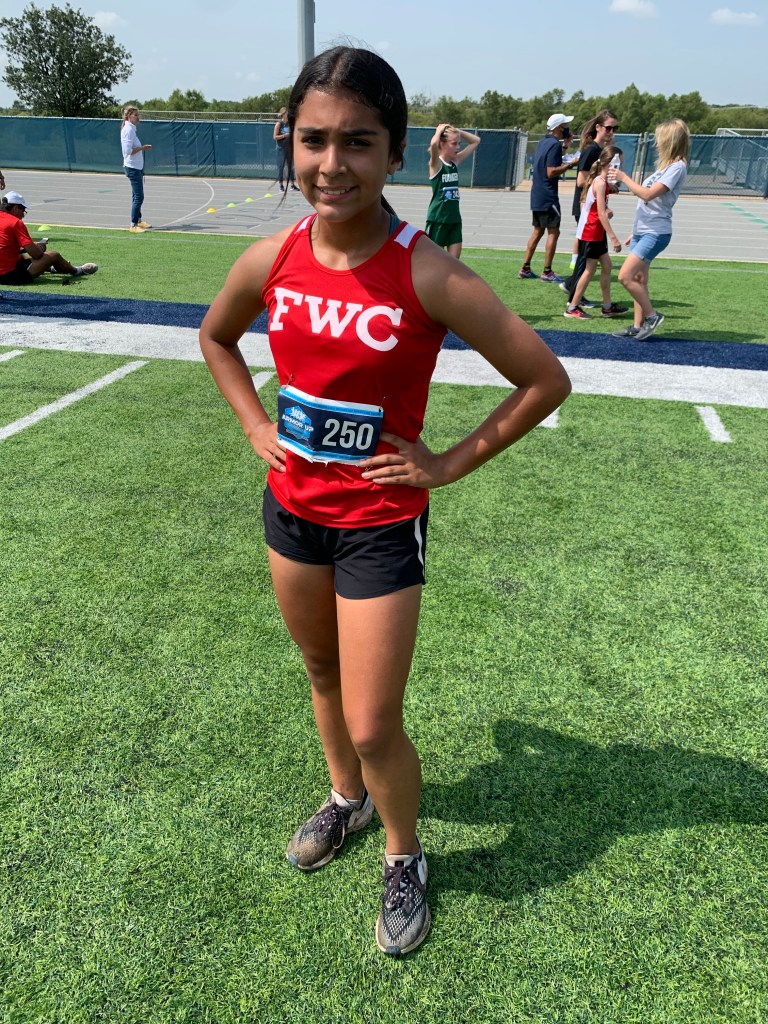
It all started Friday at noon with Joana’s first Cross Country (CC) meet. The temperature was great and although she did not set a personal record (PR), she ran a new course elegantly and finished first in her school team (7th overall). It was a difficult (hilly and super muddy) course but she managed to represent us all really well.
7th place overall XC meet. 09.20.20 (Argyle, TX)
The good news continued Saturday morning (+6 hours in Porto). Johan was not only on the 18 but starting against favorite FC Vizela at home in a typical rainy Porto September evening in front of FC Porto’s President. That type of exposure doesn’t happen every day.
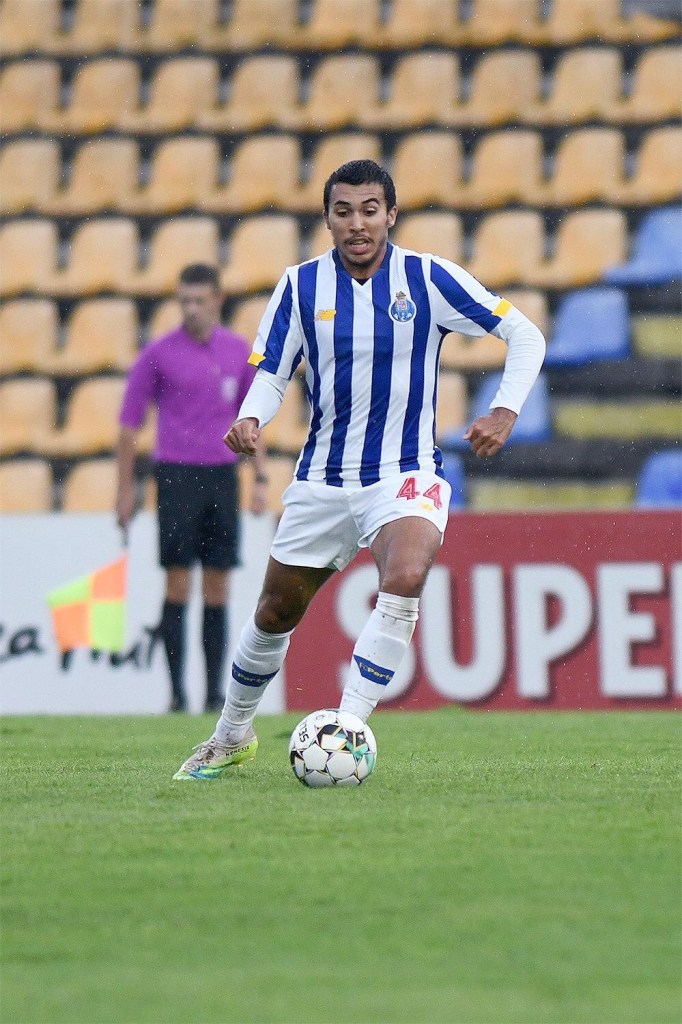
Johan looking strong 09.19.20 (Oporto, Portugal)
Johan had 40 solid minutes; he was involved in each of the three first half goals. His second half was mostly about game management. Here is his assist that led to a PK for the second goal.
Johan’s first assist of the season: FC Porto B (4) vs FC Vizela (1) 09.19.20 (Oporto, Portugal)
What stole the show for us was this sublime play that led to FC Porto B’s third goal. The first touch is exquisite and the finish followed suit. Congrats son.
Johan’s first goal of the season: FC Porto B (4) vs FC Vizela (1) 09.19.20 (Oporto, Portugal)
Saturday continued with a good showing for the Gómez’s as Jogo registered his 4th start of the season with LouCity. His aerial duels have improved, his technical and tactical awareness are very solid. In general, he’s making the most out of his opportunities and keeping a growth mindset. LouCity overall is very talented all-around and he’s fighting for minutes and contributing when called upon. The team is undefeated in its last 9 games and have almost secured a place in the playoffs. Looking forward to St. Louis game tomorrow against Indy.
On Sunday, the weekend ended extremely well with Joana. Despite playing a new position which is more defensive, she had an assist in an important away game in Houston. Inclement weather was a factor but she played well. We are beginning to see the start of something special with her and are excited to see what will soon come her way if she applies herself. There’s a lot of work to be done with all of the Gómez’s clan but we need to be patient and persevere in all the adversity that may come our way. There will be rough times in the lives of athletes time and again but with the strong support of family and friends, those rough times can be ephemeral life lessons. It’s #theGomezway
Houston Dash (1) Solar (1) 09.20.20 (The Woodlands, TX)
On a lighter note, please have a laugh. Enjoy the latest episode of Chum Chat. Judson, Tanner, and Johan raid two U20 MNT pool player Instagram accounts: Cole Bassett’s and Kevin Bonilla’s. It’s one of the funniest episodes yet and one that you don’t want to miss. These young adults have such chemistry and we have football to thank for that friendship.
International trials require far better preparation than domestic ones. It’s important to not just know and comply with the checklist for thedomestic trials but also be intimately familiar with some of the specifics described below for traveling abroad. Some (if any) football agencies may provide some sort of checklist to trialists/families before departure, if so, great. Otherwise, we hope you find the information below useful.
Documentation
Passport: Without this document, traveling is not possible which negates everything else. If you don’t have a passport, obtain one before you actually need it. Better yet, if your ancestry allows access to multiple passports, acquire them ASAP. You will not be able to travel out or into your own country without one. Once you have it and prior to traveling, take a picture of the important parts of the passport(s) and store them in your phone as back up. This will also prevent the need to carry it around everywhere and thus minimize the risk of misplacing/losing it. If you can, make a hard copy of it and carry that for ID purposes unofficially.
US consulate/embassy: In case of an emergency in the visiting country (ex. misplacing the passport, medical); it’s good to know how to get a hold of the US consulate/embassy. Have this information (phone number, address, etc.) both printed and stored in your phone.
Scrimmage documentation: Some German clubs may require a signed “waiver” from the current club to allow participation in scrimmages. Ask if this is the case, you don’t want to travel 5000 miles, spend thousands of dollars to not be allowed to participate in a scrimmage which is the entire purpose of your trip.
Club invitation letter: If such letter exists, it’s a good idea to have it readily available (printed is better). In COVID times, the letter may serve as an entry artifact to a foreign country. Have a folder or two with most of the documentation needed.
Demographics and related items
City: Become familiar with the country, city and more specifically the area where you will be staying. This is more important when doing multiple trials/training opportunities in one trip (highly recommended)
Language: If the club where you are traveling is a non-English speaking country, make an effort to learn a few general words: “thank you”, “please” and some phrases: “My name is <fill in the blank>”, “good morning”, “good night”, “where is the airport”, “how do I get from ‘point A’ to ‘point B’, “I don’t speak <fill in the blank>”? and of course some football phrases: “pass”, “I’m open”, “left”, “right”, “shoot”, “quick”, “man on”, etc. There are translation apps but it’s not always convenient to use them (ex. on the pitch)
Accommodations/Room: Will the host club provide housing (this is customary); otherwise, arrange for accommodations as close to the training facility as possible. Learn the physical address of the place where you will be staying in case a package needs to be sent out to you.
Meals/board: If the host club will be providing any food, how many meals will they provide? Can you buy additional meals if necessary? Either way, take some healthy snacks for the duration of your trip as well as some money to buy meals which may not be provided. Are there convenience stores/pharmacies nearby?
Transportation: How will you get from the airport to the training facility upon arrival? How about the opposite upon departure? Is Uber an option? Set up an account if you don’t have one. Note: Exchange rates can be significant.
Currency: Once at the host club, exchanging currency can be difficult. Ensure you have enough cash (in the correct currency) for emergencies. Go to the local bank and exchange money prior to departure, if this is not possible, do it at the airport.
Family: If the player is 16 years of age or older, it’s probably best for the player to travel alone (if possible). This allows the player to better integrate with players from the host club.
Means of communication: Will WiFi be available? Will your cellular provider work?
Hardware
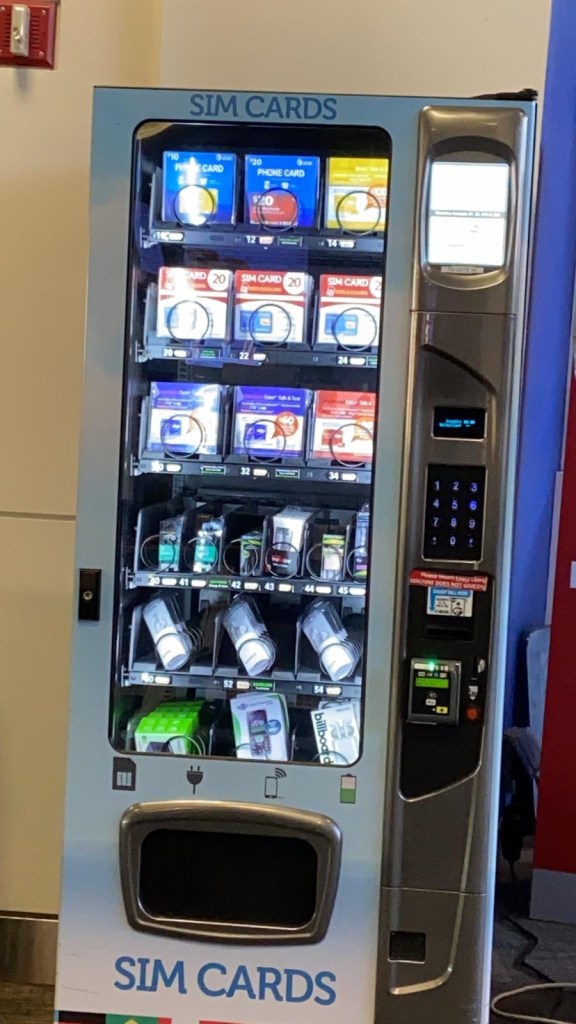
SIM Card vending machines are common in some airports: Newark
SIM Card: If your own SIM card cannot be used in the visiting country, can one be acquired and swapped out? Do you need to purchase an additional/temporary plan for data? Talk to your cellular provider before departing. Sometimes, SIM Card vending machines are located at airports.
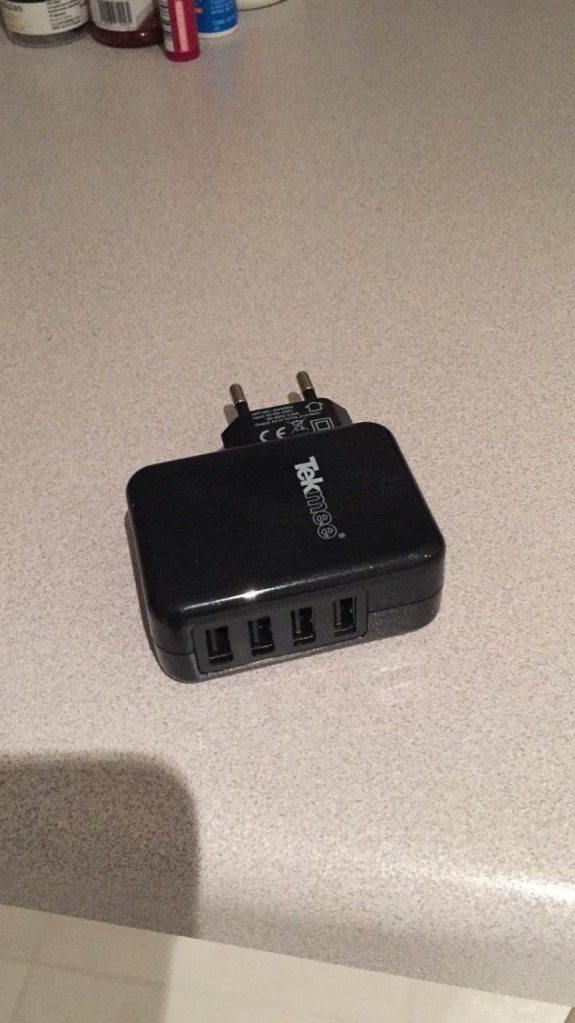
Travel adapter/power converter: Is a different voltage used in the visiting country? If so, get a plug needed to charge your electronics. Are your electronics dual voltage? Most are but be sure. This is important!!! You don’t want to fry your electronics while traveling.
Power bank: You will run out of juice at some point. Have a power supply back up and make it a habit to charge it every night. Leave it charging during practices.
USB cables: Have multiple cables to either charge multiple devices at night and/or in case you misplace one. In some foreign countries, it’s not as easy to acquire/buy USB cables like it is in the US.
Book/Magazine: If technology (WiFi, charger, phone dies/lost) is not available, a good book journal is a great way to pass time. If you enjoy writing, bring a journal and make it a habit to write about your experiences every day. Another idea is to download Netflix movies/shows prior to your departure, you can watch them even when WiFi is unavailable.
If you read this far, you are better prepared than most. Good luck in your trials/international training opportunity. If you have questions, comments or suggestions, please reach out to info@thegomezway.com
Gone are the days when all that was needed for a tryout/trial/training opportunity with another club was a ball, shin guards, cleats, water bottle, and a great attitude. The overall objective remains the same: to impress the host club enough to pique current/future interest in you or better yet immediately open up a door.
Check out the lettering on the football. We lost that ball right after this picture was taken on 08.22.20
The key to increasing the chances of success is good planning and nowadays that’s more probable with the proliferation of online information -like this blog. Keep in mind that as the player age increases, the importance of a successful tryout/trial/training opportunity magnifies and the room for error decreases. When it comes to tryouts/trials/training opportunities, second chances are rare (Chris Richards was very fortunate in the FC Dallas setup).
Note: For the sake of this post the terms trial and tryout will be used interchangeably.
Note II: This publication does not detail the technical, tactical criteria a hosting club will be looking for. There are websites who can help with that information.
Note III: The underlying assumption of this post is that the current club is aware (permission needed or not) of your intentions to pursue the trial/training opportunity with a new club. Thus, we are not addressing that process in this post. We could write several pages about our (and others’) experience but we will spare you the details for now.
Before we start presenting additional information, let’s define some terms:
Trial/tryout: An opportunity to train and showcase your talent with another (other than the current club). Let’s call the other club, the host club. Positive outcome from a trial/tryout could result in an immediate invitation to join the host club. Trials/tryouts have no cost to the player or the family (other than transportation to/from host club). A trial/tryout can be either openly promoted by the host club or solicited by the player/family/agent.
Training opportunity: An opportunity to train and showcase your talent with a host club. Positive outcome from a training opportunity does NOT usually result in an immediate invitation to join the host club. Some think of training opportunities as resume builders. Although most training opportunities have no cost (other than transportation to/from hosting club), some could have a high price tag. Training opportunities are great ways to experience the host club culture and learn their methodologies. A training opportunity is normally solicited by the player/agent and can result in a future trial/tryout. Training opportunities are in general more relaxed than trials/tryouts.
There’s so much to share and thus this post will be broken into two parts. The first part will be geared exclusively to domestic trials/training opportunities. Similarly, the second post (coming out early next week) will be exclusively about international trials. The assumption will be that most (if not ALL) the information that is included in the domestic trials post will be applicable for international trials as well. Our boys have participated in both a few times so we have gained some valuable experience and we are hoping you can leverage it.
Domestic trials:
Domestic trials/training opportunities could take place literally across town or across states in the US. Either way, preparation is important. Find out specifics about the event, club, gear and any football unique information that could either give you an advantage or make up for a handicap you inherently have.
Event specifics:
Purpose of the event: Is the trial/training opportunity solicited (initiated by you/agent) or unsolicited (invitation by the club)? As obvious as this may seem, oftentimes, these are setup by 3rd parties (ex. agents, scouts, clubs, etc.) and it’s important to understand the purpose. If unsolicited, is it a training stint only or a trial? The answer to this question is extremely important in your aspirations and expectations as positive outcome may also require a quick response from the family if a permanent invitation is extended. If it’s a trial, expect a a club decision to be made at the end of the duration of the trial.
Duration of trial/training: How long will the event last? If a decision by the club is needed, how soon is one expected and how will that be communicated to you? Best case duration (if the host club likes you) or worst case scenario (if the host club doesn’t). It’s important to understand the duration as it may have an impact on other trials/training opportunities you have already lined up. At the very least, you should know the duration of the event to start planning an itinerary around it.
Itinerary: Depending on the formality of the trial/training opportunity, you should expect some sort of itinerary from the host club. If none is provided, request one (from the club/agent) to have a minimum set of expectations. You will need some form of itinerary to at least plan for transportation to/from the event.
Location: Once you receive an itinerary, create your own itinerary that is tailored around theirs. Allow some buffer as those itineraries are very flexible. Become familiar with the city, transportation, etc. especially if it requires an overnight stay in an area new to you. Also, prepare the necessary gear for the weather of the city where the trial/training opportunity will take place.
Gear/personal equipment information:
Find out what clothing/uniform/footwear you need to wear for the trial/training opportunity. The last thing you want is to stand out for the wrong reasons. Sometimes, the host club will facilitate some gear needed for training/scrimmages/etc. However, don’t assume this will be the case. Also, check the weather ahead of time for the entire duration of the event.
Clothing: Depending on the weather, you may need extra layers. It is important for you to be comfortable. Also, find out the clothing brand the club uses, you don’t want to show up using a non-sponsored brand or the wrong colors (ex. you can’t show up wearing any FC Dallas gear at a Solar tryout -unforgivable-).
Footwear: The host club will not supply cleats, runners or slides; bring two pairs of cleats: one for soft and another one for firm ground. Similarly, bring a pair of runners and a pair of slides to relax your feet.
Other equipment: The host club will not provide shinguards, gloves, etc. In a bind, they may do so but you don’t want to look unprepared at any point.
Recovery equipment: If you use a foam roller, pack a small one. Similarly, pack some strength bands.
Water container: Bring a water container that you can fill up anywhere. Hydration is key but more so during these short, intense time windows. A water container also prevents the need to be buying disposable water bottles.
First aid essentials: Band-aids, Neosporin, Bengay, etc. if allowed on the plane and of course any medication.
Sunblock: Don’t assume anything will be provided or that you can just borrow it or go purchase it last minute.
Hygiene: Bring wipes and/or hand sanitizer especially in these uncertain times
Laundry services: Ask about laundry services or locate a laundry service near the place where you will be staying. Worst case, bring small detergent pockets and wash gear in hotel/dorm.
Notebook: Take a little notebook to write a mini-diary. It will help you remember names, activities and at the very least, years from now, it will bring back memories. Don’t forget to bring a writing utensil too.
Football info:
As stated earlier, we are not going to suggest the technical or tactical concepts that are good to possess. Clubs look at different things based on age, position they are looking for, etc. However, assume that if the host club is willing to give you an opportunity, they have at least watched a clip of you and you have what it takes. The items below are less about the practical football side of the trial/training opportunity and more about the theoretical side of it.
Club info: Do your research on the club: history, if in season, current table standing of the first team, training and playing facilities, coaching staff, youth development, etc. Knowing some club facts always makes for good conversation/ice breaker with other players, coaching staff and establishes your credibility/readiness.
Facilities: If the host club has a stadium, find out its name. If they don’t have a stadium, find out as much as you can about their training facilities.
Coaching staff: It’s recommended to do some research on the coaching staff as well. This will help you assimilate their learning methodology and their expectations of you. If you can reach out to a player who is already part of that host club, prior to your arrival, you will be better prepared.
Players: It’s best to arrive knowing some professional and youth players names. It will expedite the integration and assimilation of the club culture and values. At the very least, it makes for a more comfortable conversation.
Video clips: Watch game film of the host club teams which is readily available online. If you have an agent, request clips or just search YouTube.
Youth development: Are there academy players promoted to the first team? In your age group? Are they playing regularly? Are they playing your natural position?
Positions in need: Are there positions the club/team needs? What is the current depth chart including total roster size and expected signings for the same position? If you don’t get a spot in the position you want, is there a chance you can make it in another position?
Formation: What formation does the current coach play? Is there a style of play/formation the club likes to play? How do you fit in that formation?
Intangibles:
Confidence: Introduce yourself to the coaching staff and players as soon as you arrive. Be confident with a firm handshake, make eye contact, but be humble too.
Humbleness: The goal is to impress in many areas but be humble if you have managed to impress. If you perform well, be a good winner but if you don’t, avoid sourness. Enjoy this unique time, smile at all times.
Enjoyment: Be grateful for the opportunity but also display resilience at all times. Everyone appreciates the extra effort. Be a good listener above all.
Active listener: Keep an open mind, it’s likely the host club will do some things differently than your current club. You will learn new ways to do things you thought you already knew how to do. Always be a great listener, don’t be afraid to ask questions, and more importantly keep an open mind.
Punctuality: Be early to ALL team activities. Being early provides an invaluable chance to chat with staff or help out with setup. Volunteer as much as you can. Make sure they really get to know you and not just your jersey number.
We’ll be adding more items to this list. The window for domestic club transfers is mostly open during the summer but in practice trials/training opportunities can happen year round. On the other hand, the window for international transfers is still wide open and because of the pandemic, varies by country. I’ll be posting specific items for international trials/training opportunities later in the week. Stay tuned.
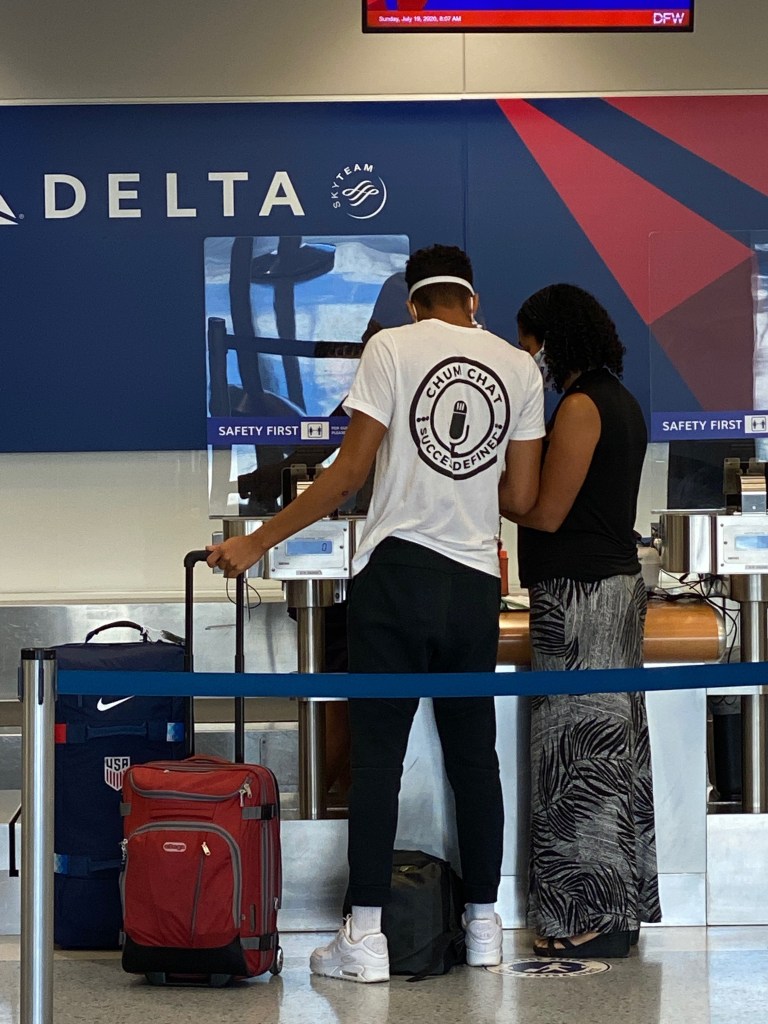
It was about a year ago that Johan left to go on trials to Europe. What a difference a year makes. Back then, airports were packed, air fares were expensive and just having an American passport was the key to any destination in the world. Today, that is no longer the case. Airports are ghost towns, air fares are not really inexpensive per se and traveling to Europe is REALLY challenging.
With the European Union current ban on travelers from the United States (reciprocity stinks, huh?), it has become extremely difficult to travel to Europe if you are a non-essential (to my dismay, football isn’t) individual/worker. Johan recently tried to return to Portugal and we had to go through a lot (two attempts) of hurdles to be able to board a plane. It would havebeen nice to have all/some of this information before we showed up to the airport so figured, we’d share it with you as there is a lot of misinformation out there. At the end of the day, it is very situational; however, we know local families who are sending players abroad very soon (good luck in Denmark, Germany, Spain, Portugal, etc.). Each situation/destination is unique so take this info with a grain of salt but here is what you may need.
Note: Unless you are an essential worker (ex. doctor, nurse, diplomat, etc.) or a worker with a unique skill (footballers fall in this category but you have to prove it), you will NOT be allowed to travel to Europe. There may be other allowed classifications based on the country you are visiting but know that American tourists will not be allowed in Europe for a while.
Note II: The good news is that the travel ban is reevaluated every 2 weeks so keep checking as your visiting country may reopen their borders back to the US.
Requirements:
US Passport: As a US citizen, you must have a US passport to even have a chance to depart the US. It helps (a lot), if you are a dual citizen of the visiting country (ex. Germany, Portugal, Spain, etc.) or have a foreign passport that allows you to enter ANY country in Europe (or even better, a passport of the visiting country specifically). Having a foreign passport can waive the US passport requirement depending on the visiting country’s laws. The *challenge* is to make it to European soil. Once there, everything is much easier.
COVID-19 negative test result: Most countries (maybe all) require travelers to present proof of a negative test result taken 72 hours prior to departure. This is very important. Take into account any layovers (especially overnight) and ensure compliance all the way through the destination country.
Nice to have’s:
EU passport: Depending on your final destination, having an official document from the country you are traveling to is extremely useful. Short of a passport, maybe a residence card (analogous to a green card in the US).
Residence card: As a US citizen, this may not be very common but depending on how long you have been residing abroad, this may be a possibility. If you have access to a residence card (or proof that you are in the process of acquiring it), that documentation should be sufficient to travel to your destination. In Johan’s case, having a copy of his residency application helped a lot. Unfortunately, we didn’t have it translated into English and we were sent packing the first time.
Letter from the traveling country’s consulate/embassy: With government offices barely opening everywhere, this may be difficult to expedite. However, if you are able to obtain a letter from an official government office from the visiting country stating that you should be allowed to enter, the letter (in official letterhead) can go a long way. Make sure the letter is written in both languages (the visiting country’s and English). This document will be presented in the US (at the airline counter) to backup reasons for being allowed to travel to Europe. Having a document written in a foreign language (w/out a translator at the airport) could be detrimental and delay check-in. This is very important as you never know the type of push back you could receive from the airline person at the counter. Make sure you have all official documentation with your son’s/daughter’s name spelled out correctly AND with a current date.
Work/Player contract: If you have your work (football) contract, it should help further justify the reasons for traveling. If you have such document in a foreign language, make sure you translate it before you present it at the US airline ticket counter. In addition to the contract, if you can, have a letter from the football club (an official declaration) stating that your player is “registered” with the club and under contract. This is almost the same as the contract except that it gives more credibility to a “long”, foreign language written contract that can not be easily translated.
Layover documentation: If your footballer has any stops during his/her flight, there may be additional documentation that needs to be filled out indicating that his/her stay is transitional and not as a final destination. Johan had a layover in France and the french government had different entry requirements than the Spanish government.
In these uncertain times, there are so many imponderables that could impact your chances of a “smooth” departure to Europe. Some may include the US state your player is traveling from (restrictions out of Texas are stricter than restrictions out of Kentucky), person at the airline ticket counter (this is by far the hardest hurdle to clear), airline, travel date, number of layovers, final destination, support from the club, player agency, etc. In our case, FC Porto went above and beyond to support Johan’s return to Portugal. We can only acknowledge their relentless assistance and professionalism towards us. Both times, when Johan traveled to the US a few months back and now, they have been a class act. Thank you FC Porto: #DragõesJuntos
The key is preparation. There are many factors to describe them in any level of detail in one post but we feel like we need to get this information out to the public to serve its full purpose. The “logistics” and sequence in which you present the documentation above plays an important role. Minimize the uncertainty and be prepared. It will pay off.
At the writing of this post, info in this post has helped at least four families initially being denied plane boarding (same airline). Please reach out if you need assistance with your questions: info@thegomezway.com. We’ll be glad to assist. It’s an extremely important trip and not planning well for it could have not just a financial impact on your family but a deeper footballing impact. Be prepared for some resistance at the US airline ticket counter, once you clear this hurdle, you are pretty much good to go. COVID is changing the travel industry significantly especially for footballers.
Les deseamos mucho éxito. En horabuena. ¡¡¡Se lo merecen!!!
Helping each other, we will grow the sport in this country. Change starts at the bottom (points at self). #theGomezway
Johan in Atlanta having successfully cleared the DFW obstacle and on his way to Paris






























 #TheGomezway