Escribimos esta publicación con algunos sentimientos encontrados. Por un lado, algunos de los jugadores del FCD y miembros del cuerpo técnico, están viviendo una situación muy complicada (tanto mental como física) en sus carreras. Sepan que los tenemos en nuestras oraciones (especialmente a los ex-compañeros de Jogo -amigos-, profes, etc.) esperando su pronta y total recuperación. Dios es bueno y los verá salir de esta.
No podemos ocultar nuestra tristeza al saber que no veremos juegos del FCD pronto; sin embargo, nos alegra saber que tanto jugadores como cuerpo técnico ya han empezado a enfocar energias en materia extra-cancha. Solidarizandonos con ellos, creemos que nostotros también le daremos un giro positivo a nuestra perspectiva y hablar de otras cosas. Nota: Esta nota la tradujimos ya empezado el torneo y la verdad de las cosas es que los partidos son una lagrima; el torneo es una verdadera burla y bueno, creemos que el FCD no se esta perdiendo de mucho mas que de la actividad.
El año pasado, el mismo equipo de FCD que ahora se encuentra en su octavo día de cuarentena, fue el mismo que le otorgó la oportunidad de debutar a Jogo. Siempre estaremos agradecidos con la organización del FCD, cuerpo técnico (Mikey Varas específicamente) y los jugadores que apoyaron su debut (Thomas Roberts y Bryan Reynolds). Sepan que estamos orando por su completa y pronta recuperación. Así es como todo sucedio…
Mientras la temporada productiva de U17s (2018-2019) de DA de Jogo llegaba a su final a manos de sus archi-rivales y eventuales campeones nacionales: Solar, el equipo filial de North Texas SC (NTSC) le presentaba algunas oportunidades. El aprovecharlas gradualmente llevó a Jogo al juego en contra de Lansing donde tuvo dos asistencias (ver abajo). Al término de ese partido, su futuro futbolero empezó a cambiar…
Primeramente, Jogo fue nombrado al XI ideal semanal por primera vez y más beneficios se derivarían después de esa actuación.
XI ideal semanal después del partido de Lansing donde Jogo tuvo dos asistencias and completó 90% de sus pases
De igual forma, las prácticas con NTSC continuaron más frecuentemente. La confianza de Jogo se fué por las nubes. De hecho, tal vez erroneamente, asumió que al siguiente juego (depues del partido con sus dos asistencias) en contra de Greenville, iría de titular. Sin embargo, el Jueves de esa semana, el profe Eric, en la cascarita preparatoria, dió el cuadro titular contra los substitutos y Jogo iba con la banca. Sin decir algo, Jogo jugó con los substitutos y se puso a jugar.
Seguimos en el proceso de traducción de la nota….paciencia, paciencia…por ahora practiquen su Inglés y leanse esa 🙂
It is with mixed feelings that we write this post. On one hand, we know some FCD players and staff are undergoing a challenging (physically and mentally) phase in their careers. Our thoughts and prayers are with you (Jogo’s ex-teammates -friends-, coaches, etc.) hoping for a quick and full recovery. God is good and will see you navigate through this one.
Isaiah 41:10 So do not fear, for I am with you;
    do not be dismayed, for I am your God.
I will strengthen you and help you;
    I will uphold you with my righteous right hand.
While disappointed we won’t be able to watch FCD games soon, we are happy that players and staff have started to shift full focus to off-the-field matters. Likewise, we feel it’s time to give things a bit of a positive spin from our perspective as well.
Last year, the same FCD first team, currently in an eight-day quarantine, provided Jogo with the invaluable opportunity to make his first team debut. We will forever be grateful to the FCD organization, coaching staff (Mikey Varas) and the players (Thomas Roberts, Bryan Reynolds, etc.) who supported his debut (know that we are praying for your full and quick recovery). This is how it all went down…
As Jogo’s productive U17’s (2018-2019) DA season was coming to an end at the expense of local foes and eventual national champions: Solar, North Texas SC (NTSC) opportunities started opening up. Seizing those up gradually led Jogo to the game against Lansing where he had two assists (see below). At the conclusion of that match, his football landscape started changing…
First, he was named to the USL-1 team of the week for the first time and more perks would come his way right after that performance…
Team of the week after the Lansing game where Jogo had two assists and completed 90% of his passes
Second, the more frequent training with NTSC continued. Jogo’s confidence soared and was at an all-time high. In fact, he felt that in the next game (following his two assist game) against Greenville, he would be part of the starting XI once again. However, on Thursday of that week, during training, Coach Eric put the starting XI to scrimmage against the subs which was customary. To his surprise, Jogo was requested to play with the subs, but he put his head down and on he scrimmaged.
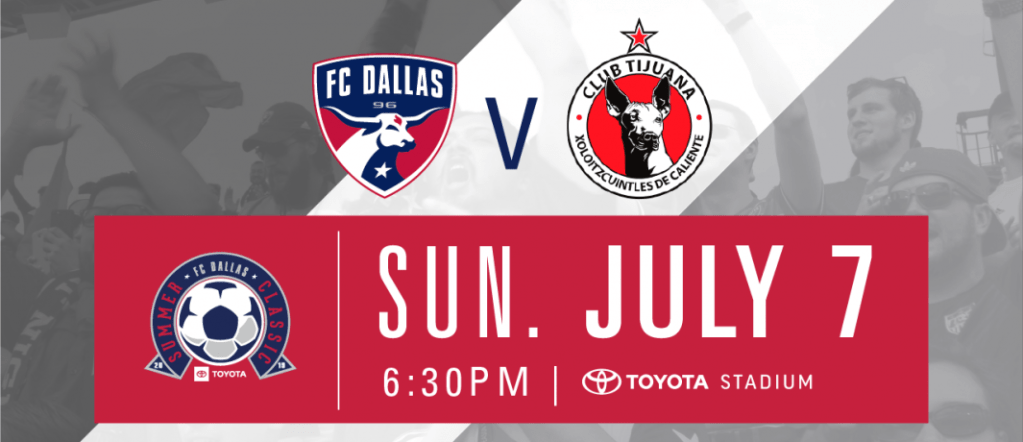
At the end of the practice, Coach Eric pulled Jogo aside and informed him that he would be rostered with the first team on Sunday, July 7th in an international friendly against Liga MX Xolos. Jogo was ecstatic. The game against Xolos would not just mark the return of former FCD Coach Oscar Pareja to Toyota Stadium but also signified Jogo’s renewed opportunity to practice with the FCD first team the following day. These friendlies are not very frequent for FCD. See here.
Friday: practice with the first team:
The chance to practice with the first team will come sooner or later for a lot of young players. It did several times for both Johan and Jogo at FCD. Whenever this takes place in your player’s journey: just have fun and enjoy the moment. Don’t overthink it. The player needs to be himself/herself and not try to do more than just KISS it. Such was the case with Jogo this time and he had an excellent practice that day…
Saturday: the day before the international friendly:
I remember walking over to Toyota Stadium (from the apartment) with Jogo Saturday evening to try to watch the Xolos “open” practice. The main objective was to say hello to Oscar Pareja and watch a few of the players Jogo could be facing the next day. Honestly, we didn’t know whether Jogo would even play or not but we were just embracing the moment. “It’s better to be prepared for an opportunity and not have one than to have an opportunity and not be prepared” – Whitney M. Young
When we arrived at the stadium’s south gate, Jogo identified himself as an FCD academy/NTSC player who would be part of Xolos friendly the next day. Both of the security guards were incredulous (given his age probably) as they refused to let us through the gates since we didn’t have any sort of IDs. I believe they were also charging $5 to watch the Xolos practice but neither of us had our wallets as the idea was to watch practice for only a few minutes and return home to rest. When I volunteered to go get my wallet from the apartment, Jogo said: “Dad, it’s okay. one day, these guys will know who I am without the need of an ID“…so we forewent watching practice…
Game day:
The day went by quickly…Jogo needed to be at the stadium by 3 PM for a 6:30 PM kickoff. Since he couldn’t drive by himself yet and it was a toasty day, mom drove Jogo. Honestly, mom had no idea where to drop Jogo off and she ended up dropping him off by the South Gate. A few fans were already waiting the arrivals of players for pictures and autographs. As expected, hardly anybody (except a young, adventurous kid) asked Jogo for an autograph; I know that was very memorable to Jogo..probably more so than the Xolos game itself. Anyway, as a family, were so out of it and just playing it by ear. A few minutes later, Jogo found out in the locker room that family members could get in for free and requested tickets for us.
With the kind heart he has, he managed to quickly find out how to get us tickets (btw, the T-mobile service in the new locker room was horrendous so he couldn’t get a hold of us). However, at last, he managed to send me a text asking me to pick up 4 tickets at will-call…and on we proceeded to the game. Johan couldn’t watch this game as he was in the middle of DA playoffs.
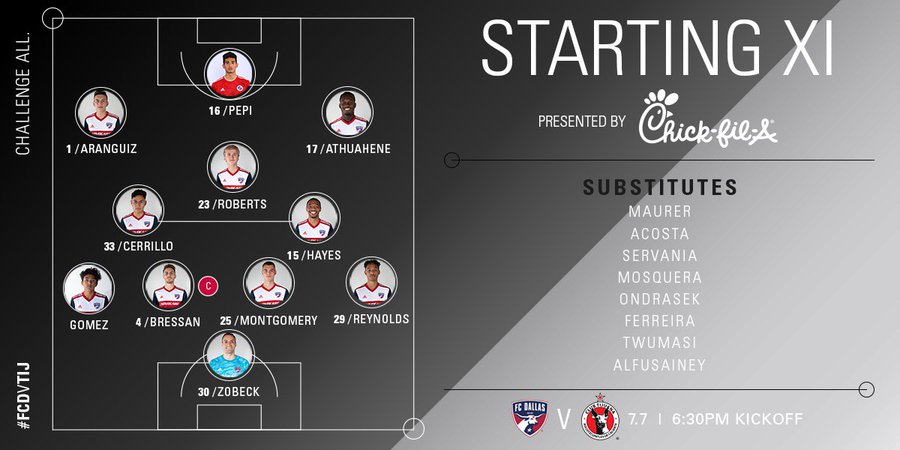
To Jogo’s surprise, he was in the starting XI which was the cherry on top. However, that immediately could translate into nervousness. To be honest, Jogo didn’t look nervous to us; although he later admitted to be just a tad… Thus, after knocking a few balls around during warm ups, he flushed those feelings out of his system and on he went….
The Pablo Aranguiz situation:
Pablo had been very vocal about the current coach’s system where a traditional static #10 doesn’t fit his scheme. Pablo had made his disagreement evident throughout the season and as a result, his playing time had suffered. In this game, Pablo was given an opportunity to play with mostly youngsters but he was evidently not pleased about that either. He was playing as a winger (out of his normal position).
The hot afternoon did not help calm his frustration/anxiety and he had a few border line risky plays where he either tried to do too much (w/out releasing the ball) or was a bit reckless on defense. This inevitably put Jogo (who was defending/attacking on the same side) on a bit of an uncertain situation. Pablo’s frustration (along with Kobra’s) was clear and only lasted until the 40th minute. In an super reckless challenge to a Xolos player, Pablo was deservedly shown a straight red card (yes in a friendly) which forced undesired subs playing a man down. The spirit of the friendly was a bit tainted by that play. Ultimately, Kobra who was supposed to have come in for Pablo never saw any action that day.
The game turned out to be very uneventful overall (0-0) but in the end Jogo got to play against players like Erik “El Cubo” Torres, Fernando Arce, Miller Bolaños, Ariel Nahuelpan, etc. He came off the game at the 79th minute.It had been a good game for him. Next up was the friendly against La Liga powerhouse: Sevilla.
The Sevilla friendly was another level of a game which will deserve its own future post. To conclude this post, we will reiterate our well-being wishes to the entire FCD team hoping that their next activity (on/off the field) comes soon enough and that journey is as successful as playing football. As for Jogo, he is gradually pursuing the next thing in his life. We also want to wish him good luck this weekend on the next challenge he’s embarked on…. seize the day son!!! #theGomezway
It’s that time of the year where families have to make decisions where they want their players to play for the 20-21 season. Unfortunately, with the recent announcement of the US soccer federation controlled Development Academy (DA) league suspending operations, there is uncertainty about where talented young players will play next season (and beyond). Some former DA amateur (non-MLS) clubs have already formed a new league called Girls Academy (GA), other former DA amateur (non-MLS) clubs migrated to the Elite Club National League (ECNL), the rest of the amateur clubs will try out the new MLS Academy league and as expected, all MLS academies will stay in the new league. That said, for the sake of this post, let’s call the next version of the MLS controlled league “DA 2.0” which is boys’/men’s centric.
ECNL Boys league
If your teenager is talented enough to play at the new DA 2.0 level (this is subjective based on who is assessing him/her) but hasn’t joined yet, this post may be for you. Let’s start by stating that as a league, the talent level in the former DA was likely higher than any other national league (at least on the boys’ side). Unfortunately, we cannot (and will not) make that same assumption with DA 2.0 since:
It’s a new league, with a new organization presiding over it.
MLS (the new organization presiding over it) has a ton of experience managing an adult league; however, no experience managing youth development leagues including non-MLS teams. There will be a steep learning curve.
A significant number of important competitive amateur clubs parted ways with DA 2.0 and joined ECNL as soon as DA 2.0 was announced.
DA 2.0 just opened the application process to recruit additional “elite level” clubs. The deadline to apply is July 17th, just over a month before the beginning of the first games.
Most important of all, the pandemic has left very little time for trial and error with DA 2.0. The clock is ticking and very little information has been made public about it.
Last but not least, DA already had its share of improvement areas which automatically become reasons to doubt DA 2.0 robustness in its inaugural season.
Also, it’s worth noting that historically, we have seen some unique individual talent who never set foot in the former DA league (Keaton Parks in Dallas, José Gallegos in San Antonio, etc.). Thus DA 2.0 will continue to not be an “all-best talent” league; however, the great news is that young talented players will continue to find alternate channels to rise to the top and become successful footballers.
In the end, we believe that the most important aspect of youth football development is finding a good/caring coach who fosters individual and team “growth mindset” environments where trust is the foundation of it all and one who creates a “winning” culture. If both of those are present, there’s no reason to seek greener pastures. In our opinion, seeking a more competitive (results based) league/club should be the last resort unless your player is bossing his/her current league. Whatever the reason may be, to each their own…and ’tis the season to look for greener grass.
Thus, as a decision to seek a move to the DA 2.0 (MLS or amateur club) becomes inevitable, there are several factors to take into account. Those typically involve player’s age, the player’s/family’s primary residence, gender, player/family aspirations, ancestry, etc. We will try to break down some of those factors in this post; however, there’s just too much to describe in one post.
Age:
If the player is under 14 years of age, there’s little benefit to jump on the DA 2.0 wagon. From the limited information available, DA 2.0 will have 5 age groups: U13, U14, U15, U17, and U19. The U13, U14, and U19 age groups are optional age groups for all participant clubs.
Thus, it’s possible that these are groups are non-existent in some DA 2.0 clubs (ex. Chicago Fire arbitrarily eliminated the U18/U19 team in the former DA league leaving players stranded looking for another club). Also, it’s entirely feasible that the lack of “mandatory” U13, U14 and U19 teams will force DA 2.0 club participants to inevitably play against local teams anyway to save on traveling costs as DA 2.0 level competition may be too far away. If that is the case, why make a jump to DA 2.0 to play against your former local club (ex. FC Dallas playing Texans 3-4 times a year). If there are local club alternatives at the U13, U14 age groups, we see minimal value to switch leagues/clubs. Instead, stay at your local club and use each opportunity when playing against any MLS clubs to play your best games. The notoriety gained by doing so will yield valuable exposure and MLS teams likely will come down knocking at important age windows. Both Johan and Jogo were recruited by FC Dallas doing exactly this.
If your player is about to be age eligible to any of the older age groups: U15, U17. It’s definitely worth exploring joining the DA 2.0. U15 is the age group when youth national teams are initially formed and international competition officially starts. It’s possible that membership to the DA 2.0 league continues to be the preferred path to youth national teams and thus the “recommendations/connections” by DA 2.0 (specifically MLS clubs) staff could prove invaluable.
On the other side of the spectrum, joining a different club (especially an MLS one) at the U18/U19 level presents ZERO benefits to a player/family. The new club team will usually be comprised of players who have been playing together for several years and the new player will likely feel out of place and spend most of the season playing catch up. Furthermore, if the U19 team is comprised of mostly High School (HS) seniors, they will tend to be more focused on their next life phase/agenda: 1. College football, 2. Professional football path, or 3. Neither. Club football development is typically placed in the back burner by staff as well. Player development stalls in this age group especially in the United States as not all U18/U19 players are ready to play in MLS; and this group of players is normally neglected by MLS sides. Likewise, the gap between U18/U19 players and MLS players is significant and playing opportunities -outside of college- are scarce (ex. U23 teams are not normal). As a result, unless it’s the only choice, switching teams at the U19 level could be VERY detrimental to football development and should be avoided at all costs.
To worsen the situation, at some MLS sides, their satellite campuses along with their solid reputation helps them recruit players throughout the year. Be ready for your player to be challenged when a satellite campus player arrives mid-season of the U19 year. Also, foreign-born players are more likely to arrive at the U19 age group due to FIFA regulations barring U18 and younger player international moves. Caveat: This player movement at the U19 level may be more prevalent at the FC Dallas setup given their reputation and multiple (over 10) satellite campuses
Geographic location:
Once player’s age has been thoroughly factored into the selection of a club, next comes “location”. There are many DA 2.0 clubs geographically scattered throughout the United States. If the player’s residence is near the training facilities of a DA 2.0 club, the odds of the player joining the desired club are magnified. The potential disadvantage of living within a radius from a DA 2.0 MLS club is a concept called MLS territories. Per MLS rules, a player/family who lives within 100 miles from the MLS stadium now “belongs” to that MLS club. Even if the player never plays for such MLS club, the club automatically owns his/her rights. For example, in our local market, if a Solar player, for whatever reason, wants to forego the opportunity to play for the FC Dallas academy and instead wants to play for the Columbus Crew academy, FC Dallas has to “approve” the move (there could a financial cost associated with this approval between MLS clubs depending on age) or the player’s family has to physically move to Columbus, OH for non-football related reasons.
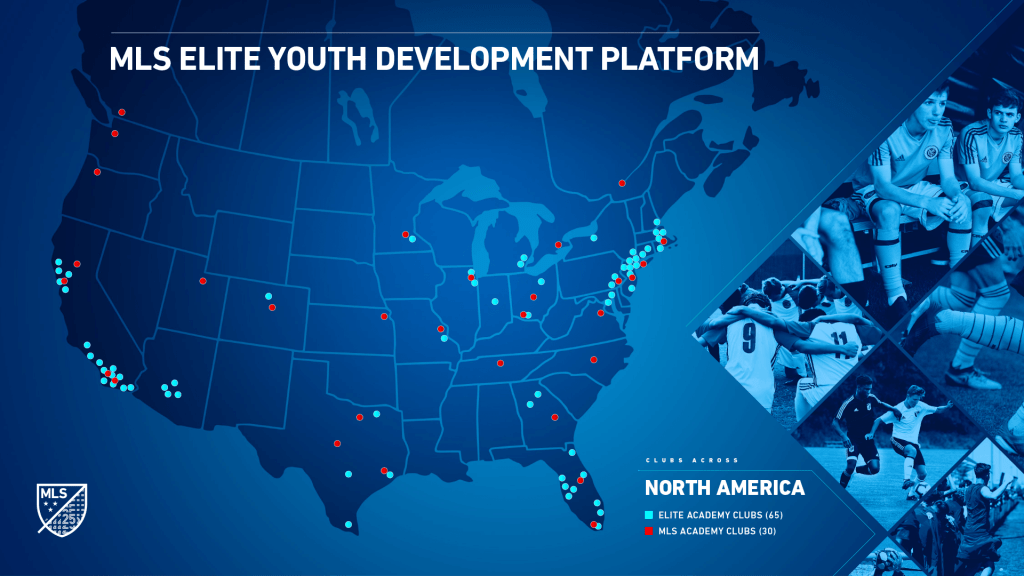
Unfortunately (but maybe a good thing), not everyone lives in close proximity to a DA 2.0 club (see map below). However, in such cases, driving costs start to add up and bigger sacrifices need to be made by the player/family. On the other hand, a huge advantage of NOT living close to a DA 2.0 MLS club is that the player is not constrained by any MLS club rules and can join ANY (MLS or amateur) DA 2.0 club at will.
Geographic distribution of the new MLS League (aka DA 2.0)
Player’s/Family’s aspirations:
Know who you (player/family) are and have a vision based on your core values. Even while pursuing the player’s dream to a pro football career, some (probably most) parents prefer not to separate from their player at a young age. Letting him/her go live with a foster family may not be a viable option either. In some cases, a family move, albeit radical, could be a better alternative. Each family situation is unique and complex; there’s never any guarantees of success. Be realistic about your player’s talents and aspirations. There will always be a level of uncertainty with any life decision but being informed helps mitigate some of it.
Currently, what is certain is that any league in its inaugural season goes through some growing pains. Such will be the case for DA 2.0. If that adds uncertainty to your player’s/family’s situation, it may be best to sit on the sideline and let it mature for a year or two if you can afford it. Believe us, you won’t regret it and it’s possible, your player may continue to love the game in its purest form without the added stress about the uncertainty.
If you do decide to proceed with a move to an MLS club specifically, below you will find some advantages and disadvantages of joining an MLS club vs a non-MLS (amateur) club.
Advantages of joining an MLS academy:
Cost:
Most MLS clubs are low to no-cost for their “academy” teams; therefore MLS clubs pose a significant financial advantage over most amateur pay-to-play clubs which normally do not have a revenue stream through a professional team. However, there are some amateur clubs whose academy is low to no-cost such as Cross-Fire and Rise but they are part of the minority. Conversely, in the former DA, there were MLS academies that were pay-to-play (DC United and Minnesota United FC).
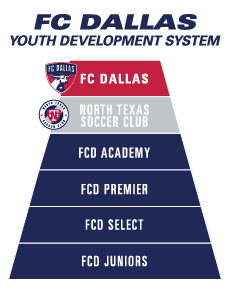
In the Dallas Forth Worth (DFW) area, the MLS side has both: FC Dallas youth teams (Juniors, Select, Premier) which are pay-to-play and low cost FC Dallas academy teams as part of their development model (see figure below). The many (over 200) FC Dallas pay-to-play teams serve a unique purpose: to subsidize the FC Dallas academy teams. This may or may not be the model at other MLS sides.
Some local parents are drawn to the FC Dallas name for their U13 and U14 players and unfortunately find themselves paying thousands of dollars a year for no additional developmental benefit (beyond first team discounted tickets and a permanent training ground). In the figure above, the bottom three categories are pay-to-play ($3k – $3.5k+ per year) teams normally higher than their local amateur club fees. The FC Dallas Academy category has minimal costs but it’s worth noting that it’s not easy to either: 1. Make the FC Dallas Academy teams or 2. Be promoted from any of the bottom three categories to the FC Dallas Academy teams. Honestly, if your player has spent more than two consecutive seasons in any of the bottom three categories, there’s almost zero chance he/she will ever be moved up permanently to the FC Dallas Academy team.
To be fair, the FC Dallas Academy category (or similar for other MLS clubs) is almost fully funded nowadays; however, it is very prohibitive in terms of flexibility to play other sports (school or not), and requires a significant amount of traveling with NO real added benefit at the early ages. In fact, the increased travel, burned out a lot of young footballers who eventually selected other mainstream sports by high school age. Thus, it is fair to say that the densest concentration of talent is not always playing for MLS clubs (for many potential reasons).
Talent:
There’s a possible misconception that the MLS clubs monopolize most of the local talent. While that may be very true in some geographic areas, it is not so much in areas like North Texas, North/South California, etc. DFW is so big and rich in football talent that one MLS team is unable to accommodate the abundance of talent in the area. Therefore, there are a multitude of very competitive DA, ECNL, classic/lake highlands league football clubs that have historically established themselves as great alternatives for development environments that are excellent (if not better) than FC Dallas. If one considers all age groups in any football academy, we agree that the MLS club should have a higher concentration of talent but a family should focus on the specific age group their player wants to join. Below, we analyze and compare a couple of age groups from local teams vs. FC Dallas:
Looking at recent statistics, in the just truncated 2019-2020 DA season, both the Solar U16/U17 boys and girls teamsachieved superior results than the FC Dallas U16/U17 counterpart teams. One could argue that specific sample is an outlier, or that it supports our theory of a fairly talent distribution among clubs in our area, or whatever other pretext. We tend to discredit the outlier theory because in the previous season (2018-2019), both boys and girls Solar teams were crowned national champions in the same age group eliminating the corresponding FC Dallas U16/U17 teams in the process. This is not unique to North Texas only; California and Colorado are other markets where amateur academies are stronger than their MLS counterparts.
Training frequency:
MLS academy clubs train more frequently than amateur clubs. While FC Dallas has the resources to dedicate to daily training; other amateur clubs do not. Repetitions are essential for the more advanced players; however, the risk of burnout is always present. Normally on the boys side, MLS clubs will communicate with the player/family by the age of 15/16 as to whether they have any professional plans for the player or not. If they do have plans, the player should stick around and benefit from the more frequent practices and other perks (practice with the USL/first team, etc.) the MLS side has to offer. Otherwise, the player needs to evaluate if the “juice is worth the squeeze”. Will sticking around the MLS side with more frequent practices help him/her with other future options like college, playing abroad, etc. Would he/she rather forego sacrifices associated with playing for an MLS team and instead join an amateur club that allows him/her more flexibility to do other extra curricular activities (ex. play other sports in HS, discover other talents, etc.) and still be in a competitive team?.
Opportunities:
Development opportunities (ex. Generation Adidas -GA- Cup, Youth National Team -YNT- recommendations) at an MLS club are going to be typically better during the 17 and younger years than for amateur clubs. At the U19 level, players tend to mostly just go through the motions as they have either already secured college placement, reached some level of professionalism with the club, or are in the process of planning trials abroad as a path to professionalism. Indifference at the U19 age group is rampant especially from MLS sides. Locally, the inception of the NTX SC affiliate, has seen a focus shift from the U19 age group to the USL-1 side. There will only be a handful of U19 players who will benefit from opportunities such as higher level training but unfortunately, the majority of players not selected for additional development opportunities are left behind with little motivation to be in the program. The FC Dallas U18/U19 saw an exodus of key academy players this past season…
Thus, it’s at 17 years of age and younger where MLS clubs normally offer more exposure to national and international tournaments; those however, will come at a high cost whether the player plays for an MLS club or not. International tournaments are normally funded by parents exclusively in both setups. However, amateur clubs very seldom offer these opportunities as families are already shelling out a lot of money to pay for the academy team. Furthermore, MLS sides also offer exposure to YNT opportunities. However, with the federation announcing that most YNT age groups are frozen for the remaining of 2020, that may factor into a “rushed” decision to join (or not) an MLS team for the 20-21 season.
Disadvantages of an MLS academy:
Gender:
Historically, MLS academies have been gender biased towards boys/men. Some (ex. LA Galaxy) have gone as far as recently cancelling their girls/women academy program. Thus, if your talented player is a female and cost is not much of an issue, MLS sides may not be the best choice for a move. First, unlike the boys’/men’s side, MLS clubs do not offer a clearer pathway to professional fooball for girls/women. Also, most MLS clubs have very little experience overseeing girls’/women’s programs and see limited financial gain from supporting that program; that’s why most MLS sides de-prioritize their girls’/women’s program.
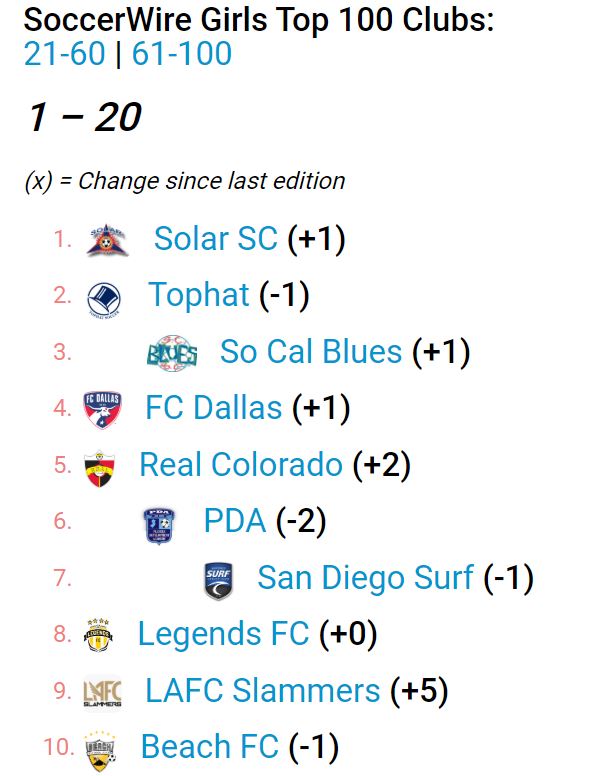
Also, your local market may offer better club alternatives than the MLS club. In the DFW market, Solar (and sometimes Texans, D’feeters, etc.) offers hands-down a more established growth environment and more competitive teams for girls/women than FC Dallas. See this past seasons’ results at the U17, U16, U15 levels. Also, see this recently published chart (you can go back many months or observe the same trend in multiple publications ex. Topdrawersoccer):
There’s also far more female players being called up from Solar, Real Colorado, Tophat and other amateur clubs to youth national teams than there are from FC Dallas and other MLS sides.
one common misconception about the FC Dallas academy teams is that they are fully funded and that is not the case. Depending on the age group, the FC Dallas academy teams have at least one mandatory international trip (Mexico) each year (to play friendlies) which costs over $1,500. Furthermore, each family is required to raise funds for these mandatory international trips. To be fair, these expenses do not remotely compare with the annual costs associated with joining any of the other pay-to-play local amateur academy clubs which at least cost over $3k just for coaching fees and uniforms (no international tournaments). However, if money is not as much of an issue to your family, try to stay in the pay-to-play amateur club (ex. Solar) for as long as possible if your player has any real chance of becoming a professional. Why is that? Read below…
Training compensation:
If your player has the talent to play professionally (this is very subjective), try to absorb the academy costs in a pay-to-play system for as long as possible (or seek scholarship opportunities) because once your player joins the MLS club, the club can claim the right to “very steep” training compensation. Training compensation is defined as the price tag on a player by the MLS club (on an annual basis) for having “developed” the player during the formative years. The compound amount of money piles up significantly over the years and it can become a deal breaker when a non-MLS club is interested in your player because the price tag is too high. Currently, this price tag is non-existent for most non-MLS (amateur) clubs. Read more about it here. Our recommendation is to shorten (if possible avoid) the MLS academy environment for as long as possible to minimize training compensation costs by joining academy amateur clubs (ex. Barca Academy, Solar, Cross Fire etc.).
Each decision to move to the new DA 2.0 league (MLS club or amateur club) must be carefully evaluated and thought out. There’s no one size fits-all solution and much less “perfect situation”; inexorably, sacrifices will have to be made by player and families. However, make the most informed decision by gathering factual information, talking to other parents, coaching staff, and most importantly, your own player. In the end, the decision should be made as a family with the player’s input being the most critical. Once a decision is made, don’t look back on it. Pursue it with a passion; “enjoy the ride” and something is to be gained out of ANY outcome.
Good luck and please reach out to us if you have comments/questions.
It’s with mixed feelings that we write this post after learning that the Development Academy (DA) program suspended operations indefinitely. There’s a glimpse of hope as a successor program was announced by MLS almost immediately after the news broke out; however, the lack of details disclosed on it could be uncertain for current and future families seeking a new football league/team/club. Thus, at the writing of this post, the uncertainty of the new program (let’s call it DA version 2.0) prevents us from having an objective opinion about it. Therefore, we will focus on the known and now defunct DA program (DA going forward).
As some would say, DA was not perfect but its successor won’t be either. It’s human nature to complain about many things in life as a way to try to enhance/optimize them and maybe for excellent reasons; sometimes that’s how we drive change. Like everything else though, there isn’t a solution that fits everyone’s needs and DA was definitely in that category. Since DA was costing families money (lots in some cases), parents (and players) would naturally feel entitled to more value than what perhaps they were receiving. Beauty is always in the eye of the beholder.
In our case, we inherited the DA setup by virtue of having joined the FC Dallas (FCD) environment prior. Therefore, the benefits or disadvantages of being a member of DA were somehow diluted by virtue of being with the club first. DA did a lot for the Gómez boys (more good than bad). In the end, it gave them a more realistic platform to “the dream” which they didn’t have before. For us parents, it provided countless memories.
San Diego 2019 playoffs
Neither one of the boys will play in DA v2.0 anymore so why do we care? Easy, we care because one of the objectives of this site is to share information for football families. We would have liked to have all this information available when we were at crossroads with some of these decisions. Ultimately, we also want the betterment of the sport in this country. Equally important, we do have a daughter who plays the sport at a competitive level. Note: We typically exclude her from most football related posts for two reasons: age and love for the game. Although she’s probably the most technically gifted of all the three siblings, her love of the game isn’t quite there (yet) AND in this particular case, she never experienced the DA setup given her age. Below, we try to break down some of the pros and cons that DA (from an FCD parent’s perspective) provided for us. First the pros:
Training frequency:
When Johan joined FCD, the club already participated in TEPAL (Texas Pre-Academy League), a US Club Soccer sanctioned league. For this league, FCD required training five times a week (as opposed to twice a week with Johan’s previous club: Solar). The increased training frequency was instrumental in Johan’s development; it soon increased to six times a week during his U14 year (when his team -01s- joined DA). Although we had to commute to Frisco for training (45 miles – 90 minutes with traffic- each way), training was worth the extra time and miles. Johan was being coached and evaluated by not only FCD staff but U.S. Soccer local scouts for inclusion to U.S. Soccer local/national training centers and camps. Jogo, two years later went through the same process except, he never played TEPAL.
Travel:
Our traveling was not limited to/from practices. In TEPAL, the team traveled for games twice a month within the the state of Texas and would play against local clubs (Andromeda, Solar, Texans), Houston (Dynamo, Rush), San Antonio (Classics Elite), and Austin (Lonestar). Once the team moved to DA, most of the TEPAL teams joined DA and new ones (out of state) joined our conference. As a result, the travel now included Colorado teams (Rush, Real Colorado, Rapids) and Sporting Kansas City. In TEPAL, all the out of town trips were via bus; once the team started traveling to Colorado and Kansas, the team started flying. Similarly, DA provided the opportunity to attend two (fall/winter) and (spring/summer) showcases to play different teams from across the nation. At the time, the spring/summer showcase always took place in Frisco which was convenient. Additional showcases included futsal which both boys loved.
FCD vs Lonestar futsal showcase
Competition:
The competition in TEPAL was very good. In fact, some of the best competition the FCD 01s ever faced was out of San Antonio (Classics Elite) which unfortunately never made it to DA. In the end, most of these clubs eventually joined DA but some good talent was definitely left behind. The state of Texas is loaded with talent but when DA added “neighboring” out-of-state clubs, league competition definitely improved. Also, the showcases were always packed with parents (at the younger ages), scouts/agents (at the older ages) and of course, coaches/players. A football social networking heaven. These showcases offered the opportunity to play equally talented teams from across the country. In their first year, the FCD’s 01 DA team, ranked #1 at the time, played LA Galaxy ranked #2 at the time (rankings are always subjective). In an extremely competitive game FCD defeated LA Galaxy with Johan scoring this goal:
The FCD 01 DA would go on to record the first (and only) undefeated DA season in the club’s history. Anyway, all this travel (at FCD) had ZERO cost for the families/players.
Cost:
In TEPAL, the team traveled by bus a couple of times a month and parents paid FCD for the trips (about $60/player). In DA, that was no longer the case for either bus or airplane trips. The coaching, the uniforms, the fields, and the travel fees (associated with DA) were all covered. The only cost associated with watching Johan play was the expense incurred as a family to attend the games (and filming). Even then, when we couldn’t attend the games, all the games were recorded or streamed (or both).
Games/Film:
When the games were not streamed, all it took to watch DA games (albeit delayed a few days) was a request to the team manager. For the Gómez’s, DA made it convenient to watch the boys’ games, we no longer had to attend games live and much less record the games ourselves. The addition of the DA games helped enrich our YouTube channel: theGomezway. Most of that content is unlisted. As a side note, we heard this season FCD realized that families were using these tapes to showcase their players and the requests for film now require academy director approval. It makes some sense; honestly, we were always given full access to video without any restrictions. We are extremely grateful for that. Either way, the exposure by streamed or recorded games provided yet a different platform for additional player publicity; some parents/families eventually realized its huge impact.
National team exposure:
Whenever the DA games (showcase mostly) were streamed, the number of viewers was significantly large. In our case, we learned of agents, scouts, remote family members who were able to view, enjoy, and assess the boys’ performance thanks to these streamed games. Similarly, the DA’s database of recorded games could easily be accessed by some of these professionals interested in youth games. In the end, it wasn’t necessary for families to build a football library as the film was easily accessible online. The DA showcases were open season in terms of talent for national team scouts who were always in attendance. It was partially at those showcases where both of the boys gained more attention with the national team staff. Thank you DA and FCD!!
Recognition:
As you can read from above, DA required a lot of player (and family) commitment (cons below). However, the league was setup to reward individuals and teams (with end of season awards). The boys were recipients of several accolades (team and individual) during their DA membership and those incentivized them to continue improving. The one below is probably the most significant as both were on the same award simultaneously. The effects of a pat in the back for anybody (more so for a young player) are underrated. Words and actions are very motivational.
Not everything was rosy with DA. For almost every advantage I listed above, there’s at least one counter-point. Here are some of the cons:
Training frequency:
Although it was very beneficial to train more frequently, the body (without proper care) eventually feels the wear and tear which normally leads to more injuries. Unfortunately, most of these DA clubs were not setup to provide the medical attention needed for these players who underwent a long season with a rigorous training regime. Medical care was typically left up to parents. In our case, we always tried to be very proactive regarding the boys’ health and nutrition and thankfully, neither struggled much with injuries. Ultimately, it IS a contact sport and that can’t be prevented. There were other players who were not as fortunate. Medical negligence influenced their performance and in some cases cut their football careers short. To be fair, the six times a week training wasn’t necessarily a mandate by DA but the organization didn’t frown upon it either. For an organization that emphasized player safety, training six times a week never seemed to be scrutinized and/or challenged.
Injuries:
At the younger ages (U15 and below), DA rosters are usually not impacted as much with injuries (equivalent playing time plays a role). Also, the game is more pure than at the older ages where street smartness and hormones comes into play. Statistically, the frequency and severity of injuries increases as players age until they become professionals. Player injuries ultimately impact the quality and sometimes the results of matches. By the end of the season, making a run for the DA championship seemed more of a battle for the survival of the fittest (deeper benches) than the team playing the better football. Johan’s team made two of the last three DA finals. Injuries, as part of the regular game as they may be, in some cases became a huge financial burden on families and unfortunately, DA (or the club) didn’t make it known to families that secondary medical insurance was available to assist with medical costs.
Cost:
At FCD, cost was minimal to play DA but that wasn’t the case at other local clubs. We can’t imagine having to pay for coaching, fields, uniforms, travel, etc. If, in addition to the regular season fees, one adds preventive medical or injury costs, the expense to play “the beautiful game” skyrockets and justifiably some strongly criticized DA.
National Team Exposure:
Kuddos to national team staff that was always present at showcases. Historically, looking through youth national team player selection for the different age groups, there seems to be a higher density of selected players from MLS based academies. There could be many reasons for that depending on who you ask, some may even go as far as saying that talent is higher at MLS academies. In our opinion, non-MLS talented players do not always get as frequent assessments from youth national team staff as MLS based players. This may not necessarily be a ding against DA but a tendency indeed. We will be writing a post on this subject (Is a player better off joining an MLS side?) in the near future.
Length of season:
DA games started in early September and ended in early July of the following year (for those teams going all the way to the final four). However, training at FCD started in late July leaving only two weeks of vacation in the summer and two weeks in the winter. Also, FCD usually had two international trips (outside of the DA season) to México per year. These mandatory trips were not club-subsidized (required fundraising) and occurred in early August and another one in mid January. The trips were fun, competitive, but didn’t allow proper recovery of the young athlete’s growing body. It’s a very long season that leaves limited time for anything outside of football. DA had some participation rules but not a single rule about a mandatory rest period.
School sports:
DA had a “rule” (albeit soft) that players could not participate in school football (middle and high school). Personally, this may have been the main drawback for our boys. Both boys attended a private school prior to joining FCD. In that school, they could have very well excelled playing football (and other sports) as it’s not public-setting competitive. Early in their teenage years (more Jogo), they had to forego playing with school friends and abandon school sports due to potential saturation. In hindsight, some would say it was the correct decision. Ironically, both boys now get to see how their younger sister excels in every school sport she participates in and maybe that plants a seed of uncertainty about the “what could have happened if I….”.
I could go on listing more pros and cons but this post is already long. To summarize it, I would say that there isn’t a perfect fit for every football family. As you gauge what environment is best for yours, do your due diligence. Do what fits your family the most and without regrets go all in with the decision. We did that, and although it wasn’t perfect, we would do it again in a heartbeat. Please continue to reach out should you have any questions.
BTW, Johan and friends continue chumchatting. This week’s guest was the famous two time national champion Clemson “American” football coach: Dabo Swinney. Give them a listen.
It is never easy to say good-bye (Instagram icon above) to longtime friends and teammates under any circumstances, but in the end, one must move on to pursue different opportunities when the current setup is no longer a viable option. We are not aspiring to be pioneers, insurgents, or anything of that sort but we know many families are currently on the same boat. For those of you right in the middle of it, know that there are options, but the risk/reward ratio is high. Odds are meant to be beaten; we are ALL in now. Also, know that we are in it together…and in the end, no matter what happens, the friendships will endure all adversities.
Jogo alongside a natural leader on and off the field. Pure class (01.11.20)
As Jogo begins his transition from an important stage of his football career to a new chapter of his life, Johan sets foot again on a soccer field for a light jogging and passing session. Baby steps they say; it was an excellent day today indeed. We are grateful. God’s timing is always perfect.
Johan grinding at Olival 01.20.20
In other news, Johan and his ex-teammates started a new project (click on the YouTube icon below). If you find the content useful, funny, witty, or silly, give them a like or subscribe to the channel. It’s entertaining but what can I say? I am a bit biased.
The tournament did not start well for the team. However, anybody who knows a thing or two about out of town soccer tournaments knows that playing the host team for the first game is always challenging. You end up playing against their crowd, their fields, their weather, their rules, etc. You then factor in the long flight 24 hours earlier, returning from the holiday break, a fragile roster with depth issues and all bets are off. I must say, the scoreline (1-3) for the first game was deceiving. For those of us who watched the game, it had its moments of decent FCD soccer with SIMA gold elite (SIMA from here on) playing very direct and using their speed to create the more dangerous chances overall. It is important to note that going down 0-1 in the first five minutes of the match (on top of my pretexts given above) against a top quality opponent is like ice-skating uphill trying to come back. At the end of the match, the boys and the coaching staff quickly shifted their focus to the second game…
The quality of soccer improved in the second game against Valencia and the coaching staff finally learned their rules (ex. unlimited substitutions and reentries permitted). Furthermore, FCD did not fall victim of overconfidence and there were no early forced substitutions due to injuries (incredible player management by the club on the eve of a U20 MNT camp). Also, Valencia plays a different brand of soccer so it was easier to stick to a ball possession plan. Overall, Valencia was supposed to be the opponent to beat but my guess is that this was not their “A” team. I find it interesting that a Spanish team would fly 11 hours to come play a “meh” tournament in the middle of their season (according to their schedule, they are supposed to play a regular season game in a few hours). Anyway, the final score was a tie with us conceding a soft goal in the winding minutes of the match for the second consecutive game. We really could have used those two points to secure a smoother pathway to the championship game but hey, live and learn…
Given SIMA’s dominance in their first two matches, it was a “do or die” situation for FCD’s third game against Esporte Clube Jacuipense . On paper, the Brazilians appeared to be the least known and most flexible opposition and that was indeed the case. FCD had the majority of the opportunities with our GK and defense having very little to do throughout the game. FCD went up on the score in the first half with a PK and closed the deal in the second half off of another set piece. 2-0 was the final score and that in conjunction with the continued dominance of SIMA (undefeated in the first three matches) setup a must see rematch for the “championship” game between SIMA and FCD.
Keeping the score tied at zero in the first 20 minutes of the championship game was of utmost importance in order to start playing our game (possession and mental); however, that was almost achieved until a soft PK call was given to the host team around the 10th minute. After going down 0-1, our team realized that PK calls were going to be soft and we ended up benefiting from two in our favor; one of our players is a master of that art. The game quickly turned more intense and aggressive with players on each team earning a red card and some yellows earned in the process as well. This was a battle not just against SIMA, the crowd, the fields, but their long winning tradition. SIMA had never lost this tournament in the 9 years they had organized it. Good job players and staff for the collective and individual hardware…it was a “good ride”. Thank you.
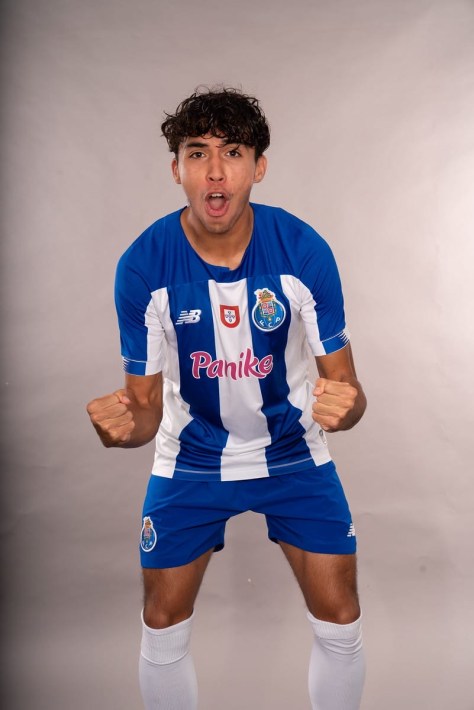
In the midst of uncertainty in some aspects of one of the kids’ football future, it’s great that the other Jogo received excellent news today. Let’s see if anything materializes. As the aphorism would say: “Stay tuned until then”. Good luck against Philly tomorrow Jogo.
Misinformed decision by the club today; we don’t understand it but respect it regardless. We keep our heads down, working, and enjoying every minute we get to play and/or watch the beautiful game. We go to the Showcase and perform. No questions asked…for now. Time will tell…
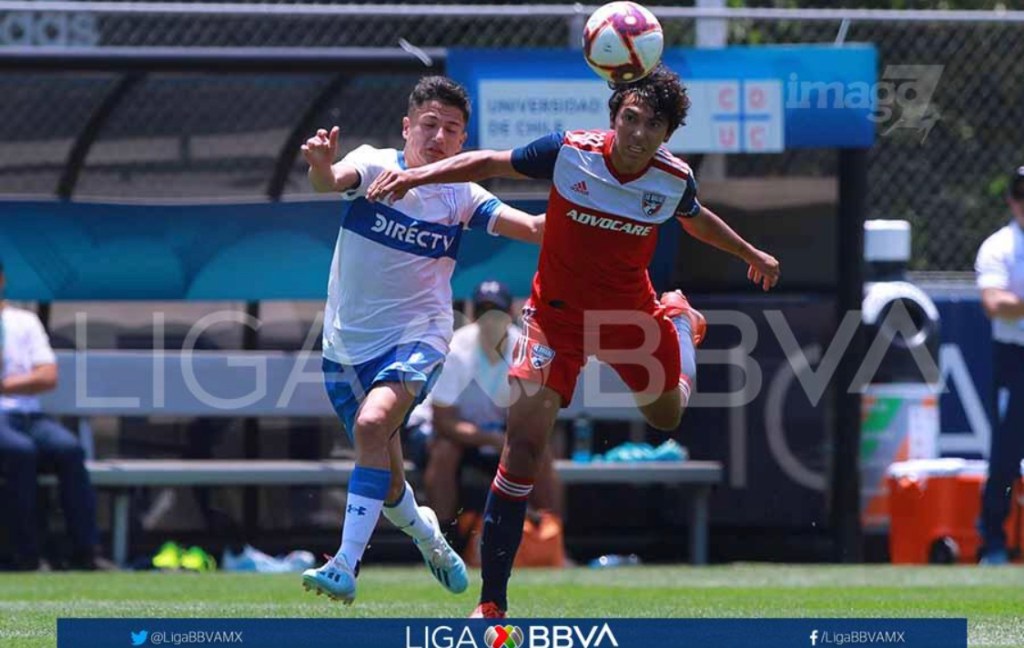
Jogo playing against Universidad de Chile Sub15 Internacional courtesy of LigaBBVAMX (08.15.19)
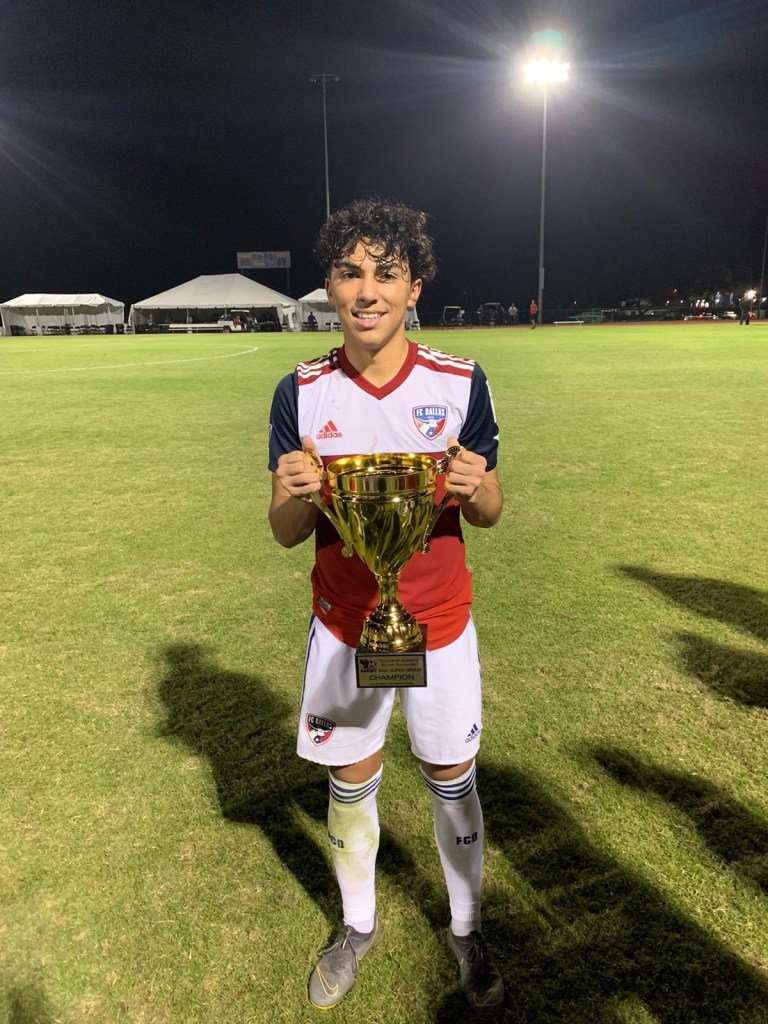
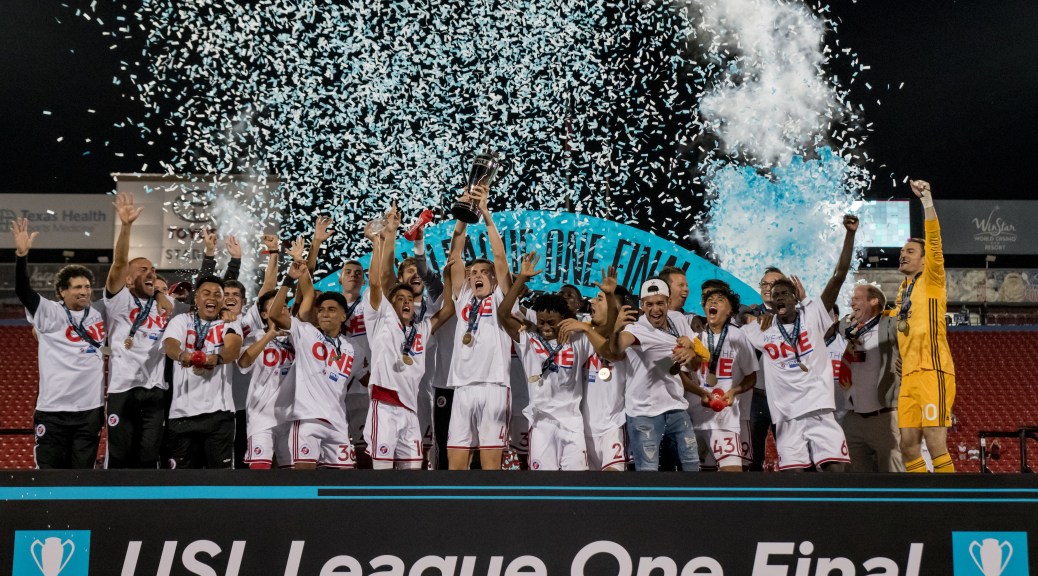
Way to go kiddos. Jogo, your participation during the season, but more so, in the championship game proved instrumental to the victory. The hockey assist resulted in the winning goal and the save in the second half counted for at least a goal and a half. Congratulations.
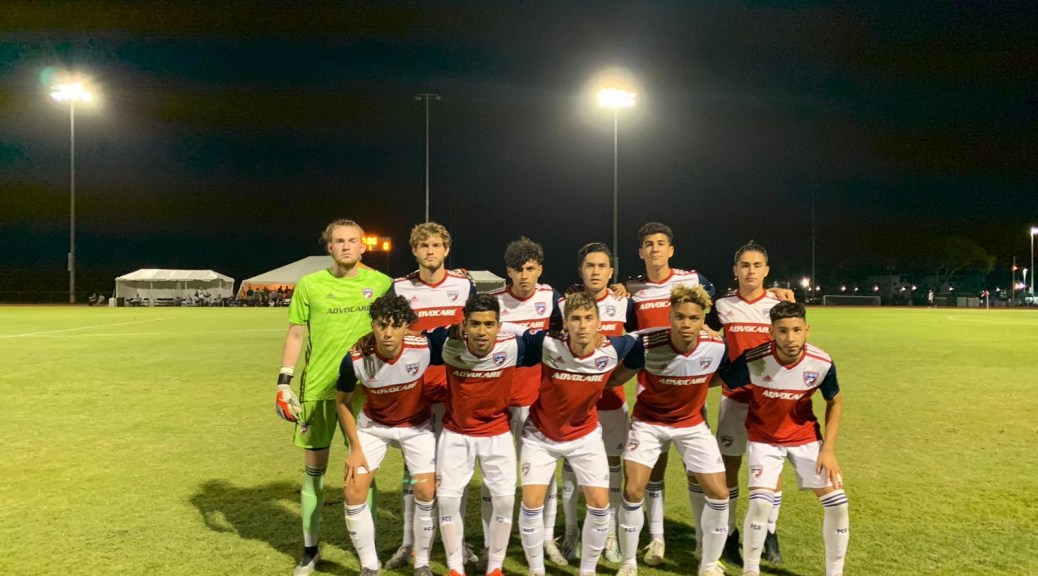
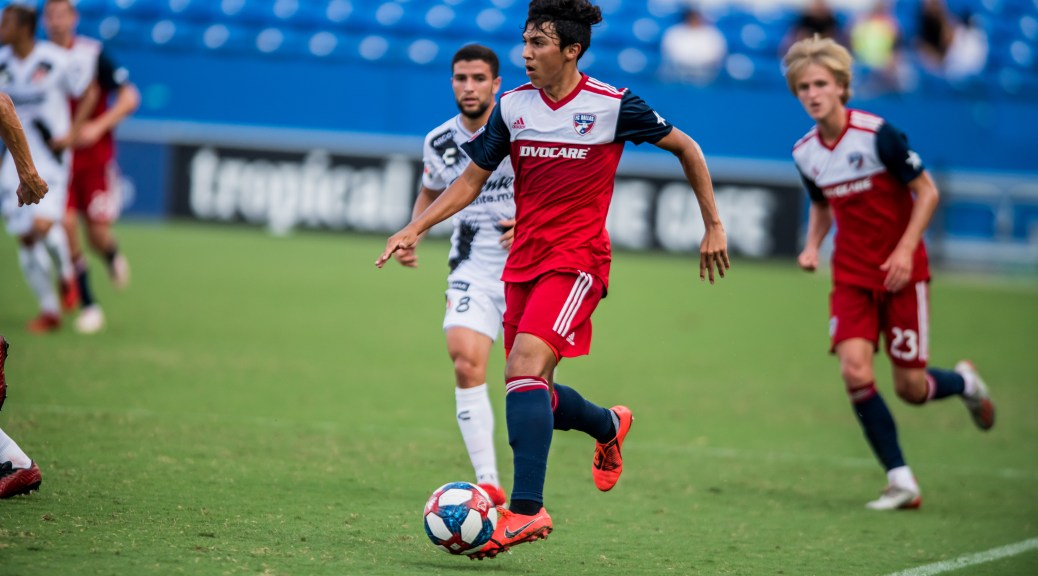
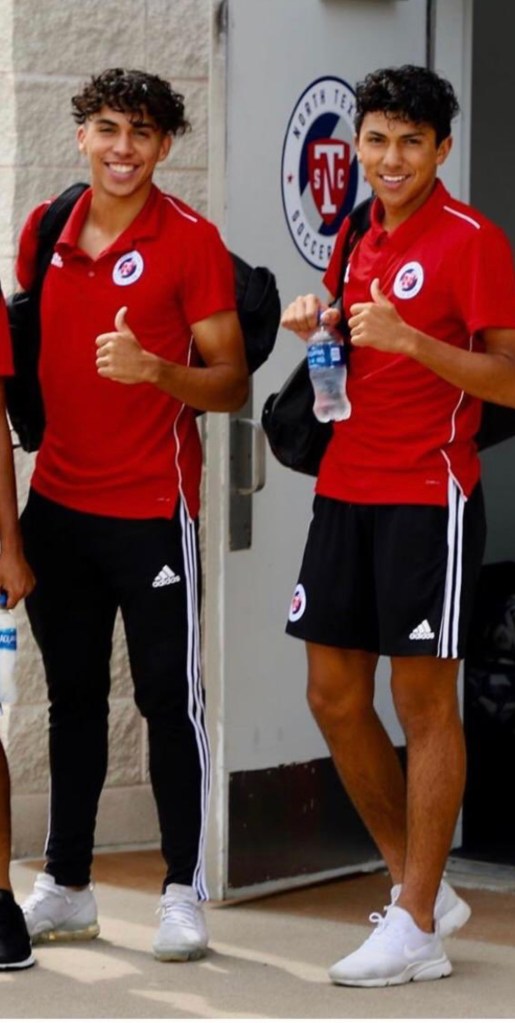
Overall, the family’s proudest moment of the season came the day when both Jogos shared the field in Toronto. The family will eternally be grateful to the FC Dallas organization for these opportunities provided to the boys. Congratulations to both of you on a successful season. #TheGomezway.
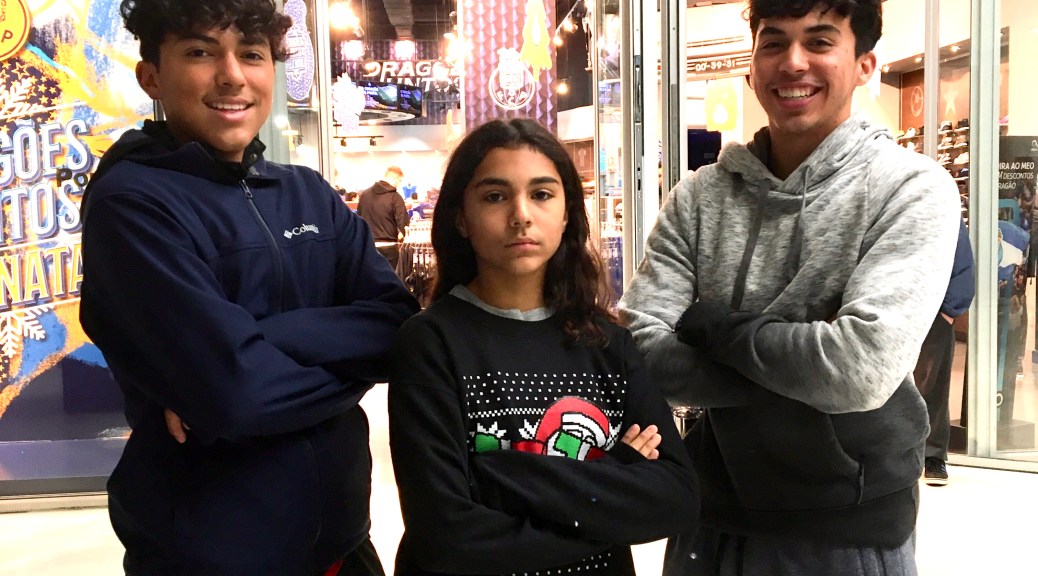
Getting ready to fly to Toronto for their first NTSC game together. Image by North Texas Soccer Club













 #TheGomezway