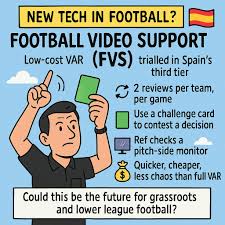
FVS is a simplified, lower-cost video-review system designed to give referees a way to review “clear and obvious” match-deciding incidents without the full technical, staffing and camera requirements of a traditional VAR center. It is not VAR with a different name — it’s a different operating model intended mostly for competitions that can’t run full VAR.
Why FIFA introduced it
Accessibility and cost: many member associations asked for a more affordable way to use video to support referees (fewer cameras, no permanent VAR room and a smaller support footprint). FIFA developed FVS to meet that demand.
Control and simplicity: FVS aims to keep the referee at the center of the decision and to provide a framed, limited review process that’s easier to deploy across youth tournaments and lower-budget leagues.
Using technology to support referees around the globe 🖥️⚽️
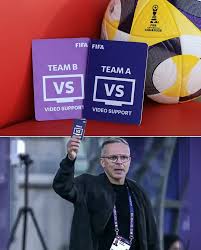
Football Video Support is the cost-effective alternative to Video Assistant Referee, implemented for competitions with limited human and financial resources. pic.twitter.com/azMhuegPIL
While FVS was initially tested in the Spanish Futsal League (Primera División de Futsal), the first top-flight domestic association football league to fully adopt and debut the system was Spain’s top women’s league, Liga F (also known as the Liga Profesional de Fútbol Femenino) in the beginning of its 2025-2026 season (specifically, in September 2025). Prior to that, FIFA trialed and used FVS at multiple youth tournaments:
Blue Stars / FIFA Youth Cup (trial).
FIFA U-20 Women’s World Cup (trial in Colombia 2024).
FIFA U-17 Women’s World Cup (used in 2024 tournament and being included in subsequent youth tournaments).
More recently it has been used at FIFA U-20 (Chile) and U17 (Morocco) youth tournaments and trialed broadly.
What FVS reviews (which incidents can be challenged)
FVS is limited to the same four review categories normally associated with VAR protocols:
Goal/no-goal (including offences in the build up, offside where applicable, handball).
Penalty/no-penalty.
Direct red card incidents (serious foul play, violent conduct, DOGSO, etc.).
Mistaken identity when a referee books/sends off the wrong player.
How FVS works (step-by-step, matchday)
Challenge method: unlike VAR, reviews are initiated by the coaches — each coach gets a limited number of challenge requests (typically two per match; one extra in extra time in competitions that allow it). The coach must hand a challenge card to the fourth official immediately after the incident to trigger a review.
Referee review: the referee goes to a pitch-side monitor (or another on-field review area) to view replays provided by a replay operator using available broadcast/camera feeds, then makes the final decision. There is no separate VAR team continuously monitoring all incidents from a remote control room.
Technology footprint: FVS is intentionally lighter — it generally relies on broadcast camera feeds or a small number of dedicated cameras and a local replay operator rather than a fully equipped VAR control room with many specialist cameras and staff.
Key differences vs VAR (at a glance)
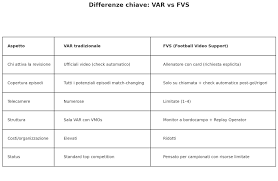
Initiation: VAR can perform “silent checks” and proactively monitor incidents; FVS only reviews when a coach requests a review (challenge).
Staffing/tech: VAR requires a full VAR room, specialist VARs and often many dedicated cameras. FVS needs fewer cameras, a replay operator and no continuous remote video-referee team.
Scope and coverage: VAR continuously watches all key incidents and can intervene; FVS is limited to coach-triggered, narrowly defined reviewable events. That reduces coverage and the chance of automatic correction.
Final authority: in both systems the on-field referee has the final decision after viewing replays, but FVS places more emphasis on the referee doing the review themselves on the sideline rather than relying on a separate VAR team recommendation.
Advantages of FVS
Cost and accessibility — much cheaper to implement, so more competitions (youth, lower leagues, smaller federations) can use video support. That’s the main strategic advantage.
Simplicity — fewer moving parts, simpler procedures and less technical overhead make roll-out faster.
Empowers coaches — gives coaches a structured way to challenge decisions (adds a tactical and accountability element). Some coaches and organizers like that involvement.
Keeps referee central — the on-field referee reviews evidence directly, which supporters say preserves authority and transparency.
Disadvantages / risks compared with VAR
Limited coverage / accuracy — because FVS usually uses broadcast feeds and fewer cameras, very tight technical calls (e.g., marginal offsides requiring frame-by-frame multi-angle geometry) may be harder or impossible to resolve as precisely as with full VAR systems that use multiple dedicated cameras and calibrated offside technology.
Interruptions & tactical misuse — coach challenges stop play and can interrupt momentum; coaches may “game” their challenges (save them for late in the match or use them tactically). Some coaches and observers have raised this concern during trials.
Fewer proactive corrections — because FVS waits for a coach challenge, clear errors that nobody challenges (or situations where coaches don’t want to burn a challenge) can remain uncorrected — whereas VAR’s silent checks can catch incidents that the teams didn’t notice.
Consistency & pressure on referee — the on-field referee must perform the review and deliver the decision in front of teams/fans; that creates different psychological pressures versus VAR where a separate VAR team can make or strongly recommend the call remotely.
Early data & reception
Reports from tournaments and media indicate FVS is being used regularly in youth tournaments and early trials. Coverage from trials shows a modest number of reviews per game (e.g. some reporting cited an average around ~1.4 interventions per match in certain trials, with a large proportion confirming the original decision) — but opinions are mixed: some refereeing authorities and coaches welcome the lower cost and clarity; other stakeholders worry about interruptions and possible tactical use. FIFA and IFAB are monitoring trials and collecting data before deciding on wider roll-out.
Practical example (how a coach challenge looks in real time)
Coaching staff thinks a referee missed a clear handball leading to a goal.
Coaching staff immediately gives the fourth official the challenge card. (If the ball is in play again, the challenge must be given immediately — the Laws require that a decision be changed only before play restarts.)
Referee stops play if necessary, views replays on the pitch-side monitor supplied by the replay operator (using available camera angles), then signals and announces the final decision to the teams and stadium.
Bottom line — when FVS makes sense
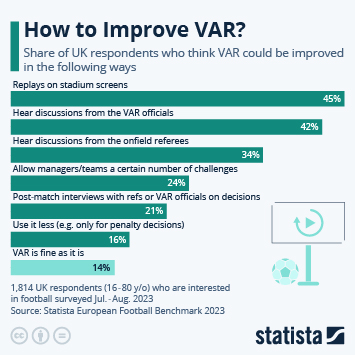
FVS is a pragmatic compromise: it’s not meant to replace VAR in elite competitions that can afford full VAR with advanced camera systems, but it does give many more competitions a practical path to use video review for big, match-deciding incidents. For youth tournaments and leagues with limited budgets it’s a realistic step forward; for top professional leagues the trade-offs in precision and continuous monitoring mean many will continue to prefer full VAR — at least until FVS matures or hybrid models appear. It is worth noting that if for whatever reason the FVS technology malfunctions, the match will continue without the system after both team managers and captains have been informed. As for VAR, there’s always room for improvement as depicted by a survey conducted in the UK.
If you would like us to break down any other football topics, please reach out at info@thegomezway.com
Throughout the years, I have witnessed nearly every type of substitution strategy there is in the book of football (aka soccer). One doesn’t have to be a referee to experience these ceremonial, sometimes odd, events. I am sure others, who have been around the game in other capacities (ex. fans, pundits), have observed similar strategic behaviors and perhaps, have normalized them as part of today’s game.
Supporting Breast Cancer Awareness.
Unfortunately, these behaviors are here to stay. FIFA, far from discouraging them, does little to properly equip referees with the adequate tools to combat such time-consuming subbing strategies. Some are team and tactical oriented while others are more individual and non-tactical in nature. In the end, they are all time-consuming and serve specific purposes. FIFA has gone as far as mandating additional time be taken to to deal with specific subbing scenarios involving certain player positions (ex. Goalkeepers) or certain injuries (ex. head).
Below, I attempt to explain and classify the possible tactical, psychological, and time-management considerations rather than actual medical reasons used during player substitutions. In some cases, I even provide (and illustrate) some recent examples.
Time Management/Game Management
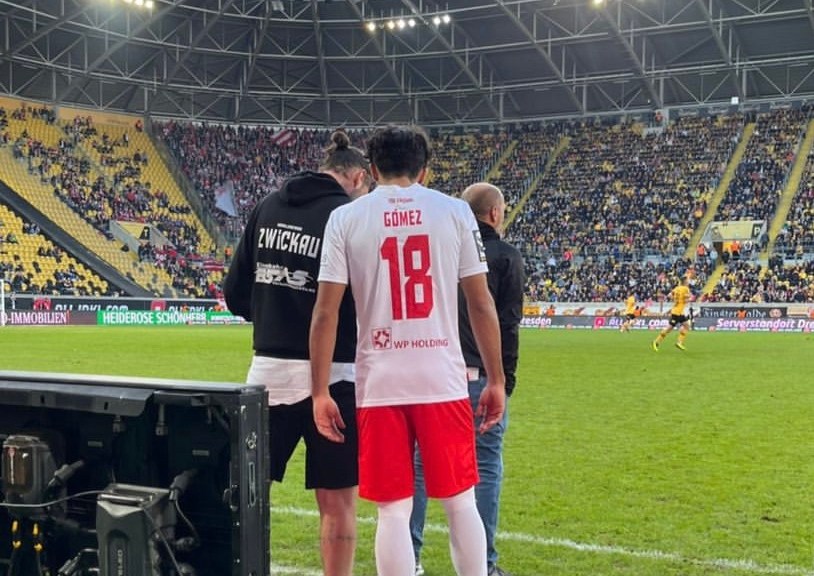
This strategy normally occurs by the team which is leading late in the game; players oftentimes go down to slow the game tempo and allow their team to reset. It is characterized by a player drop right after the fourth official raises the substitution board (a convenient “pause” before the next phase) and it is intended to have any (or all) the following effects:
Disrupting the opponent’s momentum.
Providing tired teammates a brief breather before a defensive stand.
Allowing the coach to finalize substitution instructions or delaying play strategically.
Psychological or Face-Saving Mechanism
Being subbed off can be a blow to a player’s pride, especially if they have played poorly or disagree with the decision. This strategy is characterized by the player looking disappointed or glancing at the bench, then suddenly sitting down to clutch a leg or calf. It is intended to have the following effects:
Going down “injured” provides a socially acceptable excuse — “I’m coming off because I’m hurt, not because I played badly.”
It helps them preserve face with teammates, fans, and coaches.
Cristiano Ronaldo is known to use this strategy. Moments before the substitution board goes up, he briefly gestures discomfort, touching his leg. Sometimes, there is no real injury, but going down softens the optics of being replaced for tactical reasons. It allows him to preserve ego and control the narrative: “I came off for fitness reasons, not performance.”
This strategy is normally applied when time is not of the essence and the outcome is favorable to the team subbing; however, players like Ronaldo, Vinicius, etc. apply it whenever they deem it necessary.
Masking Fatigue
Fatigue (especially in high-intensity matches) can be extreme, but players often hesitate to admit exhaustion. This strategy is characterized by a late game cramping or calf-grabbing gesture, but the player walks off fine moments later. It is more popular in games played in extreme weather (ex. hot/cold, humid, rainy, etc.), that extend to over regulation or a series of games played over a short duration (ex. tournaments). It is intended to have the following effects:
Falling to the ground signals to the bench: “I’m completely done” without directly saying so.
It gives the physio a reason to check the players (hydrate them) and the coach a window to substitute without appearing to replace a “fit” player (gives an out to the coach).
Players know their bodies best and sometimes they can plow through fatigue albeit risking a more severe injury (ex. overload) that could sideline them for a longer period of time. Therefore, players take the precautionary route, subbing themselves out and hoping to be available for the team soon. Coaches also welcome this honest strategy with open arms as fatigue is not always conspicuous. That said, if the outcome of the game does not go as intended for the team, the coach can always claim that the “unexpected” subs impacted initial technical/tactical game plans.
Tactical Reset Opportunity
A brief pause before a substitution allows a team to regroup. This strategy is characterized by the physio jogging on to the field but no treatment occurs. Since the sport is designed to have very few pauses for coaching, this brief pause provides the coach time to shout instructions from the sideline to specific players. It is intended to have the following effects:
The manager can use the break to relay tactical instructions to several players.
The incoming substitute gets more time to warm up or receive final guidance.
Pep Guardiola is the master of this strategy. In Guardiola Manchester City’s system controlled pauses are gold. Players often blatantly sit down just before a tactical substitution late in matches. It’s rarely coincidental — Guardiola uses these moments to reorganize his press or formation. The physio goes on, but the real value is the 30-second team huddle at the touchline.
If the opponent has momentum (sustained attacks or pressing high) a pause can interrupt their flow. This strategy often occurs after the opposing team has just missed a big chance or started dominating possession. It is intended to have the following effects:
The emotional and physical rhythm of the attacking team is broken.
The defending side can reset shape and composure.
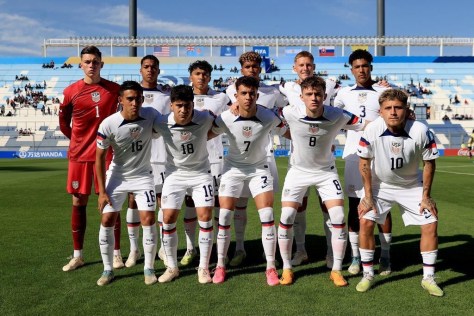
This strategy is very common in competitive matches where one goal is all that is needed to achieve a milestone (ex. win, tie, advancing to next phase) and it’s exacerbated if the team needing to score is continuously applying offensive pressure. The team on the defensive stance often resorts to this strategy to defuse momentum while catching a breather. In the 2023 U20 Men’s World Cup matches, US Coach Mikey Varas instructed Goalkeeper Gaga Slonina to go down late in the second half of most games. This pause would allow Coach Varas and staff to talk to the group. A player substitution was not always conducted.
Cynical / Theatrical Gamesmanship
In some competitions or teams, it’s a deliberate part of “dark arts” (subtle manipulation of the game). This strategy is characterized by a player dramatically sitting or lying down right before their number goes up for a substitution, then sprints off the pitch seconds later. It is intended to have the following effects:
Delays play.
Allows tactical conversations.
Sends a message that the player gave “everything” and is being replaced only because of that “effort.”
An excellent example of this strategy is Atlético de Madrid’s Coach – Diego Simeone. When Atlético are defending a late lead, players often “cramp up” in sync. A player goes down dramatically just before being replaced burning seconds and slowing opponents’ tempo significantly. Pundits call Simenone’s strategy “masterful gamesmanship” acknowledging it as part of a systemic tactical culture which include time-wasting, tactical fouls, simulating injuries, sideline theatrics, and using psychological tactics to frustrate opponents. This approach has earned Atlético the reputation of being masters of “shithousery” and made them one of the most difficult teams to play against in Europe. Diego Simeone transferred his shithousery as a player and perfected the art as a coach.
Preemptive Injury Precaution
Sometimes a player feeling slight tightness or discomfort (ex. hamstring twinge) may go down to prevent worsening it. This scenario is common late in matches or congested fixture schedules. It is intended to have the following effect:
Even if it’s not a true injury, it’s a protective signal — “I felt something; better to come off now.”
It is similar to fatigue but with potential longer lasting effects. Explosive players like Kylian Mbappé who are prone to injuries have used this strategy often. At PSG, Mbappé would gesture discomfort and would sit down before being subbed off. In reality, he was not injured but felt tightness in his hamstring — later confirmed by the manager as precautionary. It’s common for players who partake in multiple matches a week to “go down” preemptively to avoid aggravating micro-injuries. Knowing your body is instrumental for a longer and healthier career in any sport.
In summary, when a player collapses before a substitution without being truly injured, it’s usually about controlling tempo, face-saving, or tactical delay — not deception in the malicious sense, but part of the gamecraft that elite players and managers use to influence moments and margins. In practice, these strategies are used widely not just by elite players but all the way down to the amateur level.
Hope you found this post useful. If you have any suggestions or topics you want discussed, please reach out to info@thegomezway.com. #TGW
In late 2023, I first wrote a publication about the shortage of soccer referees in the United States. One of the reasons I cited was the torment of constant criticism that officials undergo on a weekly basis. Adult referees cope with it better; however, for young ones, it is often too much to handle and most abandon the profession. Youth soccer needs referees to grow, without them, games cannot happen. US Soccer has recognized what many of us knew for years. “Without referees, there’s no game. Protecting our referees must become a priority”. Here are some concerning stats provided by US Soccer:
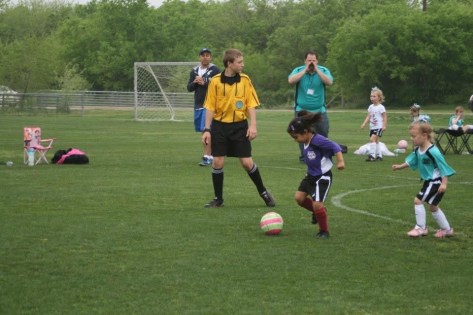
Joana dribbling, me clapping and opponent coach yelling at players and referee
90% of referees report that abuse has increased over the last 5 years
60% of referees choose not to recertify due to harassment and threats
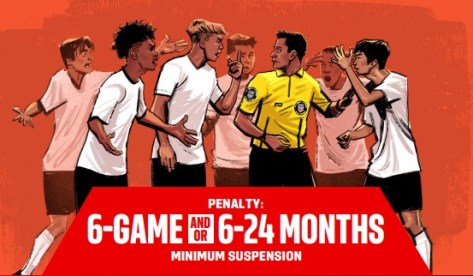
On March 1st, US Soccer’s update to the Referee Abuse Prevention (RAP) Policy (Policy 531-9) took effect. The policy update includes clearer definitions for physical and non-physical abuse -as well as stronger suspensions for reported referee abuse. The updated policy sets minimum expectations for suspensions for individuals who violate the policy.
What the policy does, is to increase the penalties for those who commit offences as outlined by the policy, and following disciplinary action taken by referees under the Laws of the Game. A nationwide reporting structure is currently in development as the next phase (3) of the process, but until this becomes available, referees should ensure that they continue reporting offences and disciplinary sanctions through the reporting process as determined by your local and/or state associations. All the information about the policy update, including the materials for download, can be found at www.ussoccer.com/rap. Here is a summary:
Rules & Consequences
US Soccer is standing firm to protect referees and restore respect to the game. The updated policy includes stronger sanctions for any form of physical or non-physical abuse towards referees. Players, coaches, and parents are encouraged to learn what behaviors cross the line, so they can avoid penalties and help create a better culture for the future of soccer.
Summary
Both Physical and Non-Physical Abuse Have No Place in Our Game.
Suspensions will be for several games or time-based (or sometimes both) depending on severity and circumstance.
Players, coaches, and spectators are all encouraged to report abuse.
Non-Physical Offenses
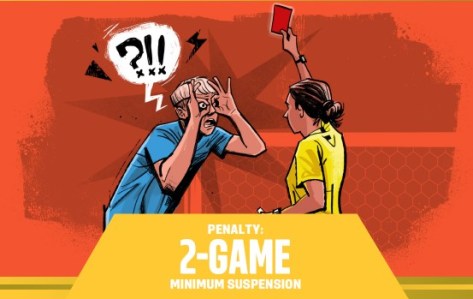
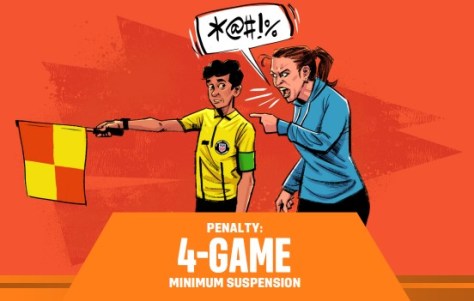
The penalties tables below define consequences associated with physical and non-physical offenses against referees. The first table contains non-physical offenses of gross misconduct, abuse, and / or assault.
Non-physical offense
Minimum Games
Time
Insulting, Belittling, Insinuating or Taunting Behavior Undermining Referee Authority
2
Harassment, Intimidation, Retaliation, Abusive, or Threatening (Non Physical) Language
4
Aggression, Attacking, Derogatory, Cyberbullying, Doxing or Threatening (Physical / Violence) Language
6
6-24 months
Offensive or Discriminatory Act
10
12 – 24 months
Physical Offenses
The second table contains non-physical offenses of gross misconduct, abuse, and / or assault.
Physical Offense
Minimum Games
Time
Minor or Slight Deliberate Touching 3 1 – 6 Months
3
1-6 months
Pushing, Grabbing, Pulling, Squeezing, Pinching, Lightly Slapping, Use of Object in Non Striking Manner, or Physical Property Damage
10
6 – 24 months
Hitting, Punching, Elbowing, Kicking, Biting, Spiting, Choking, Tackling, Throwing or Use of Object or Any Part of Body (Forearm, Knee, Head) in a Striking Manner
12 months – lifetime
Key Takeaways:
Penalties can be both game and time depending on severity /circumstances
Second time offenders receive double punishment
Third time offenders receive a lifetime ban
More than one offense at the same tim is at least the punishment for the most serious offense
Offenses against minors are automatically subject to a “minor multiplier” resulting in triple punishment
One offense warning per league to be managed by states and leagues collaboratively
Game consequences are inclusive of 1 game penalty for any red cards given
Optionality for 50% penalty for first offense from a minor
Everyone deserves the opportunity to experience soccer without risking his or her well-being. We must protect those in service to the game and we all have a role to play. The game belongs to all of us. To ensure that soccer remains a positive experience for everyone, we need your help to stop referee abuse. Here’s how you can make a difference:
Coaches: Lead by example. Set the tone for good sportsmanship with your players.
Players: Respect your referees, whether you agree with their calls or not.
Parents & Spectators: Cheer for your team, not against the referee. Help create a positive environment
Thank you to all our match officials for their continued efforts, and for doing your part to ensure that abuse and unwanted behaviors have no place in our game. Together, we can make another facet of the beautiful game continue to grow in this country. There is, however, a lot of work for coaches, players, parents, spectators and officials.
If you have topics you’d like us to address please, write to us at info@thegomezway.com
This site is non-profit and for the past 6 years has been the result of one person. If you enjoy the content, consider making a donation to support the infrastructure to keep it going. I’m thinking about revamping the website which would incur in some additional costs. Please consider a donation. Any donation is good.
As we begin a busy year of soccer in the United States (MLS, USL, NWSL, Gold Cup W, Nations League, Copa America, etc.), refereeing takes central stage. That’s not only because the MLS referees are currently on a lockout but because soccer officiating is beginning to gain the attention it deserves as a profession. There are opportunities in refereeing opening up for “the ambitious”…
Last year, I wrote this post about the shortage of referees in the US. In it, I explained the annual certification process and how its length could be detrimental to referee recruitment and retention. Now, in my 20th year of soccer refereeing, here is how the process looks for a North Texas Referee. It’s NOT any shorter but the truth be told, the refresher material is very relevant (even for experienced referees). Below is a checklist of the process with its brief explanation:
Required background check and clinic registration (National)
Welcome (State Association: North Texas)
Intro to Safe and Healthy Playing Environments (National)
Safesport (National -18 years of age minimum)
Laws of the Game (National)
Law Changes Review (National)
Referee Code of Conduct (National)
Referee Refreshers (2) Assignment (National)
Online Test (National)
Required Background Check
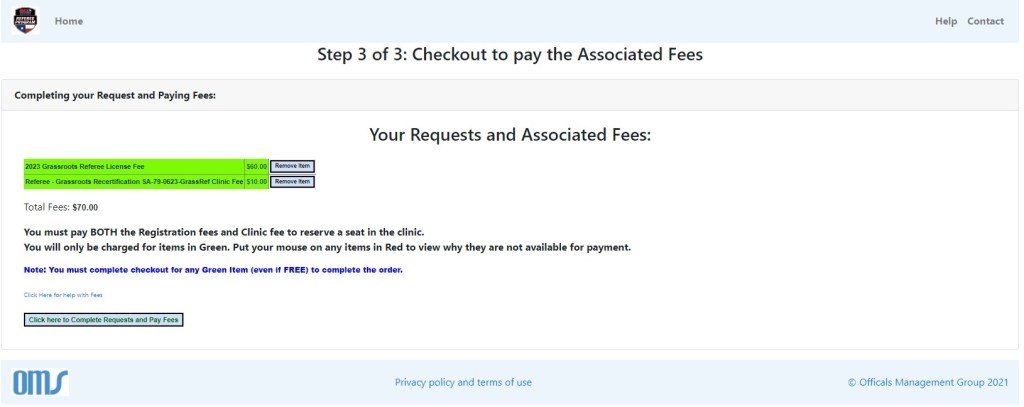
In order to register with your corresponding state association (in my case North Texas (NTX)) and the US Soccer Federation (USSF), the referee candidate (if 18 years or older) must pass a background check. The application process in the North Texas System is comprised of 3 steps:
Step 1: Answering a quick (3 questions) questionnaire
In this step, the candidate is asked about 1. prior convictions and types: Felony, Crime of Violence, Crime against an individual, or Fraud. 2. current/desired soccer official type: Assignor, Referee Coach or Referee type (Futsal, Indoor, Outdoor) and 3. Type of registration: Recertification, Upgrade, Fitness Test, Emeritus, Supplemental Training, or Regain Level .
Step 2: Selecting an online clinic
Based on the answer to question #2 in the previous step regarding desired soccer official type and type of registration, you will have to select the pertinent clinic(s) to fulfill your registration process.
Step 3: Payment of pertinent clinics
In my case, I needed to pay two fees: $40 for the USSF “2024 Referee License Fee” and $30 for the Referee Recertification clinic. Payment is expected at this point in order to proceed. This includes a $10 late fee for not having taken care of this process prior to December 31st, of 2023.
Since background checks have a cost associated with them, the verification process doesn’t really start until payment is rendered and approved. Then, the system will send a confirmation email to the email address in your profile. Also, the system will require “Consent” and “Social Security Number” in order to proceed with the electronic background check.
The actual background check process is performed through a third party website (JD Palatine). The submission of some personal information is necessary to complete the application. In addition to consenting to the electronic background information, the candidate will be asked the state where you intend to work AND where you reside. This process will take 10 minutes to complete and upon its conclusion, another email will be generated. This email contains a file number to check on the status of the background check; resolution to the background check can take up to three weeks to be received by the state association. Plan accordingly if there’s a desire to officiate immediately.
Welcome
This online presentation contains slides regarding the recertification steps starting with the two US Soccer Learning Center modules: Introduction to Safe and Healthy Playing Environments and Safesport. Presentation duration is about 5 minutes
Introduction to Safe and Healthy Playing Environments
This is the description that the US Soccer Learning Center provides about this course: “Understanding and knowing how to react to emergencies is an important part of our responsibility as leaders in the sport. This training will help you identify and respond to common issues that occur on the field; it is good for one year from the date of completion.”
This course mostly talks about having Emergency Action Plans (EAPs) in place and when to activate them based on situations impacting different players, coaches, referees emergencies (ex. concussions. cardiac arrest, inclement weather, etc.). Course duration can vary from 2 to 3 hours.
Safesport
This is the description that the US Soccer Learning Center provides about this course:: “SafeSport training is a requirement of the USOPC for anyone involved in youth sports. This training is provided by the U.S. Center for SafeSport and requires yearly refreshers“.
This training is not required for any individual under the age of 18.” Course duration can vary from 40 to 60 minutes.
Laws of the Game
This is merely a reminder that officials need to have a copy of the laws of the game. Through the 3-4 slides presented, one can either read, download a hard copy on your personal computer or download “the Laws of the Game” mobile application. There’s also a link to the IFAB Laws of the Game website. Duration is 5 minutes.
Laws of the Game changes
This is a summary of the law changes for which the applicant is seeking recertification. Duration is dependent upon the number of law changes or revisions. For 2024, emphasis was on the offside call, deliberate play, and hand balls. As reference, the 2024 duration is about 20 minutes
Referee Refreshers
For the 2024 recertification, there were two refreshers. These refresh courses reinforce material learned in previous years: Managing the game, managing the players, etc. the 2024 duration is 30 – 60 minutes for each lesson.
Online Tests
Four 25 question tests are administered. They need to be completed in one session; otherwise, the test must be started from the beginning. A score of 80 or above must be attained. Duration is variable for each of the four tests.
Minority representation
With Women’s international day celebrated last Friday (03.08), it seems fitting to talk about minority representation in refereeing. Historically, the refereeing circle has been quite limited; the “boys club” in refereeing, as in other circles of soccer, has dominated making entry to the profession difficult for marginalized groups. However, recent assignments to important games are encouraging. One can only hope that these assignments to women (and other minority groups) are more permanent rather than based on annual commemoration of inclusion days or just checking a box. Below are some examples of baby steps:
MLS Match
San Jose Earthquakes vs. Real Salt Lake – September 16, 2023
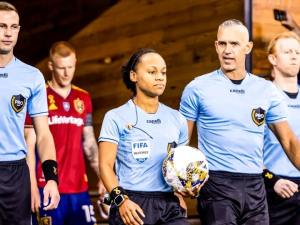
USA FIFA Referee Natalie Simon was assigned as the Referee, making her the fourth ever female official to work an MLS match as the Referee and the first Black female official to do so.
The most recent female official to work an MLS match as the Referee was USA FIFA Referee Tori Penso (wife of retired referee Chris Penso), who recently became the first USA official to referee a Women’s World Cup Final.
It is also worth noting that the assignments to minority groups should be based on merit and not on inclusion status or checkboxes. Due to their historical limited experience, some of these , minority referees may not be quite ready for the big stage. Tori has demonstrated that her level (physical and emotional) is dynamic to be refereeing important matches consistently. Even at the Women’s Gold Cup, she struggled when game-impacting decisions were required of her.
MLS Cup
Other recent assignments to important matches include.
Armando Villarreal, Referee
Cameron Blanchard, Assistant Referee
Ian McKay, Assistant Referee
Jon Freemon, 4th Official
Kevin Stott, VAR
TJ Zablocki, AVAR
Jeremy Kieso, Reserve AR
NWSL Final
Katja Koroleva, Referee
Jennifer Garner, Assistant Referee (from North Texas)
Kate Wasiak, Assistant Referee
Anya Voigt, 4th Official
Kevin Broadley VAR
Maggie Short, AVAR
Tiff Turpin, Reserve AR
USL Championship
Elton Garcia, Referee
Mike Nickerson, Assistant Referee
Nick Balcer, Assistant Referee
Natalie Simon, 4th Official
Matt Schwartz, Reserve AR
USL League 1 Final
Sergii Demianchuk, Referee
Matt Rodman, Assistant Referee
Joe Suchoski, Assistant Referee
Jeremy Scheer, 4th Official
Bennett Savage, Reserve AR
MLS Next PRO Final
Calin Radosav, Referee
Noah Kenyawani, Assistant Referee
Rhett Hammil, Assistant Referee
JC Griggs, 4th Official
Nick Seymour, Reserve AR
Liga MX
This past weekend Katia Itzel García, officiated the Queretaro vs Pachuca game. It had been 20 years since Virginia Tovar, the first woman to officiate a Liga MX match, was given an opportunity. Twenty years had to go by for a second opportunity. Katia recently officiated the Women’s Gold Cup match between Canada and USA.
That’s all for now. For suggestions on topics you’d like to see discussed, please reach out. #theGomezway.
There’s no denying that Messi’s arrival to MLS in August has had an impact of unprecedented proportions. It not unusual for some current (early 2000s: ‘David Beckham effect’ on MLS) or retired athletes (Now: ‘Deion Sanders effect’ on NCAA football) to have an effect in their sports; however, in Messi’s case, multiple aspects of MLS have been deeply and permanently impacted by the now well-known “Messi effect”. Below is a brief summary of its impact so far:
Joana outside “La Bombonera” stadium in Buenos Aires
Increased global attention: Lionel Messi is one of the greatest footballers of all time and already had a massive global following. His arrival in MLS attracted substantial attention from not only American fans, media, and sponsors but worldwide too. MLS is benefitting from increased exposure, TV ratings, merchandise sales, and more international viewership. Since his arrival, Messi helped Inter Miami win its first trophy just a few weeks after joining the team. In his first 11 games with Inter Miami, the team won 10 and tied 1. In those games, Messi scored 11 goals and recorded 8 assists. With those numbers, it’s inevitable to not garner global attention.
Boost in attendance: Messi’s presence in MLS stadiums has increased attendance numbers. Every stadium where Messi has played has sold out. Fans (casual and hard-core) are eager to see one of the world’s best players in action. His participation in games has resulted in increased ticket sales (527% increase in prices) and higher game-day revenues.
Television (Apple tv) ratings and subscriptions: Inter Miami matches have experienced an exponential boost in television ratings. MLS Season Pass, which is Apple’s streaming package that broadcasts soccer matches, experienced a 1690% increase in sign-ups the day Messi first played for his new club. Broadcasters are excited to showcase Messi’s skills (in multiple languages) and MLS’ TV deals are becoming more lucrative abroad. Higher ratings have inevitably attracted more advertisers and sponsors.
Enhanced brand value: Messi’s arrival to the league has elevated its brand value and prestige. It’s now very common to see celebrities in attendance whenever Messi plays. He has not done it alone though, former Barcelona teammates Sergio Busquets and Jordi Alba joined Inter Miami which only continued to elevate the club’s AND the league’s value. Inter Miami’s worth prior to Messi’s arrival was $575 million. As of September 15th, that value is now near $1 billion and estimated to be in the range of $1.3 to $1.5 billion in 2024.
Financial impact: While the signing of Messi required a significant financial investment -he earns an estimated $50 – $60 million annually-, his signing has led to an exponential overall revenue for the league. ESPN reported that in the first 24 hours of Messi jersey sales, it was the best 24 hours of any player’s changing teams across all sports. Messi’s Inter Miami jerseys were conveniently out of stock until a couple of days ago, they are currently priced at $180 each. Sponsorship deals, merchandise sales, and international interest have generated additional income enabling MLS to potentially reinvest in infrastructure, youth development, and player salaries making the league even more attractive and financially competitive with top continental leagues such as Liga MX and Campeonato Brasileiro.
Player development and competition: Messi’s presence serves as a tremendous opportunity for young MLS players. Training and competing alongside one of the best players in the world has elevated the level of play of those around him (ex. Campana, Cremaschi, Allen, etc.). Elevating the competitive level of his teammates and opponents can gradually contribute to the overall development of domestic talent; thus improving the leagues’ competitiveness and who knows, maybe the US national team pool. Prior to Messi’s arrival, Inter Miami had only won 10/28 games, drawn 3 and lost 15. They were in last place and now, they are fighting for a playoff spot with a few games remaining in the season.
Unfortunately, not all the Messi effect’s and influence has had a positive effect on fans. See, I was refereeing this past weekend when out of the corner of my eye, I spot a soccer parent walking down the experts’ sideline trying to get his son’s attention while the match is going on. Once, he succeeded, he instructs his son, who at the time was playing as a forward, to forget about playing defense and play like Messi. We, other parents and myself, were all puzzled when the following emanated from his mouth: “Don’t defend anymore, just stay up and wait for the ball to come to you; only run when the ball is 5 feet away from you; that’s how Messi plays and he is successful at it”. The kid incredulous heeded his father’s instructions the remaining of the match.
Needless to say, his son’s team ended up losing the game badly as they practically played down a player and the son never touched the ball again in the match. Moral of the story, be careful instructing your children with stuff you see on TV without the proper knowledge, context and background. Sometimes, in an effort to help our kids, we prevent them from progressing. This supportive father, imparted some useful wisdom onto his son that ended up serving a completely unintended effect on his son (and his team) in part thanks to the “Messi effect”.
Texas soccer fans wearing Messi jerseys
Keep in mind that there’s only one Messi, and as simple as the game is, his greatness stems from making the simple game look even simpler. The “Messi effect” will gradually fade and we will be left with his legacy. For now, enjoy him while you can and if you are planning to watch him live, remember to not pay the exuberant ticket prices unless you are certain he will be playing. See below what some fans played for the Orlando vs Miami game last Sunday and Messi, Jordi, and Busquets did not play.
Part of the reason the ex-Barcelona trio did not play against Orlando was strategic. They need to rest for their Lamar Hunt US Open Cup championship match tomorrow night. That game, prior to Messi’s MLS arrival, would have taken place with little fanfare. Tomorrow, all the spotlights will be on Inter Miami, especially if Messi plays.
The opponent for that game will be Houston Dynamo and if Inter Miami is victorious, it could be Messi’s second trophy in the last 8 weeks. Stay tuned as he, and teammates, continue to shape up the “Messi effect” on MLS. Until next time, #theGomezway
2023 marks my 19th consecutive year as a certified US Soccer Federation (USSF) referee. It has been a progressive journey; I have had the pleasure of officiating anywhere from outdoor U4-U19 recreational games, competitive 3 vs 3’s, competitive club leagues/tournaments, public high school, Development Academy, to men’s college matches and indoor competitive. Disclaimer: I have never officiated a futsal match.
As I wind down on my involvement on what appears to be my last year, I can say that most of my officiating years have served the following purposes: 1. Develop a greater respect, appreciation and empathy for the refereeing profession 2. Understand yet another facet of the beautiful game. 3. Share acquired knowledge (through organic playing, refereeing, coaching and parenting education) via mentorship of young referees (ages 13-17), players (fans and coaches included) and last but not least 4. Fitness/exercising.
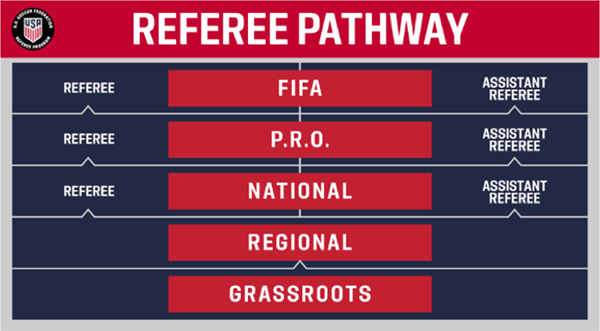
I officially started refereeing during my college years; I only refereed one indoor season as it was very seasonal and realistically, engineering consumed most of my college time. After graduation, I took a 6 year break before I rejoined the ranks and became one of the 100K+ registered soccer referees. However, I quickly understood that moving up the referee pathway (below) was going to take time which I didn’t have much of due to my other academic and corporate endeavors. Unfortunately for the sport in this country, soccer officiating is a profession that very few pursue as a career for many reasons; some of which we will try to root-cause below.
Income
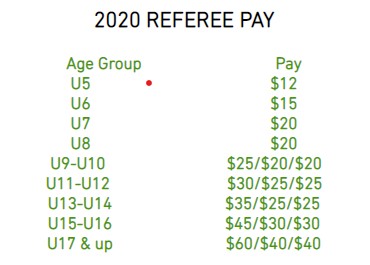
It is important to understand that the best part of officiating is flexibility. Soccer referees are independent contractors; as such, the duration of their work is short, and they normally have the freedom to officiate at times, places and fees of their own choosing. That said, most young referees pursue soccer officiating to generate a stream of income with flexible hours starting as early as 13 years of age. Another advantage is that referees can earn up to $600 (tax-free) in a calendar year without having to report it to the IRS. The below recreational (rec.) referee pay scale (albeit from 2020) can be very attractive to a young referee.
Thomas Moran: Update the referee pay scale in the KSA website
Let’s be honest, pay scales like the one above won’t be sending any adult referees into immediate retirement either. Caveat: Recreational refereeing pay scale is at the bottom of any pay scale. As such, adult soccer referees normally do not enter the profession hoping it become the single source of income. Even for college level soccer referees, the hourly wage (once travel is factored in) is nothing to write home about. In the majority of the cases, adult referees enter the profession by being forced to be around the sport in some capacity: coaching youth, volunteering, having a child playing in the local rec. soccer association or just wanting the best seat in the house while earning some (albeit little) cash. Some use it as a hobby and in some rare cases like mine, we end up pursuing it as a permanent way to give back to the beautiful game. There is however, an in-between temporary category of soccer officials where “hobby meets income source” and that normally belongs to referees whose English is a second language. They tend to pursue the profession wholeheartedly at the beginning of their arrival to the United States but that dedication only lasts until some higher income source comes along.
A few years back, there was a small perk for referees; at the conclusion of the assigned games, a cash payment was rendered at the fields. There’s just something satisfactory about being paid immediately after a service is rendered. However, times have changed with technology. Most soccer associations have now adopted an automated payment system where referees no longer get paid cash at the fields. Instead, they have to wait up to three days to be electronically compensated for their services. Unfortunately, there are adult referees whose personal finances depend heavily on the revenue they generate refereeing over the weekend and having to wait to be paid is just another entry barrier to the profession or its progression. One time, at my local association, it took about 6 weeks for three games refereed to be deposited into my bank account due to a “glitch” in the system.
Those situations described above lead us to conclude that the best hope to have future competent referees resides in the youngsters (ages 22 – 30) whose college soccer playing days are over, still have a desire to be involved in the game, progress through the referee ranks, are financially stable and despite the constant criticism, choose to pursue the career.
Criticism
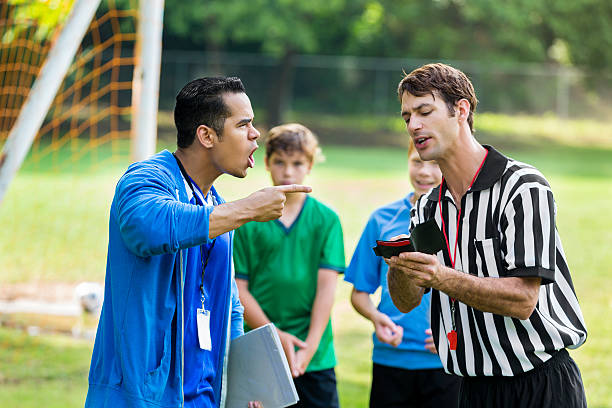
Mid adult Hispanic soccer coach yells at mid adult Caucasian referee and points at him over a bad call. The players in green jerseys and blue jerseys are watching and listening in the background.
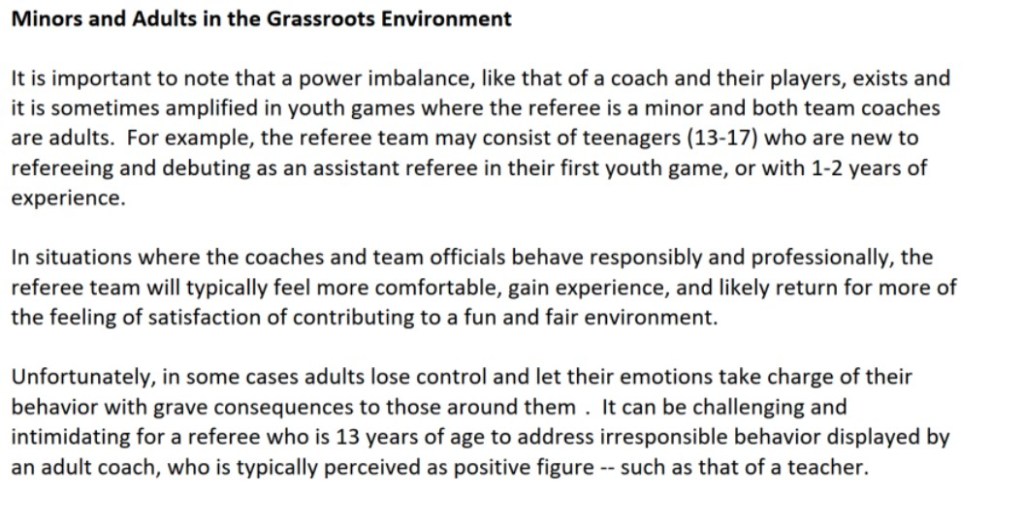
Unfortunately, the brave and ambitious young referees who consider advancing in the profession face the constant criticism from the experts (ex. coaches and fans) which ultimately proves too much to endure at such low wages. The below statement comes from the yearly Grassroots training that all referees must undergo during recertification.
Officiating public high school soccer is more attractive financially due higher wages and a travel per diem. In theory, fans are more knowledgeable about the game since they have been around it longer but the sad reality is that high school soccer is the twitter of soccer; anonymous spectators hiding behind crowds (screen) easily become coaches and experts of the game. The constant disrespect towards the refereeing crew is even normalized by other adults at the stadiums as “teenage behavior”. Spectators from all walks of life become loud critics of the officiating crew showing constant dissent. It’s common to listen to criticism from students, family members, etc. whose background may not even include ever setting foot on a soccer field (other than to kick a field goal). Statistically, constant criticism is the main contributor for younger (more experienced) referees to trump their progression in their careers.
To play devil’s advocate, not all the blame can be placed on “know-it-all” spectators though. Many soccer referees may not possess the adequate soccer background/instinct to maintain the flow of the game or even establish credibility in a game. When it comes down to it, it’s a chicken and egg dilemma. How can more potential referees be recruited if the few brave ones face the constant criticism of the experts? Therefore, anybody (and I mean anybody) willing to undergo a few hours of training is often recruited (family members/friends) by assignors (ex. KSA) and thrown to the fire without the proper preparation. Unfortunately, the lack of playing/watching experience for a referee is immediately evident and the fans pick up on it and magnify its impact on the game. This aspect is exacerbated at the professional level as ex-professional referees are normally hired by tv networks to critique their former colleagues’ performances.
Referee retaliating to player in LigaMX game
Playing/watching experience
The low retention rate of referees unfortunately leads to the desperate recruiting of unqualified individuals. Most referees I officiate with did not grow up playing, coaching or even watching the beautiful game. In fact, here in Texas where American football “is life”, on a typical Saturday fall morning at the referee tent, most referees often converse about American college football games in between soccer games while simultaneous football derbies (ex. Real Madrid vs Barcelona, Inter vs AC Milan, Man City vs ManU) are being played. Soccer has a long way to go to be mainstream in the American culture to reach the popularity levels of other American sports. As a result, most soccer referees are more knowledgeable about other sports, but become soccer referees for a spectrum of reasons, but none really for career advancement or even the love for the game.
The flip side sometimes is that not having played or watched the game growing up, could be an advantage as these inexperienced referees only view the game in a binary way. They then become more purists applying the laws of the game per the textbook. In my opinion, referees who played the game have a more intuitive feeling and appreciation for the game and as a result, allow a greater fluidity of the game. Unfortunately, most referees who did not grow up playing or watching the game do not pursue the profession at a higher level as they do not feel properly equipped (protected) with the tools to succeed.
Another reason that deters individuals from pursuing officiating as a career is the growing recertification requirements. Associations do not make it simpler to desire any serious involvement in it. Furthermore, it’s a profession pretty much monopolized by the referee assignors. In my local soccer associations, if you are good friends with the assignor, he/she will assign you competitive (or your desired) games; otherwise, referees may be doomed. I get it, assignors need reliable referees and in some cases need to prioritize repaying favors to referees who were promised games during recruitment.
Annual certification
US Soccer requires each referee to undergo an annual recertification process. The online education consists of seven modules with an approximate total duration of about 5 hours if taken back to back. However, realistically speaking, nobody takes all this training in one sit-down, therefore, for a working adult, the training could easily take 3-4 days.
Welcome
Intro to Safety
Safesport
Laws of the Game Changes Review
Reference Cards
Grassroots Referee Refresher Assignment
Online Test
Appropriate training needs to be taken (and test passed) corresponding to the current referee level desired at the end of the calendar year. The most basic recertification level is called the “Grassroots Referee License Fee”.
Cost
There is an initial equipment cost to become a referee. Between uniforms, a reliable watch, whistle, flags, etc. a beginner young referee could easily spend $200 to get started. This startup cost is very steep for a young teenager who is trying to make some quick cash. If in addition to that, the youngster has to put up with constant criticism from the experts, it can easily be justified why so many quit within the first two years.
Registration:
There’s a cost associated with the recertification of each officiating grade in the previous section (and a late fee if registered after mid December). The lowest recertification cost is for the Grassroots Level. That annual cost is about $60
Equipment:
Official Sports International (OSI) has a USSF approved monopoly on referee gear. US Soccer has allowed this throughout several decades. As a result, OSI has a huge market share of the referee equipment market domestically. Their merchandise is constantly being pushed/advertised by USSF. The gear is not inexpensive. For example, a short sleeve yellow pro referee shirt is about $50 (the economy version is about $30). You then add socks, shorts, tennis shoes, whistle, flags, cards, etc. and the startup costs for a young referee can easily add up to $200 – $300 in between different color referee shirts (short sleeve vs long sleeve). All that is “conveniently” provided by OSI.
Background Check
In the North Texas Association, anybody 18 years of age or older is subjected to a mandatory annual background check. Successfully completion is a requirement for eligibility to either recertify or become a referee for the first time.
The background check does not take any training time; instead, it requires the submission of some personal information so that the State Soccer Association uses that information to process the background check. If the background check is passed; the training required for recertification can begin.
Safety Certification Courses
Introduction to Safe and Healthy Playing Environments
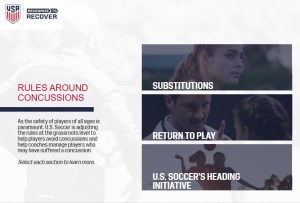
US Soccer requires a yearly certification of the “Introduction to Safe and Healthy Playing Environments” online module with an approximate duration of 45 minutes. The training is available for coaches, referees, and staff over the age of 18 to ensure adults give some consideration to having an Emergency Action Plan (EAP). The EAP would be triggered in the unfortunate event of a medical emergency. Specific scenarios like concussions, cardiac arrests, heat strokes, and more are covered. Similarly, action items such as CPR, AED, calling 911 are described in detail.
Although the training is a great tool to have (not only for football related emergencies), it does place a good deal of responsibility on adults who may be in an emergency situation. That said, the yearly requirement, which doesn’t change from year to year, is a deterrent for some referees (especially the young ones) to recertify.
Safesport Training
In addition to the “Introduction to Safe and Healthy Playing Environments” training above, US Soccer also requires individuals 18 years of age and older to be “Safesport Trained”. The course contains information about fostering a safe and positive environment for athletes while preventing the different types of abuses/misconducts.
Fitness test
For the very few interested in advancing their officiating careers through the different refereeing grades, annual fitness tests must be paid for and passed in order to prove physical fitness proficiency. There’s an additional cost to undergo that physical assessment during the annual certification periods. Aspiring referees must undergo the fitness assessment on a Saturday morning and preparation is key. Otherwise, it could turn out to be a harsh reality check for those older/heavier set referees. Let’s be honest, it’s no ninja warrior type of course but it’s no cake walk either. Fitness proficiency helps referees’ credibility as they are trying to keep up with 18/19 year old players. Few individuals want to stay fit to advance their officiating careers though.
Assessments
For those interested in advancing in their careers, there are annual referee assessments (at a cost of course) to make it to the next level. These are yearly assessments that referees must undergo in order to re-certify at their current (or higher) level. Honestly, it really helps to “know” the assessor as some referees, given their mobility on the field, knowledge of the game, etc. have no business passing their corresponding assessments.
Different laws of the game
One of the main complains that you will hear from soccer referees is that IFAB annually approves revisions to the laws of the game (ex. definition of a handball). FIFA then, in an effort to make the game more attractive and easier to understand, approve those changes. As the revisions are cascaded down to each countries’ football associations, they complicate the learning of the laws of the game which few referees care to keep up with. As a result, constant education is key to the success of the soccer referee but many fail due to the inconsistent application of the law changes from their peers. To exacerbate the inconsistent application of the laws of the game, the laws of the game also change based on age group, and competition type. Law changes are the only constant in refereeing.
Recreational
The entry level for young soccer referees is recreational youth soccer. Starting with the little ones (U4, U5), it’s by far the easiest level to officiate where innocent referee mistakes can be made and they won’t impact the outcome of a match. Unfortunately, more often than not, you find the parent (not coach) who wants fouls be called because their son was tripped “on purpose” by a 4-year old when their team was already winning by 10 goals.
As older age group games are officiated, the main challenges in recreational soccer become learning the different rules (ex. no heading of the ball, build-out line) AND trying to position yourself correctly on the field. A wide spectrum of playing experience often cause random and unexpected ball touches/bounces which are just unpredictable for the unprepared referee when seeking best positioning. It takes a lot of experience and focus to position (not so much to officiate) these types of games as the player and ball movement is not very predictive. I have always found that more competitive games are easier and more fun to referee; however, with greater fun comes more responsibility and required knowledge and certifications.
High School
High school certification has its own annual costs, assessments, and of course rules (outside of USSF) which in Texas are dictated by the University Interscholastic League (UIL). The rules are very similar to college level NCAA rules. Everything that you can imagine that shouldn’t be changed with regular FIFA football laws of the game is changed in high school soccer. For example, officiating with one, two or the regular three referees is allowed, stopping the clock is permitted and frequently used by the referees, different card colors are allowed, in case of a tie at the end of regulation, overtime is an option, etc. Those are only a small sample of rules that are different that most referees must stay current on to establish credibility.
The annual revisions in high school soccer rules (and FIFA too) justify the recertification process but it’s a deterrent. Simultaneously refereeing club soccer and high school soccer can be confusing for referees as their seasons overlap. This potential confusion could make a referee look like a novice if rules switching is not applied properly. The annual revision of rules (the system itself) makes it very challenging for referees to learn all the different sets of rules of each competition level.
College
Similar to high school, college NCAA soccer rules are very different than regular FIFA soccer’s. At least the referee remuneration for officiating any level of college soccer is generous but nothing to write home about. However, that doesn’t justify the different rules. I wrote the above post about that topic a few months ago so I will not rehash that discussion.
Club
Officiating club is a level above recreational. The laws of the game are similar; however, the environment is more competitive and the fans are more involved. The american “pay to play” model puts additional pressure on parents and players to win at all costs so typically, club players, even at young ages, push the envelope on the application on the laws of the game. Despite that challenge, competitive club is my favorite level to officiate.
Reputation/Prestige
Let’s be honest, soccer is not the most prestigious sport in the United States; that, combined with being a profession that is frequently scrutinized by the “experts” due to the constant (no time outs) decision making need, do not make it very appealing for pursuit. As a result, the United States has very few competent referees that represent the country at the highest level. Hats off to the trailblazers who paved the way for others to follow despite the many challenges cited above.
The future
As somber as the preceding paragraphs may have sounded, the future of US soccer is bright. As the women’s game becomes more popular in the United States and the world, the need for women referees will organically grow in parallel. Qatar marked the first time a men’s finals world cup game was refereed by 38-year old, French native, Stephanie Frappart. The December 1st, 2022 Costa Rica vs Germany match also marked the first time an all-women crew refereed a men’s world cup game. Stephanie, had already engraved her name in the soccer history books by being the first female to have refereed a male’s UEFA Champions League and Ligue 1 games respectively.
US Soccer is gradually growing and has established a well-structured referee program with mentorship programs, quarterly newsletters, continuous education, and other tools to better equip aspiring referees. I am confident that with the right support, the US will see a greater amount and more competent referees not only at the MLS level but also at the world stage level. Will this effort keep up with the rest of the world? We shall see…
My future
The sport has given our family so much that it would be unfair to not give back in some capacity. In full disclosure, I have selfishly used refereeing as a tool to grow my leadership skills in my other life endeavors. It does require a lot of patience, and more importantly thick skin thereby building strong character. Unfortunately, the perks are quickly offset by its challenges making it a tough profession to progress in for a great majority.
Personally, I have found these 19 years so fulfilling as they have provided me a different understanding of the game. As a result, both Johan and Jogo pursued refereeing for many years which proved to be not only a great way to make decent money but doing so in a field they were passionate about. Unfortunately, at some point it became difficult to referee along with their academic and dynamic soccer schedules.
In my current home association, we have an excellent core of experienced referees who have established a young referee mentorship program. Maybe my next phase is to become a full-time mentor. Unfortunately, the current shortage of referees, encourages recently-recruited referees to behave and officiate like experienced professionals soon after recruitment by assuming assignments that are above their experience level . The higher expectations placed on young referees is yet another reason, that soccer associations have such high referee turnover. Just like the sport itself, refereeing requires muscle memory to become competent. High expectations from the fans linked to high expectations from the Assignor/Director of Referees forced upon newly recruited referees/assignors are common deterrents. As a result, most teenage referees normally find alternative sources of income through high school and young adults are very unlikely to start their refereeing careers especially after they have finished a college degree and are entering the more rewarding “corporate world”.
As I wrap up this post, our high school aged daughter is expressing a strong interest in becoming a recreational soccer referee. Who knows? I may stick around for at least one more year (20?) to help her decide whether refereeing is for her or not. BTW, if you know anybody interested in refereeing, visit this page. Until next time…#theGomezway































 #TheGomezway