

FVS is a simplified, lower-cost video-review system designed to give referees a way to review “clear and obvious” match-deciding incidents without the full technical, staffing and camera requirements of a traditional VAR center. It is not VAR with a different name — it’s a different operating model intended mostly for competitions that can’t run full VAR.
Why FIFA introduced it
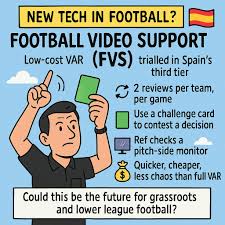
- Accessibility and cost: many member associations asked for a more affordable way to use video to support referees (fewer cameras, no permanent VAR room and a smaller support footprint). FIFA developed FVS to meet that demand.
- Control and simplicity: FVS aims to keep the referee at the center of the decision and to provide a framed, limited review process that’s easier to deploy across youth tournaments and lower-budget leagues.
When FVS is (and has been) used

While FVS was initially tested in the Spanish Futsal League (Primera División de Futsal), the first top-flight domestic association football league to fully adopt and debut the system was Spain’s top women’s league, Liga F (also known as the Liga Profesional de Fútbol Femenino) in the beginning of its 2025-2026 season (specifically, in September 2025). Prior to that, FIFA trialed and used FVS at multiple youth tournaments:
- Blue Stars / FIFA Youth Cup (trial).
- FIFA U-20 Women’s World Cup (trial in Colombia 2024).
- FIFA U-17 Women’s World Cup (used in 2024 tournament and being included in subsequent youth tournaments).
- More recently it has been used at FIFA U-20 (Chile) and U17 (Morocco) youth tournaments and trialed broadly.

What FVS reviews (which incidents can be challenged)
FVS is limited to the same four review categories normally associated with VAR protocols:
- Goal/no-goal (including offences in the build up, offside where applicable, handball).
- Penalty/no-penalty.
- Direct red card incidents (serious foul play, violent conduct, DOGSO, etc.).
- Mistaken identity when a referee books/sends off the wrong player.
How FVS works (step-by-step, matchday)
- Challenge method: unlike VAR, reviews are initiated by the coaches — each coach gets a limited number of challenge requests (typically two per match; one extra in extra time in competitions that allow it). The coach must hand a challenge card to the fourth official immediately after the incident to trigger a review.
- Referee review: the referee goes to a pitch-side monitor (or another on-field review area) to view replays provided by a replay operator using available broadcast/camera feeds, then makes the final decision. There is no separate VAR team continuously monitoring all incidents from a remote control room.
- Technology footprint: FVS is intentionally lighter — it generally relies on broadcast camera feeds or a small number of dedicated cameras and a local replay operator rather than a fully equipped VAR control room with many specialist cameras and staff.

Key differences vs VAR (at a glance)
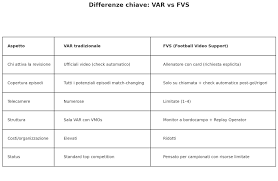
- Initiation: VAR can perform “silent checks” and proactively monitor incidents; FVS only reviews when a coach requests a review (challenge).
- Staffing/tech: VAR requires a full VAR room, specialist VARs and often many dedicated cameras. FVS needs fewer cameras, a replay operator and no continuous remote video-referee team.
- Scope and coverage: VAR continuously watches all key incidents and can intervene; FVS is limited to coach-triggered, narrowly defined reviewable events. That reduces coverage and the chance of automatic correction.
- Final authority: in both systems the on-field referee has the final decision after viewing replays, but FVS places more emphasis on the referee doing the review themselves on the sideline rather than relying on a separate VAR team recommendation.
Advantages of FVS
- Cost and accessibility — much cheaper to implement, so more competitions (youth, lower leagues, smaller federations) can use video support. That’s the main strategic advantage.
- Simplicity — fewer moving parts, simpler procedures and less technical overhead make roll-out faster.
- Empowers coaches — gives coaches a structured way to challenge decisions (adds a tactical and accountability element). Some coaches and organizers like that involvement.
- Keeps referee central — the on-field referee reviews evidence directly, which supporters say preserves authority and transparency.
Disadvantages / risks compared with VAR
- Limited coverage / accuracy — because FVS usually uses broadcast feeds and fewer cameras, very tight technical calls (e.g., marginal offsides requiring frame-by-frame multi-angle geometry) may be harder or impossible to resolve as precisely as with full VAR systems that use multiple dedicated cameras and calibrated offside technology.
- Interruptions & tactical misuse — coach challenges stop play and can interrupt momentum; coaches may “game” their challenges (save them for late in the match or use them tactically). Some coaches and observers have raised this concern during trials.
- Fewer proactive corrections — because FVS waits for a coach challenge, clear errors that nobody challenges (or situations where coaches don’t want to burn a challenge) can remain uncorrected — whereas VAR’s silent checks can catch incidents that the teams didn’t notice.
- Consistency & pressure on referee — the on-field referee must perform the review and deliver the decision in front of teams/fans; that creates different psychological pressures versus VAR where a separate VAR team can make or strongly recommend the call remotely.
Early data & reception
Reports from tournaments and media indicate FVS is being used regularly in youth tournaments and early trials. Coverage from trials shows a modest number of reviews per game (e.g. some reporting cited an average around ~1.4 interventions per match in certain trials, with a large proportion confirming the original decision) — but opinions are mixed: some refereeing authorities and coaches welcome the lower cost and clarity; other stakeholders worry about interruptions and possible tactical use. FIFA and IFAB are monitoring trials and collecting data before deciding on wider roll-out.
Practical example (how a coach challenge looks in real time)
- Coaching staff thinks a referee missed a clear handball leading to a goal.
- Coaching staff immediately gives the fourth official the challenge card. (If the ball is in play again, the challenge must be given immediately — the Laws require that a decision be changed only before play restarts.)
- Referee stops play if necessary, views replays on the pitch-side monitor supplied by the replay operator (using available camera angles), then signals and announces the final decision to the teams and stadium.

Bottom line — when FVS makes sense
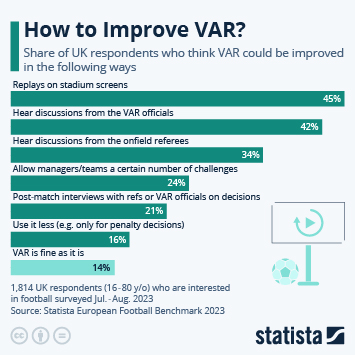
FVS is a pragmatic compromise: it’s not meant to replace VAR in elite competitions that can afford full VAR with advanced camera systems, but it does give many more competitions a practical path to use video review for big, match-deciding incidents. For youth tournaments and leagues with limited budgets it’s a realistic step forward; for top professional leagues the trade-offs in precision and continuous monitoring mean many will continue to prefer full VAR — at least until FVS matures or hybrid models appear. It is worth noting that if for whatever reason the FVS technology malfunctions, the match will continue without the system after both team managers and captains have been informed. As for VAR, there’s always room for improvement as depicted by a survey conducted in the UK.
If you would like us to break down any other football topics, please reach out at info@thegomezway.com




 #TheGomezway