Tag Archives: Learning

What is Football Video Support (FVS)?

FVS is a simplified, lower-cost video-review system designed to give referees a way to review “clear and obvious” match-deciding incidents without the full technical, staffing and camera requirements of a traditional VAR center. It is not VAR with a different name — it’s a different operating model intended mostly for competitions that can’t run full VAR.

Why FIFA introduced it
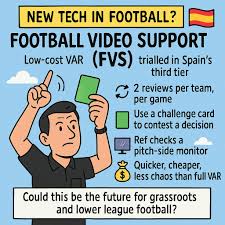
  • Accessibility and cost: many member associations asked for a more affordable way to use video to support referees (fewer cameras, no permanent VAR room and a smaller support footprint). FIFA developed FVS to meet that demand.
  • Control and simplicity: FVS aims to keep the referee at the center of the decision and to provide a framed, limited review process that’s easier to deploy across youth tournaments and lower-budget leagues.

When FVS is (and has been) used
While FVS was initially tested in the Spanish Futsal League (Primera División de Futsal), the first top-flight domestic association football league to fully adopt and debut the system was Spain’s top women’s league, Liga F (also known as the Liga Profesional de Fútbol Femenino) in the beginning of its 2025-2026 season (specifically, in September 2025). Prior to that, FIFA trialed and used FVS at multiple youth tournaments:

  • Blue Stars / FIFA Youth Cup (trial).
  • FIFA U-20 Women’s World Cup (trial in Colombia 2024).
  • FIFA U-17 Women’s World Cup (used in 2024 tournament and being included in subsequent youth tournaments).
  • More recently it has been used at FIFA U-20 (Chile) and U17 (Morocco) youth tournaments and trialed broadly.
What FVS reviews (which incidents can be challenged)

FVS is limited to the same four review categories normally associated with VAR protocols:

  1. Goal/no-goal (including offences in the build up, offside where applicable, handball).
  2. Penalty/no-penalty.
  3. Direct red card incidents (serious foul play, violent conduct, DOGSO, etc.).
  4. Mistaken identity when a referee books/sends off the wrong player.

How FVS works (step-by-step, matchday)

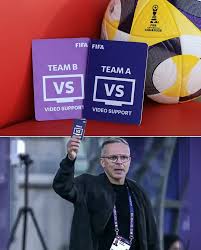
  1. Challenge method: unlike VAR, reviews are initiated by the coaches — each coach gets a limited number of challenge requests (typically two per match; one extra in extra time in competitions that allow it). The coach must hand a challenge card to the fourth official immediately after the incident to trigger a review.
  2. Referee review: the referee goes to a pitch-side monitor (or another on-field review area) to view replays provided by a replay operator using available broadcast/camera feeds, then makes the final decision. There is no separate VAR team continuously monitoring all incidents from a remote control room.
  3. Technology footprint: FVS is intentionally lighter — it generally relies on broadcast camera feeds or a small number of dedicated cameras and a local replay operator rather than a fully equipped VAR control room with many specialist cameras and staff.

Key differences vs VAR (at a glance)
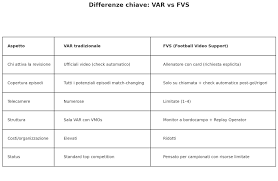
  • Initiation: VAR can perform “silent checks” and proactively monitor incidents; FVS only reviews when a coach requests a review (challenge).
  • Staffing/tech: VAR requires a full VAR room, specialist VARs and often many dedicated cameras. FVS needs fewer cameras, a replay operator and no continuous remote video-referee team.
  • Scope and coverage: VAR continuously watches all key incidents and can intervene; FVS is limited to coach-triggered, narrowly defined reviewable events. That reduces coverage and the chance of automatic correction.
  • Final authority: in both systems the on-field referee has the final decision after viewing replays, but FVS places more emphasis on the referee doing the review themselves on the sideline rather than relying on a separate VAR team recommendation.

Advantages of FVS

  • Cost and accessibility — much cheaper to implement, so more competitions (youth, lower leagues, smaller federations) can use video support. That’s the main strategic advantage.
  • Simplicity — fewer moving parts, simpler procedures and less technical overhead make roll-out faster.
  • Empowers coaches — gives coaches a structured way to challenge decisions (adds a tactical and accountability element). Some coaches and organizers like that involvement.
  • Keeps referee central — the on-field referee reviews evidence directly, which supporters say preserves authority and transparency.

Disadvantages / risks compared with VAR

  • Limited coverage / accuracy — because FVS usually uses broadcast feeds and fewer cameras, very tight technical calls (e.g., marginal offsides requiring frame-by-frame multi-angle geometry) may be harder or impossible to resolve as precisely as with full VAR systems that use multiple dedicated cameras and calibrated offside technology.
  • Interruptions & tactical misuse — coach challenges stop play and can interrupt momentum; coaches may “game” their challenges (save them for late in the match or use them tactically). Some coaches and observers have raised this concern during trials.
  • Fewer proactive corrections — because FVS waits for a coach challenge, clear errors that nobody challenges (or situations where coaches don’t want to burn a challenge) can remain uncorrected — whereas VAR’s silent checks can catch incidents that the teams didn’t notice.
  • Consistency & pressure on referee — the on-field referee must perform the review and deliver the decision in front of teams/fans; that creates different psychological pressures versus VAR where a separate VAR team can make or strongly recommend the call remotely.

Early data & reception

Reports from tournaments and media indicate FVS is being used regularly in youth tournaments and early trials. Coverage from trials shows a modest number of reviews per game (e.g. some reporting cited an average around ~1.4 interventions per match in certain trials, with a large proportion confirming the original decision) — but opinions are mixed: some refereeing authorities and coaches welcome the lower cost and clarity; other stakeholders worry about interruptions and possible tactical use. FIFA and IFAB are monitoring trials and collecting data before deciding on wider roll-out.

Practical example (how a coach challenge looks in real time)

  1. Coaching staff thinks a referee missed a clear handball leading to a goal.
  2. Coaching staff immediately gives the fourth official the challenge card. (If the ball is in play again, the challenge must be given immediately — the Laws require that a decision be changed only before play restarts.)
  3. Referee stops play if necessary, views replays on the pitch-side monitor supplied by the replay operator (using available camera angles), then signals and announces the final decision to the teams and stadium.
Bottom line — when FVS makes sense

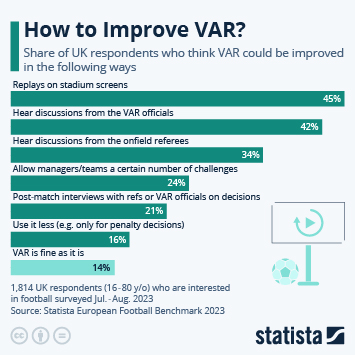
FVS is a pragmatic compromise: it’s not meant to replace VAR in elite competitions that can afford full VAR with advanced camera systems, but it does give many more competitions a practical path to use video review for big, match-deciding incidents. For youth tournaments and leagues with limited budgets it’s a realistic step forward; for top professional leagues the trade-offs in precision and continuous monitoring mean many will continue to prefer full VAR — at least until FVS matures or hybrid models appear. It is worth noting that if for whatever reason the FVS technology malfunctions, the match will continue without the system after both team managers and captains have been informed. As for VAR, there’s always room for improvement as depicted by a survey conducted in the UK.
If you would like us to break down any other football topics, please reach out at info@thegomezway.com
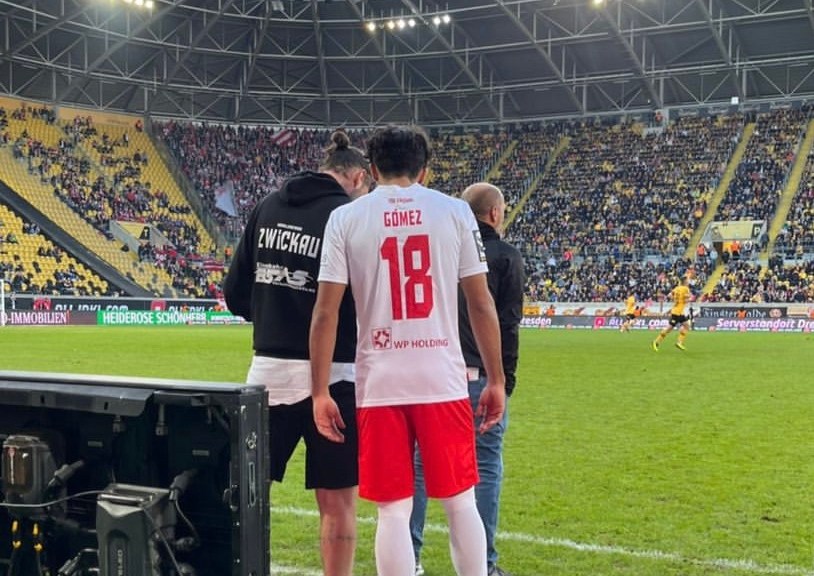

Subbing strategies in football

Throughout the years, I have witnessed nearly every type of substitution strategy there is in the book of football (aka soccer). One doesn’t have to be a referee to experience these ceremonial, sometimes odd, events. I am sure others, who have been around the game in other capacities (ex. fans, pundits), have observed similar strategic behaviors and perhaps, have normalized them as part of today’s game.

Supporting Breast Cancer Awareness.

Unfortunately, these behaviors are here to stay. FIFA, far from discouraging them, does little to properly equip referees with the adequate tools to combat such time-consuming subbing strategies. Some are team and tactical oriented while others are more individual and non-tactical in nature. In the end, they are all time-consuming and serve specific purposes. FIFA has gone as far as mandating additional time be taken to to deal with specific subbing scenarios involving certain player positions (ex. Goalkeepers) or certain injuries (ex. head).

Below, I attempt to explain and classify the possible tactical, psychological, and time-management considerations rather than actual medical reasons used during player substitutions. In some cases, I even provide (and illustrate) some recent examples.

Time Management/Game Management

This strategy normally occurs by the team which is leading late in the game; players oftentimes go down to slow the game tempo and allow their team to reset. It is characterized by a player drop right after the fourth official raises the substitution board (a convenient “pause” before the next phase) and it is intended to have any (or all) the following effects:

  • Disrupting the opponent’s momentum.
  • Providing tired teammates a brief breather before a defensive stand.
  • Allowing the coach to finalize substitution instructions or delaying play strategically.

Psychological or Face-Saving Mechanism

Being subbed off can be a blow to a player’s pride, especially if they have played poorly or disagree with the decision. This strategy is characterized by the player looking disappointed or glancing at the bench, then suddenly sitting down to clutch a leg or calf. It is intended to have the following effects:

  • Going down “injured” provides a socially acceptable excuse — “I’m coming off because I’m hurt, not because I played badly.”
  • It helps them preserve face with teammates, fans, and coaches.

Cristiano Ronaldo is known to use this strategy. Moments before the substitution board goes up, he briefly gestures discomfort, touching his leg. Sometimes, there is no real injury, but going down softens the optics of being replaced for tactical reasons. It allows him to preserve ego and control the narrative: “I came off for fitness reasons, not performance.”

This strategy is normally applied when time is not of the essence and the outcome is favorable to the team subbing; however, players like Ronaldo, Vinicius, etc. apply it whenever they deem it necessary.

Masking Fatigue

Fatigue (especially in high-intensity matches) can be extreme, but players often hesitate to admit exhaustion. This strategy is characterized by a late game cramping or calf-grabbing gesture, but the player walks off fine moments later. It is more popular in games played in extreme weather (ex. hot/cold, humid, rainy, etc.), that extend to over regulation or a series of games played over a short duration (ex. tournaments). It is intended to have the following effects:

  • Falling to the ground signals to the bench: “I’m completely done” without directly saying so.
  • It gives the physio a reason to check the players (hydrate them) and the coach a window to substitute without appearing to replace a “fit” player (gives an out to the coach).

Players know their bodies best and sometimes they can plow through fatigue albeit risking a more severe injury (ex. overload) that could sideline them for a longer period of time. Therefore, players take the precautionary route, subbing themselves out and hoping to be available for the team soon. Coaches also welcome this honest strategy with open arms as fatigue is not always conspicuous. That said, if the outcome of the game does not go as intended for the team, the coach can always claim that the “unexpected” subs impacted initial technical/tactical game plans.

Tactical Reset Opportunity

A brief pause before a substitution allows a team to regroup. This strategy is characterized by the physio jogging on to the field but no treatment occurs. Since the sport is designed to have very few pauses for coaching, this brief pause provides the coach time to shout instructions from the sideline to specific players. It is intended to have the following effects:

  • The manager can use the break to relay tactical instructions to several players.
  • The incoming substitute gets more time to warm up or receive final guidance.

Pep Guardiola is the master of this strategy. In Guardiola Manchester City’s system controlled pauses are gold. Players often blatantly sit down just before a tactical substitution late in matches. It’s rarely coincidental — Guardiola uses these moments to reorganize his press or formation. The physio goes on, but the real value is the 30-second team huddle at the touchline.

@dailymailsport

Pep Guardiola gives his #MCFC side a tactical chat mid-match… he never stops! 🔵👏 #mancity #manchestercity #city #pepguardiola #football #premierleague #fyp #dailymail

♬ original sound – Daily Mail Sport

Disrupting Opponent Rhythm

If the opponent has momentum (sustained attacks or pressing high) a pause can interrupt their flow. This strategy often occurs after the opposing team has just missed a big chance or started dominating possession. It is intended to have the following effects:

  • The emotional and physical rhythm of the attacking team is broken.
  • The defending side can reset shape and composure.

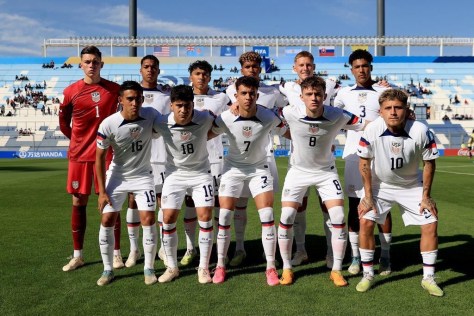
This strategy is very common in competitive matches where one goal is all that is needed to achieve a milestone (ex. win, tie, advancing to next phase) and it’s exacerbated if the team needing to score is continuously applying offensive pressure. The team on the defensive stance often resorts to this strategy to defuse momentum while catching a breather. In the 2023 U20 Men’s World Cup matches, US Coach Mikey Varas instructed Goalkeeper Gaga Slonina to go down late in the second half of most games. This pause would allow Coach Varas and staff to talk to the group. A player substitution was not always conducted.

Cynical / Theatrical Gamesmanship

In some competitions or teams, it’s a deliberate part of “dark arts” (subtle manipulation of the game). This strategy is characterized by a player dramatically sitting or lying down right before their number goes up for a substitution, then sprints off the pitch seconds later. It is intended to have the following effects:

  • Delays play.
  • Allows tactical conversations.
  • Sends a message that the player gave “everything” and is being replaced only because of that “effort.”

An excellent example of this strategy is Atlético de Madrid’s Coach – Diego Simeone. When Atlético are defending a late lead, players often “cramp up” in sync. A player goes down dramatically just before being replaced burning seconds and slowing opponents’ tempo significantly. Pundits call Simenone’s strategy “masterful gamesmanship” acknowledging it as part of a systemic tactical culture which include time-wasting, tactical fouls, simulating injuries, sideline theatrics, and using psychological tactics to frustrate opponents. This approach has earned Atlético the reputation of being masters of “shithousery” and made them one of the most difficult teams to play against in Europe. Diego Simeone transferred his shithousery as a player and perfected the art as a coach.

Preemptive Injury Precaution

Sometimes a player feeling slight tightness or discomfort (ex. hamstring twinge) may go down to prevent worsening it. This scenario is common late in matches or congested fixture schedules. It is intended to have the following effect:

  • Even if it’s not a true injury, it’s a protective signal — “I felt something; better to come off now.”

It is similar to fatigue but with potential longer lasting effects. Explosive players like Kylian Mbappé who are prone to injuries have used this strategy often. At PSG, Mbappé would gesture discomfort and would sit down before being subbed off. In reality, he was not injured but felt tightness in his hamstring — later confirmed by the manager as precautionary. It’s common for players who partake in multiple matches a week to “go down” preemptively to avoid aggravating micro-injuries. Knowing your body is instrumental for a longer and healthier career in any sport.

In summary, when a player collapses before a substitution without being truly injured, it’s usually about controlling tempo, face-saving, or tactical delay — not deception in the malicious sense, but part of the gamecraft that elite players and managers use to influence moments and margins. In practice, these strategies are used widely not just by elite players but all the way down to the amateur level.

Hope you found this post useful. If you have any suggestions or topics you want discussed, please reach out to info@thegomezway.com. #TGW

Beyond talent: A parent’s guide to helping your child become a professional football player

As the parent of two young Mexican-American football players competing professionally in Europe. We have walked the winding, often unpredictable road of raising aspiring athletes. We have watched two boys -and a girl- chase a shared dream across cities, states, and continents. And, if there’s one truth we have learned along the way, it is that talent is just the beginning.

Natural ability on and off the ball matters a lot, but talent alone is never enough to reach the professional level. If you are a parent supporting a young football player with big dreams (who isn’t?), there are critical traits often unseen on the stat sheet that are just as important, if not more so, than raw skill.

Let me walk you through some key traits that make the difference between good, and better, and how you as a parent, can help nurture them. These traits apply to many sports. In fact, they apply to many walks of life.

Growth Mindset: Belief that ability can improve

Kids who believe that abilities can be developed (rather than fixed) are more likely to seek challenges and persist through difficulties. Those who are disciplined to enhance existing abilities and develop new ones have a greater chance of success. A few years ago, during COVID, I wrote this article about a growth mindset and GRIT. It is still very valid…

How parents can help: Avoid labeling your child as a “natural” or saying they were “born talented”. Instead, say thinks like, “You worked hard on that move” or “Your improvement in passing really shows your dedication.”.

Resilience: The art of bouncing back

Lack of playing time, injury, cuts from teams, and bad performances are all part of the journey. What separates those who make it from those who do not is the ability to bounce back: resilience.

How parents can help: Do not shield your child from failures; help them process it. Encourage honest reflection and foster a home environment where setbacks are viewed as learning experiences, not the end of the road.

Grit: The power of passion + perseverance

Coined by psychologist Angela Duckworth, “grit” is a blend of sustained passion and long-term effort. Gritty players keep pushing when the initial motivation fades (ex. during cold practices, bench time, and long travel days).

How parents can help: Praise effort, not just results. Celebrate the process and remind your child that every hour on the pitch (even the tough ones) is an investment in their in their dream.

Perseverance: Sticking with it, even when it’s hard

This goes hand-in-hand with grit. Whether it’s staying motivated through long seasons, navigating coaching changes, or being away from home, perseverance is key.

How parents can help: Offer emotional consistency. Your child needs to know that your love and support don’t depend on performance. Let your home be their anchor.

Passion: The internal drive that fuels the fire

You can’t fake passion. Kids who truly love the game will play when no one’s watching (integrity), train when no one asks, and watch matches with intent to learn.

Close up of a female soccer team celebrating a scored goal

How parents can help: Don’t force the dream. Let your child lead the way. Your role is to support their passion, not to manufacture it.

Sacrifice: Giving up to go up

Becoming a professional footballer requires difficult choices. Social events, free time, and even traditional schooling paths might need to be adjusted to support elite training and competition.

How parents can help: Model sacrifice in your own life and frame it positively. Teach your child to value long-term goals over short-term pleasures. Make sure the sacrifices align with their dreams and not just yours.

Adaptability: Thriving in constant change

A pro football journey is short and often means new teams, new coaches, new countries, and new languages. Adaptability is what keeps players steady in the face of uncertainty.

How parents can help: Encourage independence from an early age. Let your child handle adversity and discomfort. International tournaments, cultural exchanges, or short stints away from home can be powerful preparation.

Coachability: Willingness to learn and change

Even the most gifted players will not succeed without taking feedback and applying it. Humility and openness to learning are crucial.

How parents can help: Model a growth-oriented attitude toward learning in your own life. Encourage respectful relationships with coaches. Help your child reflect after games or sessions, rather than rushing in with critiques.

The Journey is Yours

As a parent, your role isn’t to scout the perfect club, hire the best trainer, or push your child harder. Your job is to guide, support , believe and to help your child develop the traits that will serve them not only in football but in life.

Big Journeys Begin With Small Steps sign

Professional football is a narrow path, but it is NOT reserved for the most naturally gifted. It is open to those who are relentless, resilient, disciplined, and ready for the long haul. Help your child become one of them.

Please reach out if you have topics you would like us to expand on. #theGomezway

Referee Abuse Prevention (RAP) policy update

In late 2023, I first wrote a publication about the shortage of soccer referees in the United States. One of the reasons I cited was the torment of constant criticism that officials undergo on a weekly basis. Adult referees cope with it better; however, for young ones, it is often too much to handle and most abandon the profession. Youth soccer needs referees to grow, without them, games cannot happen. US Soccer has recognized what many of us knew for years. “Without referees, there’s no game. Protecting our referees must become a priority”. Here are some concerning stats provided by US Soccer:

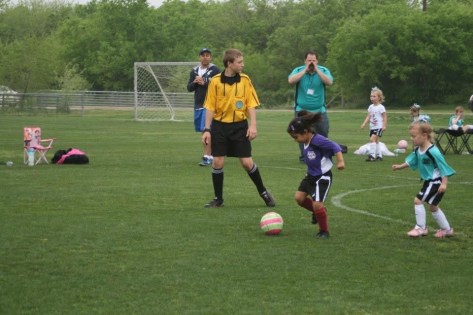
Joana dribbling, me clapping and opponent coach yelling at players and referee
  • 90% of referees report that abuse has increased over the last 5 years
  • 60% of referees choose not to recertify due to harassment and threats

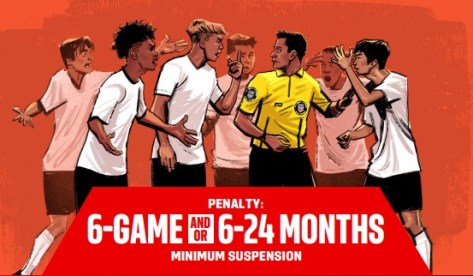
On March 1st, US Soccer’s update to the Referee Abuse Prevention (RAP) Policy (Policy 531-9) took effect. The policy update includes clearer definitions for physical and non-physical abuse -as well as stronger suspensions for reported referee abuse. The updated policy sets minimum expectations for suspensions for individuals who violate the policy.

What the policy does, is to increase the penalties for those who commit offences as outlined by the policy, and following disciplinary action taken by referees under the Laws of the Game. A nationwide reporting structure is currently in development as the next phase (3) of the process, but until this becomes available, referees should ensure that they continue reporting offences and disciplinary sanctions through the reporting process as determined by your local and/or state associations. All the information about the policy update, including the materials for download, can be found at www.ussoccer.com/rap.  Here is a summary:

Rules & Consequences

US Soccer is standing firm to protect referees and restore respect to the game. The updated policy includes stronger sanctions for any form of physical or non-physical abuse towards referees. Players, coaches, and parents are encouraged to learn what behaviors cross the line, so they can avoid penalties and help create a better culture for the future of soccer.

Summary

  • Both Physical and Non-Physical Abuse Have No Place in Our Game.
  • Suspensions will be for several games or time-based (or sometimes both) depending on severity and circumstance.
  • Players, coaches, and spectators are all encouraged to report abuse.

Non-Physical Offenses

The penalties tables below define consequences associated with physical and non-physical offenses against referees. The first table contains non-physical offenses of gross misconduct, abuse, and / or assault.

Non-physical offenseMinimum GamesTime
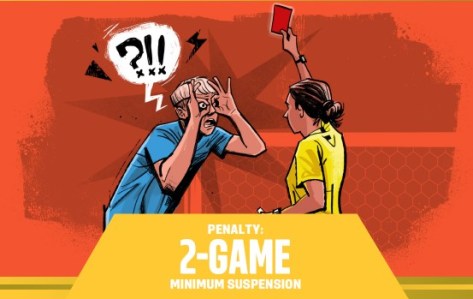
Insulting, Belittling, Insinuating or Taunting Behavior Undermining
Referee Authority
2
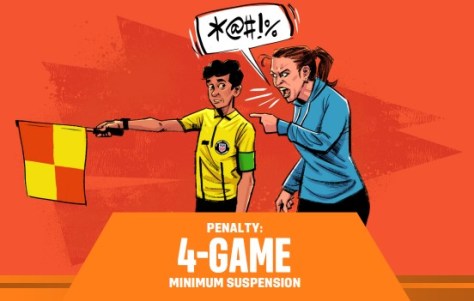
Harassment, Intimidation, Retaliation, Abusive, or Threatening
(Non Physical) Language
4
Aggression, Attacking, Derogatory, Cyberbullying, Doxing or
Threatening (Physical / Violence) Language
66-24 months
Offensive or Discriminatory Act 1012 – 24 months

Physical Offenses

The second table contains non-physical offenses of gross misconduct, abuse, and / or assault.

Physical OffenseMinimum GamesTime
Minor or Slight Deliberate Touching 3 1 – 6 Months31-6 months
Pushing, Grabbing, Pulling, Squeezing, Pinching, Lightly Slapping,
Use of Object in Non Striking Manner, or Physical Property Damage
106 – 24 months
Hitting, Punching, Elbowing, Kicking, Biting, Spiting, Choking,
Tackling, Throwing or Use of Object or Any Part of Body (Forearm,
Knee, Head) in a Striking Manner
12 months – lifetime

Key Takeaways:

  • Penalties can be both game and time depending on severity /circumstances
  • Second time offenders receive double punishment
  • Third time offenders receive a lifetime ban
  • More than one offense at the same tim is at least the punishment for the most serious offense
  • Offenses against minors are automatically subject to a “minor multiplier” resulting in triple punishment
  • One offense warning per league to be managed by states and leagues collaboratively
  • Game consequences are inclusive of 1 game penalty for any red cards given
  • Optionality for 50% penalty for first offense from a minor

Everyone deserves the opportunity to experience soccer without risking his or her well-being. We must protect those in service to the game and we all have a role to play. The game belongs to all of us. To ensure that soccer remains a positive experience for everyone, we need your help to stop referee abuse. Here’s how you can make a difference:

Coaches: Lead by example. Set the tone for good sportsmanship with your players.

Players: Respect your referees, whether you agree with their calls or not.

Parents & Spectators: Cheer for your team, not against the referee. Help create a positive environment

Thank you to all our match officials for their continued efforts, and for doing your part to ensure that abuse and unwanted behaviors have no place in our game. Together, we can make another facet of the beautiful game continue to grow in this country. There is, however, a lot of work for coaches, players, parents, spectators and officials.

If you have topics you’d like us to address please, write to us at info@thegomezway.com

This site is non-profit and for the past 6 years has been the result of one person. If you enjoy the content, consider making a donation to support the infrastructure to keep it going. I’m thinking about revamping the website which would incur in some additional costs. Please consider a donation. Any donation is good.

One-Time
Monthly
Yearly

Make a one-time donation

Make a monthly donation

Make a yearly donation

Choose an amount

$5.00
$15.00
$100.00
$5.00
$15.00
$100.00
$5.00
$15.00
$100.00

Or enter a custom amount

$

Your contribution is appreciated.

Your contribution is appreciated.

Your contribution is appreciated.

DonateDonate monthlyDonate yearly

Renting a car in France with a US driver’s license

We are very fortunate that football often takes us to new places around the globe. However, traveling to each location presents its own challenges (ex. cultural, geographic, political, financial, etc.) and pre-departure research is a must to make the trip a success. No complains, each trip leave us with lessons learned and anecdotes to share and a higher sense of appreciation for our home.

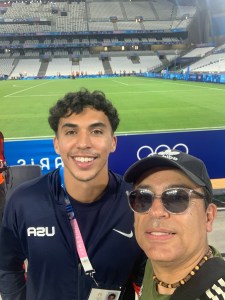
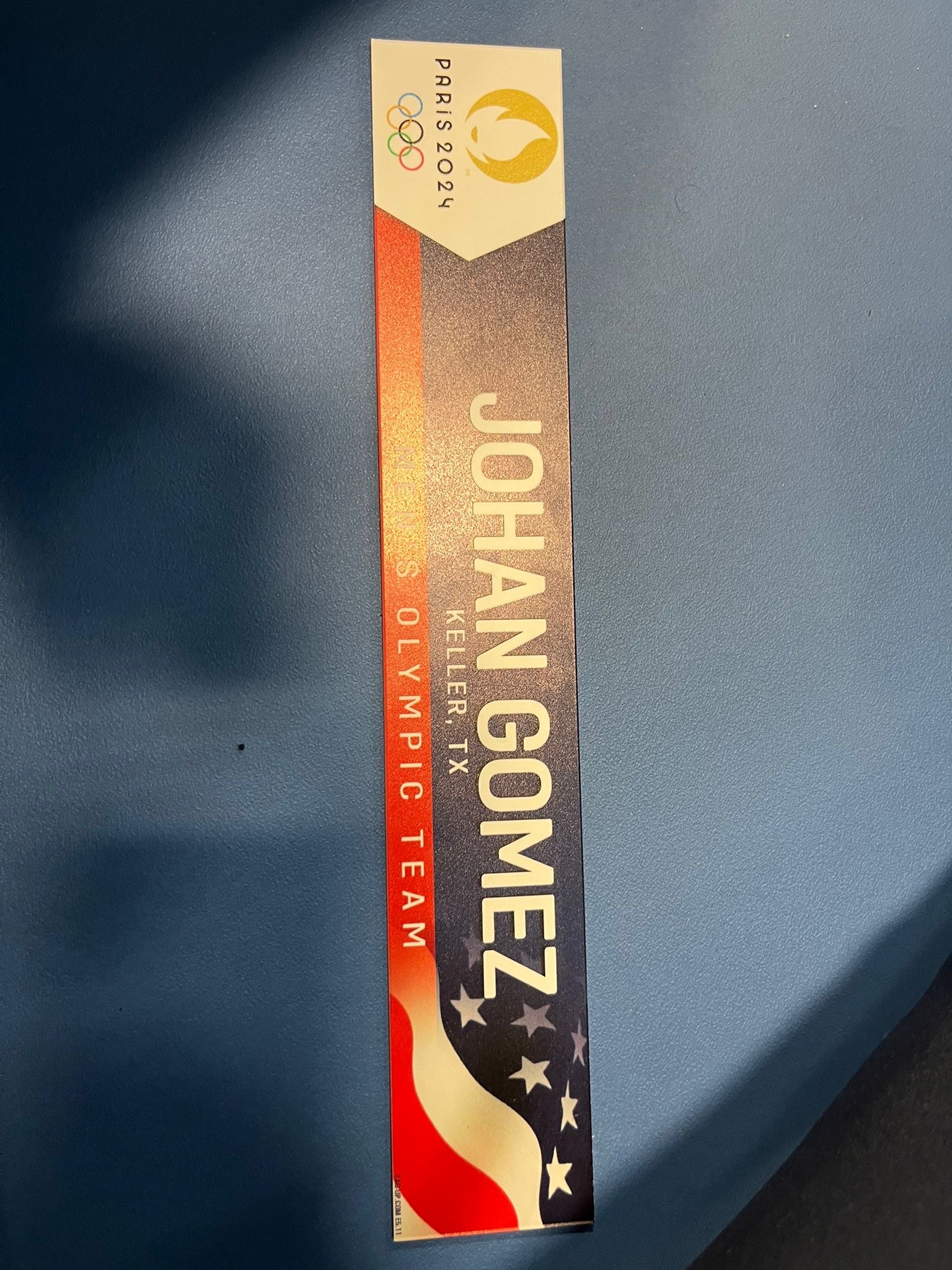
A few days ago, I returned home from visiting Johan with the US Olympic team in Marseille, France. We learned a few things that we hope you find useful for your next trip abroad (France and Spain specifically)

In the past, we had rented a car in Spain and Germany exclusively using our US driver’s license; however, we had never rented a car in France nor had the need to drive across to a different country (Spain) which called for additional requirements.

I rented a 2024 FIAT for the second time this year. This one was automatic transmission.

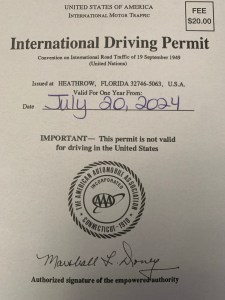
Some websites list an International Driving Permit (IDP) -which is a translation of your US driver’s license- as a requirement to rent and drive a car in Spain yet we never needed one but we have heard some stories… Based on our research, we found that we needed the IDP in France. The IDP (pictured below) can be obtained in the United States at selected AARP locations (and online) and best of all, it can be issued the same day. It costs about $20 (plus cost of 2 passport pictures that can be purchased at Walgreens/CVS).

While in France, I needed to drive up north to Donostia, Spain to visit Jogo. Thus, if one plans to travel outside of France, additional insurance coverage is needed. It is probably best to pay for this insurance upon physically acquiring the car at the counter. For Hertz, I was able to secure international insurance for an additional $20 for my entire trip (about 10 days) for the car above.

As it turned out, when I reached the counter at the Hertz office in Marseille, they informed me that the IDP was “nice to have” but not really a requirement. Therefore, if you plan to rent a car in France, do what you deem necessary. In this case, we ended up erring on the side of caution. Either way, check the rules/guidelines before your trip abroad.

Once I rented the car, it’s worth noting the number of toll roads across France. It’s convenient to carry cash to pay these tolls (about 100 euros from Marseille to Donostia). In any case, the trip was a succes in France and Spain and we’ll be returning soon.

I hope this information helps somebody. Until next time #theGomezway

Beach in Donostia, Basque Country, Spain

Sponsorships for a young footballer?

Subscribe to continue reading

Subscribe to get access to the rest of this post and other subscriber-only content.

Tweet of the month (March 2024)

Soccer is growing in popularity at an exponential rate in the US. TV Networks, Sponsors, Pundits, Coaches, Agents, Social Media Influencers, all are seizing the opportunities daily. Most seek an immediate remuneration; while others look for increasing likes or followers. Very few though, attempt to grow the sport without a premeditated benefit. I believe, the tweet below attempts to educate the public in a impartial manner by commenting on the benefits of playing both high school soccer and club soccer. Is there really a need to choose one over the other? The tweet captures the opinion of a spectrum of individuals from different walks of life. It is a quick read so if you can, take the time to read it as your soccer player either prepares to go through this phase or will undergo this decision in the near future.

For our family, neither of the boys was able to play high school soccer due to their USSF academy commitments. Unfortunately, that is a decision that we’ll have to live with for the rest of our lives. Without sounding too dramatic, it would have been the first (ok second) time the boys would have ever played on the same team. Flip side is that the time they did not spend on a high school team together was utilized to play at a semi-professional level that eventually allowed them to be currently playing at a professional level.

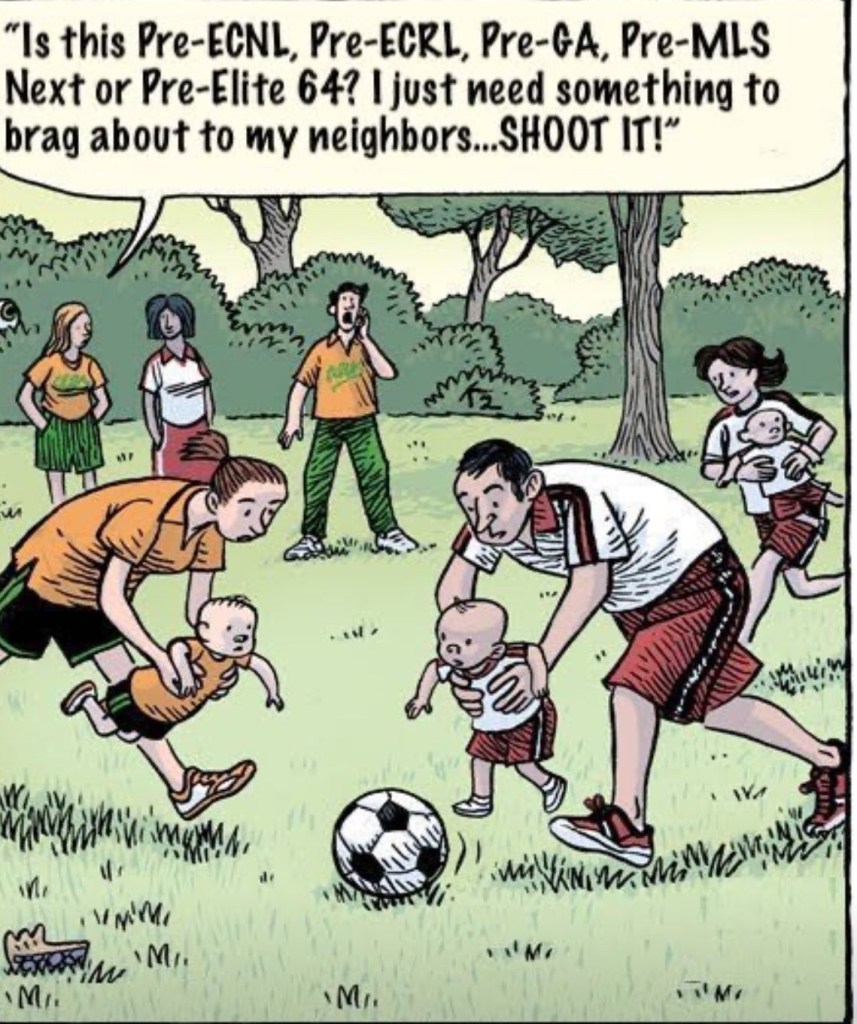
With Joana, we made sure she didn’t miss out on the high school playing experience and she has taken that opportunity on stride. She is also very fortunate to have a supportive club coach who allows his players to concurrently play high school and club soccer. Truth be told, this flexibility is really available due to the large roster he purposedly carries. In short, Joana’s team can easily field two full teams of 11 players with subs included at any given point. In the end, it’s a win-win situation for everyone involved. Players can play both high school and club soccer (even pursue other non HS soccer activities), and coach is remunerated nicely by carrying a large paying roster. Most importantly though, we parents can brag about their kids’ uber-competitive soccer experiences.

Unfortunately in our case and to echo the content of the tweet, I have also heard club coaches (ours included) comment about how high school players tend to pick up “bad habits” during HS soccer season. Therefore, the tweet above hits right at home with club coaches who constantly talk down the entire high school experience making it seem inferior. At least in Joana’s case, her high school soccer coach soccer knowledge and experience is far longer (and superior) than that of her club’s coach. In the end, we have figured out a way to use both mentors to mold her into the excellent player she has become. She is improved so much in the last two years thanks to both coaches who supplement each other quite nicely along with what we do at home.

If you have any suggestions as to topics you want to talk about, please reach out. #theGomezway

US Soccer referee annual certification explained 2024

As we begin a busy year of soccer in the United States (MLS, USL, NWSL, Gold Cup W, Nations League, Copa America, etc.), refereeing takes central stage. That’s not only because the MLS referees are currently on a lockout but because soccer officiating is beginning to gain the attention it deserves as a profession. There are opportunities in refereeing opening up for “the ambitious”…

Last year, I wrote this post about the shortage of referees in the US. In it, I explained the annual certification process and how its length could be detrimental to referee recruitment and retention. Now, in my 20th year of soccer refereeing, here is how the process looks for a North Texas Referee. It’s NOT any shorter but the truth be told, the refresher material is very relevant (even for experienced referees). Below is a checklist of the process with its brief explanation:

  • Required background check and clinic registration (National)
  • Welcome (State Association: North Texas)
  • Intro to Safe and Healthy Playing Environments (National)
  • Safesport (National -18 years of age minimum)
  • Laws of the Game (National)
  • Law Changes Review (National)
  • Referee Code of Conduct (National)
  • Referee Refreshers (2) Assignment (National)
  • Online Test (National)

Required Background Check

In order to register with your corresponding state association (in my case North Texas (NTX)) and the US Soccer Federation (USSF), the referee candidate (if 18 years or older) must pass a background check. The application process in the North Texas System is comprised of 3 steps:

Step 1: Answering a quick (3 questions) questionnaire

In this step, the candidate is asked about 1. prior convictions and types: Felony, Crime of Violence, Crime against an individual, or Fraud. 2. current/desired soccer official type: Assignor, Referee Coach or Referee type (Futsal, Indoor, Outdoor) and 3. Type of registration: Recertification, Upgrade, Fitness Test, Emeritus, Supplemental Training, or Regain Level .

Step 2: Selecting an online clinic

Based on the answer to question #2 in the previous step regarding desired soccer official type and type of registration, you will have to select the pertinent clinic(s) to fulfill your registration process.

Step 3: Payment of pertinent clinics

In my case, I needed to pay two fees: $40 for the USSF “2024 Referee License Fee” and $30 for the Referee Recertification clinic. Payment is expected at this point in order to proceed. This includes a $10 late fee for not having taken care of this process prior to December 31st, of 2023.

Since background checks have a cost associated with them, the verification process doesn’t really start until payment is rendered and approved. Then, the system will send a confirmation email to the email address in your profile. Also, the system will require “Consent” and “Social Security Number” in order to proceed with the electronic background check.

The actual background check process is performed through a third party website (JD Palatine). The submission of some personal information is necessary to complete the application. In addition to consenting to the electronic background information, the candidate will be asked the state where you intend to work AND where you reside. This process will take 10 minutes to complete and upon its conclusion, another email will be generated. This email contains a file number to check on the status of the background check; resolution to the background check can take up to three weeks to be received by the state association. Plan accordingly if there’s a desire to officiate immediately.

Welcome

This online presentation contains slides regarding the recertification steps starting with the two US Soccer Learning Center modules: Introduction to Safe and Healthy Playing Environments and Safesport. Presentation duration is about 5 minutes

Introduction to Safe and Healthy Playing Environments

This is the description that the US Soccer Learning Center provides about this course: “Understanding and knowing how to react to emergencies is an important part of our responsibility as leaders in the sport. This training will help you identify and respond to common issues that occur on the field; it is good for one year from the date of completion.”

This course mostly talks about having Emergency Action Plans (EAPs) in place and when to activate them based on situations impacting different players, coaches, referees emergencies (ex. concussions. cardiac arrest, inclement weather, etc.). Course duration can vary from 2 to 3 hours.

Safesport

This is the description that the US Soccer Learning Center provides about this course:: “SafeSport training is a requirement of the USOPC for anyone involved in youth sports. This training is provided by the U.S. Center for SafeSport and requires yearly refreshers“.

This training is not required for any individual under the age of 18.” Course duration can vary from 40 to 60 minutes.


Laws of the Game

This is merely a reminder that officials need to have a copy of the laws of the game. Through the 3-4 slides presented, one can either read, download a hard copy on your personal computer or download “the Laws of the Game” mobile application. There’s also a link to the IFAB Laws of the Game website. Duration is 5 minutes.

Laws of the Game changes

This is a summary of the law changes for which the applicant is seeking recertification. Duration is dependent upon the number of law changes or revisions. For 2024, emphasis was on the offside call, deliberate play, and hand balls. As reference, the 2024 duration is about 20 minutes

Referee Refreshers

For the 2024 recertification, there were two refreshers. These refresh courses reinforce material learned in previous years: Managing the game, managing the players, etc. the 2024 duration is 30 – 60 minutes for each lesson.

Online Tests

Four 25 question tests are administered. They need to be completed in one session; otherwise, the test must be started from the beginning. A score of 80 or above must be attained. Duration is variable for each of the four tests.

Minority representation

With Women’s international day celebrated last Friday (03.08), it seems fitting to talk about minority representation in refereeing. Historically, the refereeing circle has been quite limited; the “boys club” in refereeing, as in other circles of soccer, has dominated making entry to the profession difficult for marginalized groups. However, recent assignments to important games are encouraging. One can only hope that these assignments to women (and other minority groups) are more permanent rather than based on annual commemoration of inclusion days or just checking a box. Below are some examples of baby steps:

MLS Match

San Jose Earthquakes vs. Real Salt Lake – September 16, 2023

USA FIFA Referee Natalie Simon was assigned as the Referee, making her the fourth ever female official to work an MLS match as the Referee and the first Black female official to do so.

The most recent female official to work an MLS match as the Referee was USA FIFA Referee Tori Penso (wife of retired referee Chris Penso), who recently became the first USA official to referee a Women’s World Cup Final.

It is also worth noting that the assignments to minority groups should be based on merit and not on inclusion status or checkboxes. Due to their historical limited experience, some of these , minority referees may not be quite ready for the big stage. Tori has demonstrated that her level (physical and emotional) is dynamic to be refereeing important matches consistently. Even at the Women’s Gold Cup, she struggled when game-impacting decisions were required of her.

MLS Cup

Other recent assignments to important matches include.

  • Armando Villarreal, Referee
  • Cameron Blanchard, Assistant Referee
  • Ian McKay, Assistant Referee
  • Jon Freemon, 4th Official
  • Kevin Stott, VAR
  • TJ Zablocki, AVAR
  • Jeremy Kieso, Reserve AR

NWSL Final

  • Katja Koroleva, Referee
  • Jennifer Garner, Assistant Referee (from North Texas)
  • Kate Wasiak, Assistant Referee
  • Anya Voigt, 4th Official
  • Kevin Broadley VAR
  • Maggie Short, AVAR
  • Tiff Turpin, Reserve AR

USL Championship

  • Elton Garcia, Referee
  • Mike Nickerson, Assistant Referee
  • Nick Balcer, Assistant Referee
  • Natalie Simon, 4th Official
  • Matt Schwartz, Reserve AR

USL League 1 Final

  • Sergii Demianchuk, Referee
  • Matt Rodman, Assistant Referee
  • Joe Suchoski, Assistant Referee
  • Jeremy Scheer, 4th Official
  • Bennett Savage, Reserve AR

MLS Next PRO Final

  • Calin Radosav, Referee
  • Noah Kenyawani, Assistant Referee
  • Rhett Hammil, Assistant Referee
  • JC Griggs, 4th Official
  • Nick Seymour, Reserve AR

Liga MX

This past weekend Katia Itzel García, officiated the Queretaro vs Pachuca game. It had been 20 years since Virginia Tovar, the first woman to officiate a Liga MX match, was given an opportunity. Twenty years had to go by for a second opportunity. Katia recently officiated the Women’s Gold Cup match between Canada and USA.

That’s all for now. For suggestions on topics you’d like to see discussed, please reach out. #theGomezway.

Tweet of the month (February 2024)

Gratitude is a trait we have tried to instill in our children from an early age; they were blessed to have attended a Christian school where even when we “failed” at home, they were constantly reminded that among other life values, humility and gratitude are paramount in life.

As part of becoming professional players, they quickly realized that they were granted a special gift that impacts football fans. Often, they make it a point to show their appreciation when a situation warrants it. As parents, we proudly observe their growth off and on the field but also join them in thanking those who constantly support them especially those who are present in the good, the bad, and the ugly…

Siempre estaremos agradecidos con la gente que constantemente apoya a los chavos para bien ó para mejorar. Muchísimas gracias. No nos olvidaremos.

It is gratifying to see the boys interacting with kiddos…our children, were not too long ago *there*. We now understand that it’s impossible to ‘satisfy’ all fans requests but our boys strive to…it’s a task…