Tag Archives: FIFA

What is Football Video Support (FVS)?

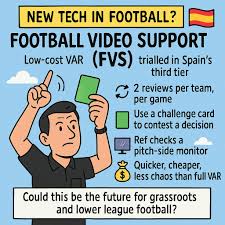
FVS is a simplified, lower-cost video-review system designed to give referees a way to review “clear and obvious” match-deciding incidents without the full technical, staffing and camera requirements of a traditional VAR center. It is not VAR with a different name — it’s a different operating model intended mostly for competitions that can’t run full VAR.

Why FIFA introduced it
  • Accessibility and cost: many member associations asked for a more affordable way to use video to support referees (fewer cameras, no permanent VAR room and a smaller support footprint). FIFA developed FVS to meet that demand.
  • Control and simplicity: FVS aims to keep the referee at the center of the decision and to provide a framed, limited review process that’s easier to deploy across youth tournaments and lower-budget leagues.

When FVS is (and has been) used
While FVS was initially tested in the Spanish Futsal League (Primera División de Futsal), the first top-flight domestic association football league to fully adopt and debut the system was Spain’s top women’s league, Liga F (also known as the Liga Profesional de Fútbol Femenino) in the beginning of its 2025-2026 season (specifically, in September 2025). Prior to that, FIFA trialed and used FVS at multiple youth tournaments:

  • Blue Stars / FIFA Youth Cup (trial).
  • FIFA U-20 Women’s World Cup (trial in Colombia 2024).
  • FIFA U-17 Women’s World Cup (used in 2024 tournament and being included in subsequent youth tournaments).
  • More recently it has been used at FIFA U-20 (Chile) and U17 (Morocco) youth tournaments and trialed broadly.
What FVS reviews (which incidents can be challenged)

FVS is limited to the same four review categories normally associated with VAR protocols:

  1. Goal/no-goal (including offences in the build up, offside where applicable, handball).
  2. Penalty/no-penalty.
  3. Direct red card incidents (serious foul play, violent conduct, DOGSO, etc.).
  4. Mistaken identity when a referee books/sends off the wrong player.

How FVS works (step-by-step, matchday)

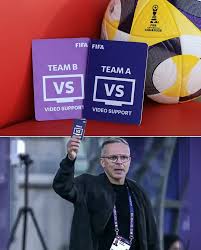
  1. Challenge method: unlike VAR, reviews are initiated by the coaches — each coach gets a limited number of challenge requests (typically two per match; one extra in extra time in competitions that allow it). The coach must hand a challenge card to the fourth official immediately after the incident to trigger a review.
  2. Referee review: the referee goes to a pitch-side monitor (or another on-field review area) to view replays provided by a replay operator using available broadcast/camera feeds, then makes the final decision. There is no separate VAR team continuously monitoring all incidents from a remote control room.
  3. Technology footprint: FVS is intentionally lighter — it generally relies on broadcast camera feeds or a small number of dedicated cameras and a local replay operator rather than a fully equipped VAR control room with many specialist cameras and staff.

Key differences vs VAR (at a glance)
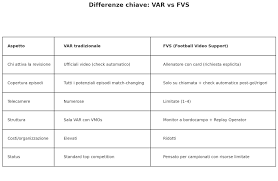
  • Initiation: VAR can perform “silent checks” and proactively monitor incidents; FVS only reviews when a coach requests a review (challenge).
  • Staffing/tech: VAR requires a full VAR room, specialist VARs and often many dedicated cameras. FVS needs fewer cameras, a replay operator and no continuous remote video-referee team.
  • Scope and coverage: VAR continuously watches all key incidents and can intervene; FVS is limited to coach-triggered, narrowly defined reviewable events. That reduces coverage and the chance of automatic correction.
  • Final authority: in both systems the on-field referee has the final decision after viewing replays, but FVS places more emphasis on the referee doing the review themselves on the sideline rather than relying on a separate VAR team recommendation.

Advantages of FVS

  • Cost and accessibility — much cheaper to implement, so more competitions (youth, lower leagues, smaller federations) can use video support. That’s the main strategic advantage.
  • Simplicity — fewer moving parts, simpler procedures and less technical overhead make roll-out faster.
  • Empowers coaches — gives coaches a structured way to challenge decisions (adds a tactical and accountability element). Some coaches and organizers like that involvement.
  • Keeps referee central — the on-field referee reviews evidence directly, which supporters say preserves authority and transparency.

Disadvantages / risks compared with VAR

  • Limited coverage / accuracy — because FVS usually uses broadcast feeds and fewer cameras, very tight technical calls (e.g., marginal offsides requiring frame-by-frame multi-angle geometry) may be harder or impossible to resolve as precisely as with full VAR systems that use multiple dedicated cameras and calibrated offside technology.
  • Interruptions & tactical misuse — coach challenges stop play and can interrupt momentum; coaches may “game” their challenges (save them for late in the match or use them tactically). Some coaches and observers have raised this concern during trials.
  • Fewer proactive corrections — because FVS waits for a coach challenge, clear errors that nobody challenges (or situations where coaches don’t want to burn a challenge) can remain uncorrected — whereas VAR’s silent checks can catch incidents that the teams didn’t notice.
  • Consistency & pressure on referee — the on-field referee must perform the review and deliver the decision in front of teams/fans; that creates different psychological pressures versus VAR where a separate VAR team can make or strongly recommend the call remotely.

Early data & reception

Reports from tournaments and media indicate FVS is being used regularly in youth tournaments and early trials. Coverage from trials shows a modest number of reviews per game (e.g. some reporting cited an average around ~1.4 interventions per match in certain trials, with a large proportion confirming the original decision) — but opinions are mixed: some refereeing authorities and coaches welcome the lower cost and clarity; other stakeholders worry about interruptions and possible tactical use. FIFA and IFAB are monitoring trials and collecting data before deciding on wider roll-out.

Practical example (how a coach challenge looks in real time)

  1. Coaching staff thinks a referee missed a clear handball leading to a goal.
  2. Coaching staff immediately gives the fourth official the challenge card. (If the ball is in play again, the challenge must be given immediately — the Laws require that a decision be changed only before play restarts.)
  3. Referee stops play if necessary, views replays on the pitch-side monitor supplied by the replay operator (using available camera angles), then signals and announces the final decision to the teams and stadium.
Bottom line — when FVS makes sense

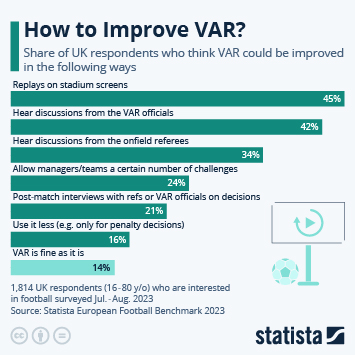
FVS is a pragmatic compromise: it’s not meant to replace VAR in elite competitions that can afford full VAR with advanced camera systems, but it does give many more competitions a practical path to use video review for big, match-deciding incidents. For youth tournaments and leagues with limited budgets it’s a realistic step forward; for top professional leagues the trade-offs in precision and continuous monitoring mean many will continue to prefer full VAR — at least until FVS matures or hybrid models appear. It is worth noting that if for whatever reason the FVS technology malfunctions, the match will continue without the system after both team managers and captains have been informed. As for VAR, there’s always room for improvement as depicted by a survey conducted in the UK.
If you would like us to break down any other football topics, please reach out at info@thegomezway.com

Subbing strategies in football

Throughout the years, I have witnessed nearly every type of substitution strategy there is in the book of football (aka soccer). One doesn’t have to be a referee to experience these ceremonial, sometimes odd, events. I am sure others, who have been around the game in other capacities (ex. fans, pundits), have observed similar strategic behaviors and perhaps, have normalized them as part of today’s game.

Supporting Breast Cancer Awareness.

Unfortunately, these behaviors are here to stay. FIFA, far from discouraging them, does little to properly equip referees with the adequate tools to combat such time-consuming subbing strategies. Some are team and tactical oriented while others are more individual and non-tactical in nature. In the end, they are all time-consuming and serve specific purposes. FIFA has gone as far as mandating additional time be taken to to deal with specific subbing scenarios involving certain player positions (ex. Goalkeepers) or certain injuries (ex. head).

Below, I attempt to explain and classify the possible tactical, psychological, and time-management considerations rather than actual medical reasons used during player substitutions. In some cases, I even provide (and illustrate) some recent examples.

Time Management/Game Management

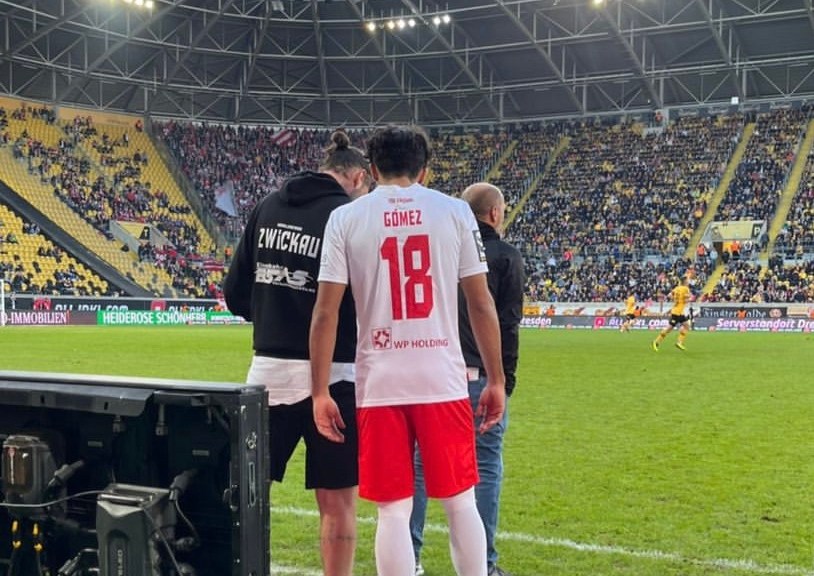
This strategy normally occurs by the team which is leading late in the game; players oftentimes go down to slow the game tempo and allow their team to reset. It is characterized by a player drop right after the fourth official raises the substitution board (a convenient “pause” before the next phase) and it is intended to have any (or all) the following effects:

  • Disrupting the opponent’s momentum.
  • Providing tired teammates a brief breather before a defensive stand.
  • Allowing the coach to finalize substitution instructions or delaying play strategically.

Psychological or Face-Saving Mechanism

Being subbed off can be a blow to a player’s pride, especially if they have played poorly or disagree with the decision. This strategy is characterized by the player looking disappointed or glancing at the bench, then suddenly sitting down to clutch a leg or calf. It is intended to have the following effects:

  • Going down “injured” provides a socially acceptable excuse — “I’m coming off because I’m hurt, not because I played badly.”
  • It helps them preserve face with teammates, fans, and coaches.

Cristiano Ronaldo is known to use this strategy. Moments before the substitution board goes up, he briefly gestures discomfort, touching his leg. Sometimes, there is no real injury, but going down softens the optics of being replaced for tactical reasons. It allows him to preserve ego and control the narrative: “I came off for fitness reasons, not performance.”

This strategy is normally applied when time is not of the essence and the outcome is favorable to the team subbing; however, players like Ronaldo, Vinicius, etc. apply it whenever they deem it necessary.

Masking Fatigue

Fatigue (especially in high-intensity matches) can be extreme, but players often hesitate to admit exhaustion. This strategy is characterized by a late game cramping or calf-grabbing gesture, but the player walks off fine moments later. It is more popular in games played in extreme weather (ex. hot/cold, humid, rainy, etc.), that extend to over regulation or a series of games played over a short duration (ex. tournaments). It is intended to have the following effects:

  • Falling to the ground signals to the bench: “I’m completely done” without directly saying so.
  • It gives the physio a reason to check the players (hydrate them) and the coach a window to substitute without appearing to replace a “fit” player (gives an out to the coach).

Players know their bodies best and sometimes they can plow through fatigue albeit risking a more severe injury (ex. overload) that could sideline them for a longer period of time. Therefore, players take the precautionary route, subbing themselves out and hoping to be available for the team soon. Coaches also welcome this honest strategy with open arms as fatigue is not always conspicuous. That said, if the outcome of the game does not go as intended for the team, the coach can always claim that the “unexpected” subs impacted initial technical/tactical game plans.

Tactical Reset Opportunity

A brief pause before a substitution allows a team to regroup. This strategy is characterized by the physio jogging on to the field but no treatment occurs. Since the sport is designed to have very few pauses for coaching, this brief pause provides the coach time to shout instructions from the sideline to specific players. It is intended to have the following effects:

  • The manager can use the break to relay tactical instructions to several players.
  • The incoming substitute gets more time to warm up or receive final guidance.

Pep Guardiola is the master of this strategy. In Guardiola Manchester City’s system controlled pauses are gold. Players often blatantly sit down just before a tactical substitution late in matches. It’s rarely coincidental — Guardiola uses these moments to reorganize his press or formation. The physio goes on, but the real value is the 30-second team huddle at the touchline.

@dailymailsport

Pep Guardiola gives his #MCFC side a tactical chat mid-match… he never stops! 🔵👏 #mancity #manchestercity #city #pepguardiola #football #premierleague #fyp #dailymail

♬ original sound – Daily Mail Sport

Disrupting Opponent Rhythm

If the opponent has momentum (sustained attacks or pressing high) a pause can interrupt their flow. This strategy often occurs after the opposing team has just missed a big chance or started dominating possession. It is intended to have the following effects:

  • The emotional and physical rhythm of the attacking team is broken.
  • The defending side can reset shape and composure.

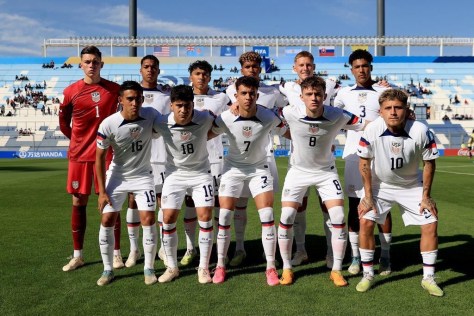
This strategy is very common in competitive matches where one goal is all that is needed to achieve a milestone (ex. win, tie, advancing to next phase) and it’s exacerbated if the team needing to score is continuously applying offensive pressure. The team on the defensive stance often resorts to this strategy to defuse momentum while catching a breather. In the 2023 U20 Men’s World Cup matches, US Coach Mikey Varas instructed Goalkeeper Gaga Slonina to go down late in the second half of most games. This pause would allow Coach Varas and staff to talk to the group. A player substitution was not always conducted.

Cynical / Theatrical Gamesmanship

In some competitions or teams, it’s a deliberate part of “dark arts” (subtle manipulation of the game). This strategy is characterized by a player dramatically sitting or lying down right before their number goes up for a substitution, then sprints off the pitch seconds later. It is intended to have the following effects:

  • Delays play.
  • Allows tactical conversations.
  • Sends a message that the player gave “everything” and is being replaced only because of that “effort.”

An excellent example of this strategy is Atlético de Madrid’s Coach – Diego Simeone. When Atlético are defending a late lead, players often “cramp up” in sync. A player goes down dramatically just before being replaced burning seconds and slowing opponents’ tempo significantly. Pundits call Simenone’s strategy “masterful gamesmanship” acknowledging it as part of a systemic tactical culture which include time-wasting, tactical fouls, simulating injuries, sideline theatrics, and using psychological tactics to frustrate opponents. This approach has earned Atlético the reputation of being masters of “shithousery” and made them one of the most difficult teams to play against in Europe. Diego Simeone transferred his shithousery as a player and perfected the art as a coach.

Preemptive Injury Precaution

Sometimes a player feeling slight tightness or discomfort (ex. hamstring twinge) may go down to prevent worsening it. This scenario is common late in matches or congested fixture schedules. It is intended to have the following effect:

  • Even if it’s not a true injury, it’s a protective signal — “I felt something; better to come off now.”

It is similar to fatigue but with potential longer lasting effects. Explosive players like Kylian Mbappé who are prone to injuries have used this strategy often. At PSG, Mbappé would gesture discomfort and would sit down before being subbed off. In reality, he was not injured but felt tightness in his hamstring — later confirmed by the manager as precautionary. It’s common for players who partake in multiple matches a week to “go down” preemptively to avoid aggravating micro-injuries. Knowing your body is instrumental for a longer and healthier career in any sport.

In summary, when a player collapses before a substitution without being truly injured, it’s usually about controlling tempo, face-saving, or tactical delay — not deception in the malicious sense, but part of the gamecraft that elite players and managers use to influence moments and margins. In practice, these strategies are used widely not just by elite players but all the way down to the amateur level.

Hope you found this post useful. If you have any suggestions or topics you want discussed, please reach out to info@thegomezway.com. #TGW

Sponsorships for a young footballer?

Subscribe to continue reading

Subscribe to get access to the rest of this post and other subscriber-only content.

What’s up with the FIFA 2030 World Cup?

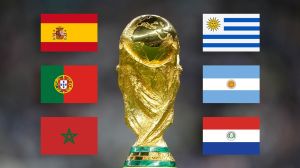
Last month, FIFA announced that the 2030 FIFA Men’s World Cup (WC), officially denominated as the centennial WC, will once again be jointly hosted by more than two countries. For the 24th edition of the quadrennial event, FIFA selected host nations which are scattered across multiple continents (3) and about 6000 miles apart. In a nutshell, the games will be played as follows:

  • Inaugural games (3) in Uruguay and one group game each in Argentina, and Paraguay
  • Rest of the games (101): Spain, Portugal, and Morocco

Below, we analyze, and hypothesize, as to the reasoning of such decision by FIFA.

Host nation requirements

FIFA is comprised of six confederations: Africa (AFO), Asia (AFC), Europe (UEFA), North America (CONCACAF), South America (CONMEBOL), and Oceania (OFO) whose member nations can submit bids to host a WC. FIFA has a list of requirements that a potential host nation need to have. Below is just a summary.

Infrastructure:

Unfortunately, only Argentina currently possesses one or two stadiums with the below requirements that FIFA could potentially approve. The three host countries do have a few stadiums that could be renovated by 2030 but that would cost money these nations do not have. Fortunately, they have over six years to attempt to be prepared and a governing body -FIFA- more than willing to bend their own requirements in exchange of some re-election votes.

  • Have at least 14 all-seater stadiums
  • Each of the 14 all-seater stadiums must have a capacity of 40,000 seats
  • 7 of the 14 stadiums must pre-exist prior to the bid submission
  • The opening and final match must take place in a 80,000-seat stadium
  • The semi-finals matches must take place in a 60,000-seat stadium
  • Have at least a pool of 72 suitable training sites for team base camps
  • Have four suitable venue-specific training site options per stadium
  • Have two suitable referee base camp training site options

In addition to the infrastructure requirements above, the FIFA council also enforces loosely documented requirements regarding broadcasting sites, competition-related event sites, as well as accommodation, requirements for sustainability, environmental protections, human rights, governmental support, and organizational model to be used. FIFA is used to turn a blind-eye on their documented requirements. Enforcing the host nation requirements resembles football refereeing a lot. It’s subject to interpretation…

FIFA’s confederation rotation policy

Along with the above requirements, FIFA has a policy of excluding from bid submission contention the confederation(s) where the most recent WC took place. At the time the selection of the 2030 WC was announced in October 2023, Qatar had hosted the 2022 WC; therefore, AFC was excluded. Also, since the 2026 WC was already scheduled to take place in Canada, Mexico and the United States, CONCACAF would also be excluded from bid submission contention. Therefore, the following confederations remained as viable candidates for the 2030 WC: AFO, UEFA, CONMEBOL, and OFO. It’s noteworthy that FIFA’s rotation policy has “somehow” historically excluded AFO (except for South Africa in 2010) so it was now time to pay favors to Africa. More specifically, Morocco had bid for a WC many times so it was long overdue.

Many speculate that with FIFA’s rotation system and the 2030 selection concluded, CONCACAF (which will host the 2026 WC), CONMEBOL, UEFA, and CAF (confederations due to host the 2030 WC), would be unable to bid for the 2034 WC, leaving the AFC and OFC as the sole candidates. This has led to accusations that FIFA selected the hosts only to ensure that Saudi Arabia, an AFC member with major human rights controversies (like Qatar in 2022) would have their bid uncontested. Since FIFA wants to make the 2034 decision in 2024, it would leave little time for other eligible members OFO (Australia and New Zealand) or China (AFC) to attempt to prepare a strong bid to co-host the 2034 WC along with Saudi Arabia.

Global reach

FIFA members will be the first ones to justify that awarding the 2030 WC to multiple nations across different continents will enhance the global appeal and reach of the tournament. Nothing can be further from the truth as the “beautiful game” is by far, the most popular and viewed sports event in the world. It really does not need any additional outreach to garner more appeal. In fact, one could argue that awarding the tournament to countries that lack the infrastructure to host the tournament is financially detrimental to the growth of the game. See attendance #’s in the “new” continents: Asia and Africa (lowest of the last 10 occurrences). South Africa is still recovering from the deep investment in WC infrastructure from 2010.

World CupTotal AttendanceAttendance/game
2018 – Russia3,031,76847,371
2014 – Brazil3,441,45053,772
2010 – South Africa3,167,98449,499
2006 – Germany3,367,00052,609
2002 – Japan/ S. Korea2,724,60442,571
1998 – France2,859,23444,676
1994 – USA3,568,56768,626
Attendance per WC.
Note: In 1998, the # of countries participating increased to 32

Political reasons

Like any of his predecessors whose career continuity depends on re-election, FIFA President Gianni Infantino is known to be a good populist diplomatic. Nothing can guarantee more votes from different continents than to spread the joy of hosting WC games among three unqualified countries: Argentina, Paraguay, and Uruguay. These three countries were allegedly selected as co-hosts nations to commemorate the 100th anniversary of the original WC in 1930 that took place in Uruguay.

Uruguay

The reason for Uruguay’s inclusion can be somewhat justified as the nation which hosted (and won) the first WC in 1930. Uruguay has qualified to 15 out a total 22 WC. It’s a regular attendee by its own merits. It has also won the WC twice in 1930 and 1950.

Argentina

Argentina is the current men’s WC champion whose national team rosters probably the best footballer in history. It’s hard to exclude them especially since Argentina is a neighbor to Uruguay. In May 2023, FIFA President Gianni Infantino started hinting at a possible Argentinean favoritism when, for political reasons, FIFA stripped Indonesia the opportunity to host the U20 men’s WC and suddenly granted it to Argentina -whose team had failed to qualify in CONMEBOL. To magnify that perceived favoritism, many argued that Messi didn’t deserve the recently awarded 8th Ballon Do’r 2023 but was secretly favored in the votes due to winning the 2022 WC. Argentina has qualified to 19 WCs out a possible 22. It has won the WC three times in 1978, 1986, and 2022.

Paraguay

The original CONMEBOL bid to host the 2030 WC included Uruguay, Argentina, Paraguay and Chile. The only reason I can reason for the inclusion of Paraguay is to honor the original bid but if that were the reason, why exclude Chile? Other than that, I am unable to justify Paraguay’s inclusion; this country wouldn’t be able to host a WC on its own given its infrastructure so other than neighboring Uruguay and Argentina, this seems as a quid pro quo reason. Paraguay has qualified to 9 WCs out a possible 22 and has never won a WC. Don’t forget that host nations get an automatic invitation to the WC, this means that not only Argentina, but also Uruguay and Paraguay, are automagically qualified to the 2030 WC (another FIFA gift).

Economic reasons

Out of the three South American nations, no economy is hurting as much as the Argentinean. Read my post about my recent trip to Argentina. With the football infrastructure Argentina currently has, a new president, Javier Millei taking office in a few days and six and a half years to prepare, hopefully the country can benefit from an influx of tourists and the economy can recover (once and for all) from the recent lows the nation has experienced in the past ten years.

Be it what it may, we in the United States, will have an opportunity to travel a shorter distance to gelid South American countries during their winter to hopefully witness some familiar football faces who will start to shine in 2026 and may be consolidated by the 2030 WC. Until next time #theGomezway