Tag Archives: feature

What is Football Video Support (FVS)?

FVS is a simplified, lower-cost video-review system designed to give referees a way to review “clear and obvious” match-deciding incidents without the full technical, staffing and camera requirements of a traditional VAR center. It is not VAR with a different name — it’s a different operating model intended mostly for competitions that can’t run full VAR.

Why FIFA introduced it
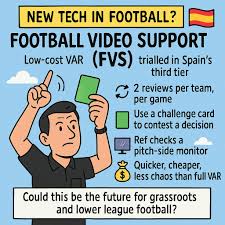
  • Accessibility and cost: many member associations asked for a more affordable way to use video to support referees (fewer cameras, no permanent VAR room and a smaller support footprint). FIFA developed FVS to meet that demand.
  • Control and simplicity: FVS aims to keep the referee at the center of the decision and to provide a framed, limited review process that’s easier to deploy across youth tournaments and lower-budget leagues.

When FVS is (and has been) used
While FVS was initially tested in the Spanish Futsal League (Primera División de Futsal), the first top-flight domestic association football league to fully adopt and debut the system was Spain’s top women’s league, Liga F (also known as the Liga Profesional de Fútbol Femenino) in the beginning of its 2025-2026 season (specifically, in September 2025). Prior to that, FIFA trialed and used FVS at multiple youth tournaments:

  • Blue Stars / FIFA Youth Cup (trial).
  • FIFA U-20 Women’s World Cup (trial in Colombia 2024).
  • FIFA U-17 Women’s World Cup (used in 2024 tournament and being included in subsequent youth tournaments).
  • More recently it has been used at FIFA U-20 (Chile) and U17 (Morocco) youth tournaments and trialed broadly.
What FVS reviews (which incidents can be challenged)

FVS is limited to the same four review categories normally associated with VAR protocols:

  1. Goal/no-goal (including offences in the build up, offside where applicable, handball).
  2. Penalty/no-penalty.
  3. Direct red card incidents (serious foul play, violent conduct, DOGSO, etc.).
  4. Mistaken identity when a referee books/sends off the wrong player.

How FVS works (step-by-step, matchday)

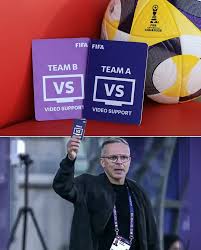
  1. Challenge method: unlike VAR, reviews are initiated by the coaches — each coach gets a limited number of challenge requests (typically two per match; one extra in extra time in competitions that allow it). The coach must hand a challenge card to the fourth official immediately after the incident to trigger a review.
  2. Referee review: the referee goes to a pitch-side monitor (or another on-field review area) to view replays provided by a replay operator using available broadcast/camera feeds, then makes the final decision. There is no separate VAR team continuously monitoring all incidents from a remote control room.
  3. Technology footprint: FVS is intentionally lighter — it generally relies on broadcast camera feeds or a small number of dedicated cameras and a local replay operator rather than a fully equipped VAR control room with many specialist cameras and staff.

Key differences vs VAR (at a glance)
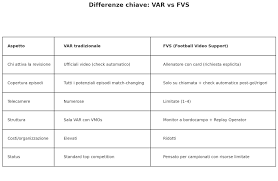
  • Initiation: VAR can perform “silent checks” and proactively monitor incidents; FVS only reviews when a coach requests a review (challenge).
  • Staffing/tech: VAR requires a full VAR room, specialist VARs and often many dedicated cameras. FVS needs fewer cameras, a replay operator and no continuous remote video-referee team.
  • Scope and coverage: VAR continuously watches all key incidents and can intervene; FVS is limited to coach-triggered, narrowly defined reviewable events. That reduces coverage and the chance of automatic correction.
  • Final authority: in both systems the on-field referee has the final decision after viewing replays, but FVS places more emphasis on the referee doing the review themselves on the sideline rather than relying on a separate VAR team recommendation.

Advantages of FVS

  • Cost and accessibility — much cheaper to implement, so more competitions (youth, lower leagues, smaller federations) can use video support. That’s the main strategic advantage.
  • Simplicity — fewer moving parts, simpler procedures and less technical overhead make roll-out faster.
  • Empowers coaches — gives coaches a structured way to challenge decisions (adds a tactical and accountability element). Some coaches and organizers like that involvement.
  • Keeps referee central — the on-field referee reviews evidence directly, which supporters say preserves authority and transparency.

Disadvantages / risks compared with VAR

  • Limited coverage / accuracy — because FVS usually uses broadcast feeds and fewer cameras, very tight technical calls (e.g., marginal offsides requiring frame-by-frame multi-angle geometry) may be harder or impossible to resolve as precisely as with full VAR systems that use multiple dedicated cameras and calibrated offside technology.
  • Interruptions & tactical misuse — coach challenges stop play and can interrupt momentum; coaches may “game” their challenges (save them for late in the match or use them tactically). Some coaches and observers have raised this concern during trials.
  • Fewer proactive corrections — because FVS waits for a coach challenge, clear errors that nobody challenges (or situations where coaches don’t want to burn a challenge) can remain uncorrected — whereas VAR’s silent checks can catch incidents that the teams didn’t notice.
  • Consistency & pressure on referee — the on-field referee must perform the review and deliver the decision in front of teams/fans; that creates different psychological pressures versus VAR where a separate VAR team can make or strongly recommend the call remotely.

Early data & reception

Reports from tournaments and media indicate FVS is being used regularly in youth tournaments and early trials. Coverage from trials shows a modest number of reviews per game (e.g. some reporting cited an average around ~1.4 interventions per match in certain trials, with a large proportion confirming the original decision) — but opinions are mixed: some refereeing authorities and coaches welcome the lower cost and clarity; other stakeholders worry about interruptions and possible tactical use. FIFA and IFAB are monitoring trials and collecting data before deciding on wider roll-out.

Practical example (how a coach challenge looks in real time)

  1. Coaching staff thinks a referee missed a clear handball leading to a goal.
  2. Coaching staff immediately gives the fourth official the challenge card. (If the ball is in play again, the challenge must be given immediately — the Laws require that a decision be changed only before play restarts.)
  3. Referee stops play if necessary, views replays on the pitch-side monitor supplied by the replay operator (using available camera angles), then signals and announces the final decision to the teams and stadium.
Bottom line — when FVS makes sense

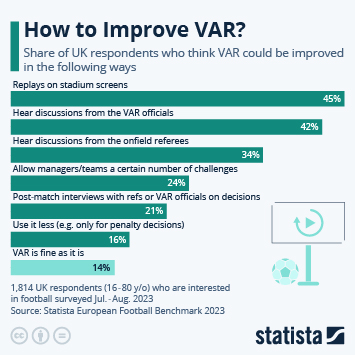
FVS is a pragmatic compromise: it’s not meant to replace VAR in elite competitions that can afford full VAR with advanced camera systems, but it does give many more competitions a practical path to use video review for big, match-deciding incidents. For youth tournaments and leagues with limited budgets it’s a realistic step forward; for top professional leagues the trade-offs in precision and continuous monitoring mean many will continue to prefer full VAR — at least until FVS matures or hybrid models appear. It is worth noting that if for whatever reason the FVS technology malfunctions, the match will continue without the system after both team managers and captains have been informed. As for VAR, there’s always room for improvement as depicted by a survey conducted in the UK.
If you would like us to break down any other football topics, please reach out at info@thegomezway.com


Acquiring a Spanish driver’s license as a US footballer

As any footballer playing in a foreign country would attest, the acquisition of new documentation in the new country is the first step to the start of “the new life”. See, shortly after Jogo’s arrival in Spain in the early part of 2022, there was an utmost need to acquire all sorts of new forms of identifications (work permit, padrón, NIE, etc.). Similarly and although not required, the need to get from point A to point B quickly became a pressing issue.

Relying on transportation from others the first few months was a suggested strategy by the club to meet new teammates, staff, etc. and it worked. However, the time quickly came to exercise his Texan driving skills in a new country. It was then that the acquisition of a a Spanish driver’s license became a must have. As surprising as this may sound, this is not a process that the player agent (and to a lesser extent the club) will assist with. Thus, Jogo embarked on this “optional” process alone.

The legal driving age in Spain is 18 years of age so at least that never represented a problem for Jogo as he arrived in Spain a few months after his 18th birthday. In the US, he had been driving for at least 3 years. It’s worth noting that anyone over 18 years of age with a valid driver’s license from their country can legally drive in Spain for up to six months (a year with an International Driving Permit -translation of the US license). I wrote about the IDP I used in France and how I got it recently. However, after that before that grace period (6 months to 12 months) expires, the player must start the process of acquiring a Spanish driver’s license.

Duration

As one can imagine, there are several factors that directly impact the process duration. For a Spanish speaker, expect anywhere between three to six months window for a player to have the physical driver’s license. This period can easily double for a non-Spanish speaker as explained below. Other non-trivial factors potentially prolonguing the process duration include city of residence (larger cities tend to fewer available appointment dates to take tests), number of times a particular test (theoretical/practical) is retaken, holidays, learning aptitude, autoescuela chosen, desire to pass, etc. . Worst case if everything goes south the period can be between 1 – 2 years.

Process

Just like in the United States, a theoretical/written exam has to be passed before proceeding with a practical/driving one. There are several requirements to take the practical one (ex. vehicle, insurance, etc.). There are two ways to embark on the process: 1. Por libre (on your own) or 2. Sign up for a driving school (aka “autoescuela”). Most Spaniards sign up for a driving school as they can help the applicant navigate the built-in bureaucracy and allow you to focus on studying and passing the exams.

Select a driving school / “autoescuela”

If you go this route, do your research. The selection of an autoescuela is extremely important as it can easily add/reduce months to the process if the correct choices (language, type of cars, etc.) are selected at the beginning of the process. The autoescuela takes care of managing your case before the DGT (Dirección General de Tráfico) and registering the applicant for the pertinent exams and tests.

Language

If you are not a fluent reader and speaker of the Spanish language, it’s imperative that you find an autoescuela that offers instruction in English; it can make all the difference. Jogo is fluent in “Mexican” Spanish so he used a Spanish autoescuela which is also less expensive but wasn’t a walk in the park either.

Automatic / Manual transmission

If you are not comfortable with a manual transmission, find an autoescuela that has cars with automatic transmission. Otherwise, each practice run will be more about learning to drive a manual transmission and less about learning how to drive in Spain. The cost for an autoescuela that has automatic transmission cars is more expensive.

Note: If you take (and pass) the exam with an automatic transmission vehicle, legally, you can only drive an automatic car in Spain

Theoretical/Written Exam

The written exam is a 30 question test. Each exam (the theoretical or the practical) can only be taken twice for the same price. If either exam test can only be failed once without an additional fee. If a test if failed more than once, the same fee has to be paid again.

Requirements

  • An application
  • A certificate of mental and physical health
  • Two passport-sized photographs
  • Residence permit. The Número de Identidad de Extranjero (NIE) is a tax ID) but not adequate for this process.
  • Proof of address (aka empadronamiento)
  • Declaration stating that there are no suspensions or legal cases preventing the applicant from driving
  • Declaration stating that applicant does not alreay hold a similar license

Practical/Driving Exam

The test is probably harder for experienced drivers because you are used to driving in a certain way. “Teaching an old dog new tricks”. For Jogo, it was easy. He passed the first time.

Examiners will be looking for how transmission gears are shifted, how many times the mirrors were checked, whether one hesitates in a particular situation, or if unnecessary risks were assumed.

Cost

Acquiring a driver’s license in Spain can be steep Here is a high view breakdown. Prices depend on location with larger cities being normally more expensive but offering more choices. Keep in mind that it’s an estimate but it should provide a fair idea of overall costs.

  • Autoescuela registration – €30 – €200
  • Physical/Mental exam – €50 (sometimes covered in the registration if the high end of the spectrum is paid)
  • Theory/Written Test – €92 (times however many times you need to re-take it)
  • Autoescuela classes – €20 – €30 each or a bundle of 20 for about €500
  • Practice/Driving test – €125 (times however many times you need to re-take it)

The process is lengthy and can be overwhelming especially for a footballer whose training/games schedules limit their ability to conclude certain activities. Our suggestion is to treat each step as a small process. Celebrate the smallest victories which will eventually lead you to the successful conclusion of the entire process. Recognize that there are a lot of factors that can potentially impact the duration and prepare accordingly. In the end, if the acquisition is a true necessity, the footballer will overcome each obstacle and ultimately obtain the driver’s license. Depending on urgency to get it, one can take as long as possible. Some folks never get one and rely on public transportation instead. This seems to work better if living in bigger cities where car ownership (gas, parking, insurance) cost is also high.

If you have any other topics you’d like to hear about, please write at info@thegomezway.com. Until next time #theGomezway

Popularity of a footballer/public figure

I still remember that Saturday morning, August 31st, 2019 when Johan as a recently-turned 18 year old, was announced by FC Porto as their new youth international signing. Our family was at the nationally acclaimed youth tournament Plano Labor Day (north of Dallas) with Joana and the phone wouldn’t stop ringing. We received congratulatory messages from folks whom we hadn’t talked to in years. Some, casually texted to congratulate me personally (as if it were my achievement), while others casually requested an FC Porto jersey. Eventually, I think we fulfilled every single one of those jersey requests but I digressed…it was at that moment that it truly hit me, Johan (and eventually Jogo) was becoming a public’ish figure.

Johan signs with FC Porto 08.31.19

Just like any other occupation, the career of any professional footballer has its ups and downs; however, being a public figure is a tad different. As an example, it never ceases to amaze us how during difficult times (ex. injuries, lack of playing time, relegation, COVID, coaching changes, etc.), the same “friends/fans” who were extremely supportive in great times, go completely missing during tough times.

Among Johan’s long list of footballing achievements is to have played the Portuguese derby Porto B (1) vs Benfica B (1)

We understand that the popularity roller-coaster comes with the life of a footballer which, these days, is magnified by social media. But, from our family’s perspective, it’s probably prudent to share that any type of positive support is (always) more appreciated and welcomed especially during challenging times. I often tell the kids that rough times build character and it is also a time when true friendships are built and strengthened.

Recently, Jogo wasn’t playing much in the first few games of the 2023-2024 La Liga 2 season with his new club. It was understandable, at least for his family, as his loan was finalized late in the transfer window and he wasn’t present for pre-season with his new club. In any case, we hadn’t heard from many fans in a while. But in the last five games, he created an own goal, had two assists (see one below), and then two hockey assists and suddenly, he’s “popular” again.

In conjunction with Jogo’s recent contributions in La Liga 2, US Soccer announced that Johan was called for the US U23 MNT camp in preparation for the 2024 Paris Olympics. Suddenly, the calls pertaining to Johan once again, resumed to our family.

This time, it wasn’t only the calls that resumed; our boys youth club Solar, for the first time ever, had an Instagram post dedicated to Johan (and our good childhood friend JT). Honestly, we had never seen his former club recognize either of our boys but hey, kudos of any form are always welcome, especially if it’s convenient for the club as well.

The Olympic camp went well (writing a post on it) and Johan even scored the first goal (below) against a superior Japanese team. Once again, the calls, messages, and tweets were abundant; even the convenient #DTID patreon tweets returned. Please don’t exhaust them all guys, we will need some of those in upcoming tough times.

As a favor to me, direct future congratulatory calls/texts to the boys. In Johan’s case, he’s the one who has fought for these opportunities the most, who went to Europe 4.5 years ago, who likely would have played in the Indonesia 2021 U20 WC until COVID chose to be a life protagonist and has opened doors for his brother and sister. Reach out to him, congratulate him; I am sure he would love to hear from you. Either way, please know that our family TRULY appreciates your support at ALL times but it’s inevitably most needed when footballing life gets tough 6000 miles away from home.

Johan Gomez: U16 BNT: U16s (3) vs Sacramento Republic (1) 09.08.16 (Sacramento, CA)

Yesterday, the celebrity world reminded us that public figures are humans and that they sometimes need help too. Mental health is important, don’t wait to reach out to other footballers (American or not) who may be going through difficult times (ex. Tyler Adams, Daryl Dyke, Josh Sargent, etc.). Be present, it can be a difference maker. Until next time #theGomezway #mentalhealth

RIP Matthew Perry
U-20 US team vs U23 UAE. Johan scored one goal.

The “Messi effect” on MLS so far…

There’s no denying that Messi’s arrival to MLS in August has had an impact of unprecedented proportions. It not unusual for some current (early 2000s: ‘David Beckham effect’ on MLS) or retired athletes (Now: ‘Deion Sanders effect’ on NCAA football) to have an effect in their sports; however, in Messi’s case, multiple aspects of MLS have been deeply and permanently impacted by the now well-known “Messi effect”. Below is a brief summary of its impact so far:

Joana outside “La Bombonera” stadium in Buenos Aires
  • Increased global attention: Lionel Messi is one of the greatest footballers of all time and already had a massive global following. His arrival in MLS attracted substantial attention from not only American fans, media, and sponsors but worldwide too. MLS is benefitting from increased exposure, TV ratings, merchandise sales, and more international viewership. Since his arrival, Messi helped Inter Miami win its first trophy just a few weeks after joining the team. In his first 11 games with Inter Miami, the team won 10 and tied 1. In those games, Messi scored 11 goals and recorded 8 assists. With those numbers, it’s inevitable to not garner global attention.
  • Boost in attendance: Messi’s presence in MLS stadiums has increased attendance numbers. Every stadium where Messi has played has sold out. Fans (casual and hard-core) are eager to see one of the world’s best players in action. His participation in games has resulted in increased ticket sales (527% increase in prices) and higher game-day revenues.
  • Television (Apple tv) ratings and subscriptions: Inter Miami matches have experienced an exponential boost in television ratings. MLS Season Pass, which is Apple’s streaming package that broadcasts soccer matches, experienced a 1690% increase in sign-ups the day Messi first played for his new club. Broadcasters are excited to showcase Messi’s skills (in multiple languages) and MLS’ TV deals are becoming more lucrative abroad. Higher ratings have inevitably attracted more advertisers and sponsors.
  • Enhanced brand value: Messi’s arrival to the league has elevated its brand value and prestige. It’s now very common to see celebrities in attendance whenever Messi plays. He has not done it alone though, former Barcelona teammates Sergio Busquets and Jordi Alba joined Inter Miami which only continued to elevate the club’s AND the league’s value. Inter Miami’s worth prior to Messi’s arrival was $575 million. As of September 15th, that value is now near $1 billion and estimated to be in the range of $1.3 to $1.5 billion in 2024.
  • Financial impact: While the signing of Messi required a significant financial investment -he earns an estimated $50 – $60 million annually-, his signing has led to an exponential overall revenue for the league. ESPN reported that in the first 24 hours of Messi jersey sales, it was the best 24 hours of any player’s changing teams across all sports. Messi’s Inter Miami jerseys were conveniently out of stock until a couple of days ago, they are currently priced at $180 each. Sponsorship deals, merchandise sales, and international interest have generated additional income enabling MLS to potentially reinvest in infrastructure, youth development, and player salaries making the league even more attractive and financially competitive with top continental leagues such as Liga MX and Campeonato Brasileiro.
  • Player development and competition: Messi’s presence serves as a tremendous opportunity for young MLS players. Training and competing alongside one of the best players in the world has elevated the level of play of those around him (ex. Campana, Cremaschi, Allen, etc.). Elevating the competitive level of his teammates and opponents can gradually contribute to the overall development of domestic talent; thus improving the leagues’ competitiveness and who knows, maybe the US national team pool. Prior to Messi’s arrival, Inter Miami had only won 10/28 games, drawn 3 and lost 15. They were in last place and now, they are fighting for a playoff spot with a few games remaining in the season.

Unfortunately, not all the Messi effect’s and influence has had a positive effect on fans. See, I was refereeing this past weekend when out of the corner of my eye, I spot a soccer parent walking down the experts’ sideline trying to get his son’s attention while the match is going on. Once, he succeeded, he instructs his son, who at the time was playing as a forward, to forget about playing defense and play like Messi. We, other parents and myself, were all puzzled when the following emanated from his mouth: “Don’t defend anymore, just stay up and wait for the ball to come to you; only run when the ball is 5 feet away from you; that’s how Messi plays and he is successful at it”. The kid incredulous heeded his father’s instructions the remaining of the match.

Needless to say, his son’s team ended up losing the game badly as they practically played down a player and the son never touched the ball again in the match. Moral of the story, be careful instructing your children with stuff you see on TV without the proper knowledge, context and background. Sometimes, in an effort to help our kids, we prevent them from progressing. This supportive father, imparted some useful wisdom onto his son that ended up serving a completely unintended effect on his son (and his team) in part thanks to the “Messi effect”.

Texas soccer fans wearing Messi jerseys

Keep in mind that there’s only one Messi, and as simple as the game is, his greatness stems from making the simple game look even simpler. The “Messi effect” will gradually fade and we will be left with his legacy. For now, enjoy him while you can and if you are planning to watch him live, remember to not pay the exuberant ticket prices unless you are certain he will be playing. See below what some fans played for the Orlando vs Miami game last Sunday and Messi, Jordi, and Busquets did not play.

Part of the reason the ex-Barcelona trio did not play against Orlando was strategic. They need to rest for their Lamar Hunt US Open Cup championship match tomorrow night. That game, prior to Messi’s MLS arrival, would have taken place with little fanfare. Tomorrow, all the spotlights will be on Inter Miami, especially if Messi plays.

The opponent for that game will be Houston Dynamo and if Inter Miami is victorious, it could be Messi’s second trophy in the last 8 weeks. Stay tuned as he, and teammates, continue to shape up the “Messi effect” on MLS. Until next time, #theGomezway