Agent vs scout part #2

This post is a follow up to the one we wrote a couple of weeks ago regarding agents and scouts part #1. With the recently finished Generation Adidas (GA) qualifying games, it seems appropriate to continue talking about agents and scouts. Before we start though, it’s of utmost importance to remind our audience that everyone in football has their own agenda. Clubs want what is best for the club, scouts want to protect their reputations, agents want to make money, parents want their kids to be a success and most of the time these agendas do not align well. With that in mind, let’s try to address some basic questions.

  1. Why do players/families seek an agent/scout?

Players/families seek out an agent or scout because they typically need assistance, guidance or just a second opinion on a decision. Normally, players/families look for an agent as a way to either validate probability or try to expedite the player’s path to professionalism. Conversely, an agent seeks out players/families to gauge if there is a potential match between the player’s/family’s aspirations and what a particular football club needs for potential representation.

2. How do players/families find an agent? Or does the agent find you?

Typically, agents find players they are interested in at events such as Development Academy showcases/playoffs, Generation Adidas Cup (qualifying and tournament), Dallas Cup, DA/ECNL games, Youth National Team events, International tournaments, football online forums, etc. On the other hand, there are some proactive parents who seek out agent advice via online research (ex. this blog) or by asking parents of players currently leveraging the services of an agent. For example, recently, we have had several parents reach out to us for suggestions on alternate paths for their players instead of the local MLS club. As far as scouts are concerned, scouts tend to be a bit more reserved and may not interact with the player/family at these events directly. Sometimes, scouts could be college coaches which is a separate option altogether.

3. Once the player/family meet/talk with an agent, what should the first conversation be about?

Well, this one is somewhat easy, if the agent found *you*, you let them explain the reason they contacted you which is likely interest in player representation. On the other hand, if you reached out to the agent, be ready to state what you need from them; be specific about your questions (these may be personal in nature). We must say that it’s likely the first meet/talk is a phone conversation. Examples could be a request to asses your player, possible progression pathways for your player, MLS/USL/DA/NCAA rules, best development environments for your player, etc. Below is an example of some topics/questions to be curious about. The priority of the questions below is situational based on player/family needs.

  1. Services offered (ex. building player profile, player placement, additional sponsorships, tax preparation, etc.)
  2. Cost structure for services offered
  3. How many other players do they represent?
  4. Who else do they represent?
  5. How long have they (agent/agency) been in the business?
  6. How did agent/agency start in the business? Did he/she play the game?
  7. How long have they been assessing/following your player?
  8. What’s their assessment of your player?
  9. How do they make money?
  10. What markets are they most comfortable in?

4. What comes after the first meeting/conversation with an agent?

It really depends on the agent’s familiarity with your player and a potential need for your player on a club. Although unlikely, if the initial conversation leads to a potential trial in a particular market; it may be necessary to have the agent create a video clip of the player for promotion/exposure. Most agents have access to ample footage (WyScout) so they should be able to create their own but sometimes time is of the essence; and the agent can request player footage to the family so it’s important for the family/player to have a clip readily available that can be used. Put some thought into creating the clip (we could probably write an entire post on this topic) but don’t go overboard (especially with the music). In our case, we organically created the #theGomezway YouTube channel and that proved to be instrumental in agents validating their thoughts on the boys. Our advice is to have fun with it; if not for recruiting, the website will be full of memories in a few years. You don’t really have to go all out either. However, it’s important that you enjoy doing it and that it doesn’t become a chore.

5. If I don’t have footage of my player, where do I find some?

If your player plays DA, all games are recorded. Most of those games are readily available if you ask the right person. At FC Dallas, there was a point in time where all it took was a request to the manager for footage but as soon as they realized parents were using it for highlight purposes, they started scrutinizing and negating such requests. It’s always a good idea to try to record (or have somebody record) games where your player shows well. Look into Soloshot. That did wonders for us. Disclaimer: We don’t work for Soloshot.

6. Does it cost money to go on trials?

It should not cost any money to be assessed by a club. However, commuting to the club’s facilities whether be across town or in a different continent is normally at the expense of the player/family. Once the player is trialing, housing is typically provided by the club. For example, trialing in Europe is very cost prohibitive for families. Once there, the inviting club normally provides room and board. Sometimes you could be fortunate enough to have a club so interested in your player that they can assist with travel costs as well. However, it is typically NOT the norm especially for American (pay to play) players.

7. Once in a trial, what role does the agent play?

The main role of an agent in a trial is to set it up. The agent usually doesn’t accompany the player to the trial (especially if it’s abroad); however, the agent will help setup room and board with the club for the duration of the trial. A typical trial is about a week but could easily last longer depending on the hosting club interest, point in their current season, weather, etc. Since the family is paying for the transportation to the trial club, it’s probably a good idea to try to line up clubs in a particular market to trial with all in one trip. If the agent sets up multiple trials in one trip, it is possible to receive feedback from the clubs prior to the end of the trip. The agent will relay that feedback to the player/family.

8. How long does it take to receive feedback?

It depends. If the club really, really wants your player (and the conditions are all present -ex passport, release, age, etc.), they can extend an offer on the spot; otherwise, they will take their time possibly to evaluate other players. Similarly, your player can explore other clubs in sequence. In general, the agent is the one receiving feedback directly from the club; one can expect to hear from the club within a few weeks; otherwise, it probably means, there may not be an immediate interest.

To be continued….

Jogo comes home and news

Jogo comes home for a short period of time after being away for “a few weeks”. The experience has been extremely positive but boy we missed you a ton. Happy half-birthday. We hear you met some interesting individuals while over there….happy half-birthday!!!

Jogo with Josh Sargent

In other news, Johan returned to action and the good news continued flowing his way. The family can’t wait to see what happens next with him. Speaking of family, the surprise visit didn’t hurt either huh? It’s always good to work on your emotional and spiritual well-being just as it is to work on your physical one. BTW, keep chumchatting son, YOLO. Great idea on the FC Dallas HG signing podcast (and great debut by Tanner). Can’t wait on the next guest with the brand new “equipment” :-).

Chumchat episode 7

Finally, thanks for Joana’s shout-out on IG. You are right; she doesn’t get enough credit sometimes so we’ll start incorporating news about her sporadically. She continued footballing and scoring and she also ran a sub 6-minute mile too earlier this week. #theGomezWay

Joana Gomez: Odyssey 3 vs East Texas (1) 02.23.20
Joana Gomez: ACES invitational 02.27.20

3000 views on our site

We want to take some time to acknowledge the frequent positive feedback we receive on the content of our site; in a very short period of time, we have registered over 3000 (why is the number 3000 so significant?) views. Thank you all and please keep interacting with us to make the content more targeted, informative and useful to all of us. In the end, it’s not about the numbers but rather about the impact (quality vs quantity) our content has on football families. Our goal will always be to contribute to the betterment of the sport in this country by sharing our coaching, refereeing, playing, but most important of all, parenting football experiences. We are grateful we have this digital space to do so. BTW, the next post will be a continuation of the Agent vs Scout post from last week. For now, cheers and thank you once again.

Also, if you have a few minutes to spare, go give these chums a listen. This week’s episode did not have a guest but we hear Chris Richards is their next guest. Good job Johan et al.

Días de reposo

Lastimarse siendo CUALQUIER tipo de atleta nunca es fácil. El estar lesionado en general, no importa a lo que dediques, es difícil, pero lesionarte como atleta profesional es incluso peor. Especialmente, si eres como yo, que te gusta hacer lo que viniste a hacer, te gusta sentirte productivo y, al final del día, quieres hacer tu trabajo. Imagínate que es como un programador de software que padece de artritis, ó como ser un piloto de línea aérea y tener mala visión. Para mí, esta lesión llegó en un momento absolutamente horrible, pero como dicen … siempre podría ser peor. Sufrí una fractura por estrés en mi pie izquierdo en mi segundo entrenamiento después de regresar de las vacaciones Decembrinas, y el último día del 2019. Aproximadamente una semana antes del campamento sub-20 al que me habían convocado que por cierto, me había costado mucho trabajo convencer al Porto de que me liberara. Originalmente, los médicos no sabían exactamente el grado de mi lesión, ya que la fractura era relativamente pequeña, pero después de obtener una radiografía, determinaron que en realidad estaba fracturado y que realmente necesitaría cirugía. Fue un gran golpe emocional para mí porque tenía muchas ganas de ir al campamento para mostrarme con el nuevo entrenador tal y como lo había hecho hace un par de meses. Sin embargo, soy una persona bastante positiva, así que lo quise ver así del lado positivo. Mi compañero de cuarto Búlgaro había sufrido casi exactamente la misma lesión que yo y lo habían dejado ir a casa durante dos semanas … así que eso era lo que esperaba también. 

Al final del día, resulta que debido a que mi fractura fue menor, tengo un menor tiempo de recuperación, por lo que volver a casa solo retrasaría mi recuperación por la cantidad de tiempo que estuve ahí. Obviamente, también es más fácil volver a casa porque me toma un poco de viaje volver a Dallas. De todos modos, la cirugía salió bien y ahora llevo 2 semanas y mi pie se está recuperando bien, pero ha sido difícil ver a mis compañeros entrenar y siempre te da una nuevo aprecio por el juego que amas. A veces no te das cuenta de cuánto realmente amas algo hasta que lo pierdes, incluso por tan solo un momento. Mi familia, más que nada, me ha ayudado a mantener una actitud positiva porque ha sido duro mentalmente, y algunos de mis mejores amigos también han estado allí para ayudarme, animándome. En general, las lesiones son parte del juego. Este no fue la primera, y aunque me gustaría que fuera, probablemente tampoco será la última. Para cualquier persona en una situación como la mía, lo mejor que se puede hacer es aceptar la situación en la que se encuentra actualmente y aprovecharla al máximo. Fortalece otras partes de ti mismo y mantente positivo durante el proceso. Mantén la cabeza baja y el tiempo comenzará a pasar volando. Todo tiene su motivo de ser. 

UEFA Youth League and more

Well, the result was a loss in PKs after a hard fought match…not desired but in the end, there has to be a winner (even the keeper got to take a PK)…pretty cool run regardless. Unfortunately, the team won’t get to defend the UEFA Youth League title but I’m glad you were able to play in important matches. I know you are sad for being unable to help out but sometimes disappointment is part of your development. Things always happen for a reason.

Jeremiah 29:11

For I know the plans I have for you,” declares the LORD, “plans to prosper you and not to harm you, plans to give you hope and a future.

Now the focus shifts to the second half of the season… I’ll leave you some material below to cheer you up. Remember there’s isn’t a single activity in life that defines us. Find what makes your journey joyous and stick to it.

Meanwhile Jogo says hello from wherever he’s at this week. That little dude is having all the fun in the world.

UEFA Youth League: Porto U-19s vs Salzburg U19s

Here we go again Johan. Different year but the same objective: win and advance to the round of 16 to defend the title from last year. Not an easy task but not an impossible one either. To be honest, it is a privilege to just be able to watch these games..the intensity, the atmosphere, the purity of play…I can’t imagine how fun it is to play them.

It’s unfortunate that you won’t be able to part take of this one due to not being 100% quite yet; however, your recovery has been going amazingly well and you are progressing faster than expected. You have always liked to beat the odds. It’s extremely encouraging that you are practicing again with the team and regaining your top form. Bueeena

Johan practicing finishing with team: 02.03.20

We love the intensity that you show in the video below. You now belong to a great club. Enjoy each day. In the end, it’s about forming those habits and discovering what you are capable of. Keep up the good work rate and hurry back; the team really needs you. Remember, there are three things you can control: preparation, attitude, and aggressiveness/effort. As for tomorrow, let’s use all three to support the team at Olival. #DragōesJuntos #TheGomezway

Johan training 11 vs 11, Porto Portugal (02.11.20)

Agent or Scout? part #1

This post is more informational than anecdotal; remember that one of the objectives of this site is to share our experiences hoping that you find them useful in the pursuit of your soccer (aka football) goals. That said, if you find any content presented herein or any of our other social media platforms useful, we always welcome a shout-out. We are better together and supporting each other, we can get “there” faster; wherever “there” may be. We see absolutely NO reason why other families should stumble upon the same challenges the Gomez’s did. We genuinely feel that if we ever aspire to grow the sport in this country (and within CONCACAF) to a world class level, change starts with us together (and not exclusively for the benefit of our own children). It is indeed a competitive world of sports where the slightest advantage over somebody else can be the difference maker; however, communication is fundamental and information sharing is free and after all, an excellent first step in becoming more educated in different aspects of the game. Informed parents tend to make better decisions; thus, below is our small contribution to that end.

Today, we’ll be writing about agents and scouts as it relates to the first time a player/family interacts with them. See, in numerous occasions, football families have approached us with a gamut of questions regarding the roles of agents and/or scouts to increase their football player’s chances of professional success. There’s so much to share in that regard, especially as those two terms are often misused interchangeably. So, let’s start off by trying to describe each one in some level of detail based on our experience. Note: differentiating them may take the bulk of this post and that’s why this is only part #1 of several to come. Here we go…

Wikipedia defines an agent as “...a legal representative for professional sports figures such as athletes and coaches. They procure and negotiate employment and endorsement contracts for the athlete or coach whom they represent“. Let’s start by saying that football agents make a living off of placing players (under contract) at professional clubs. With a growing number of US based players seeking professionalism, domestically or internationally, the agents’ main objective (at least initially) is to convert as many amateurs into professional players in the shortest possible time. Ultimately, a football agent could be the person with the right connections at various clubs who can open the initial door for a player (sometimes the hardest to crack).

In our US youth (younger than 18 years of age) football setup, a football agent, interested in representing a player professionally, often has the ability to first assist amateur players (and their families) by providing FREE advice/guidance without compromising the players’ amateur status (more on this topic later). As the player-agent relationship gradually grows, the agent will try to convert the player to a professional status as that conversion inevitably will translate into a source of income (one-time or continuous). Therefore, agents view players as personal investments and thus their motivation to pass out FREE advice initially is part of establishing rapport and credibility. Beware, most agents are eloquent, articulate and well-trained in the form of praising players; however, not all are competent and/or honest to reveal your player’s improvement areas.

Agents may have different potential professional paths for your player; thus, leverage the free advice/guidance from as many agents as possible, without signing any legal paperwork or becoming a professional (paid) player. Why is not signing any legal paperwork important? In the US, once a youth player “signs any type of legal paperwork with/for an agent/agency”, the player likely loses NCAA/NAIA/NJCAA eligibility (the ability to play football in most college/universities as an amateur) and potentially leaves significant football scholarship money on the table. College is expensive so make the decision about signing carefully!!!

In general, agents come from different backgrounds, some of the most successful ones have no knowledge of the game via their own playing careers, others mostly watch the beautiful game at the youth level, others are active participants of online youth football forums which they use to validate their own player assessments/opinions, others are businessmen/lawyers who entered the profession for the lucrativeness and yet others are a hybrid of the above. Incidentally, their expertise is usually adequate to assess your player’s chances for a trial at a particular club of their choice. Unfortunately, most agents are only able to provide a very black/white evaluation of your player; therefore, do not ever expect a thorough (ex. physical, tactical, technical, emotional, etc.) assessment of your player as that’s not what agents do best and their potential high player/agent ratio may hinder having the time to perform such evaluation (more on this player/agent ratio in a future post). Also, their knowledge of the game is centered around youth and focused on very specific geographical markets.

An example of this is the attractiveness of the German market for US youth players. Aside from that European market, very few agents have the necessary connections (relationships), desire, cultural knowledge about other European football markets. Similarly, agents don’t really *discover* players; nowadays with social media (ex. YouTube, Instagram, Twitter, player forums, player databases, etc.), players are so hyped by fans that agents have become excellent online talent “hunters”. Thus, agents end up competing with each other to first engage the player (and their family) and ultimately route players from team A to team B. Once they succeed in placing the player, it’s natural for that relationship to deteriorate a bit as the primary goal for family and player has been achieved. Let’s be clear, football talent identification is not an exact science either; the little discovery agents do perform is indeed difficult if one considers the massive pool of players. My advice to parents is that if you need a genuine talent evaluation of your player (ex. opportunity areas), find yourself a scout who in general is better equipped to provide unbiased assessment and is trained to evaluate your player in different aspects of the game.

Conversely, Wikipedia defines a football scout as a person who “…attends football matches on behalf of clubs to collect intelligence”. Agents usually work for themselves, their agency or have an immediate ve$ted intere$t in recruiting players/families; scouts usually work for somebody else (ex. a club) allowing them to be more thorough and genuine in their player evaluations. Scouts tend to attend the games physically while agents do a lot of their work virtually. Scouts report their technical findings back to their club (employer) along with a recommendation. The club’s technical staff then decides whether there’s enough interest to continue monitoring the player in upcoming competitions. If the player continues to excel, the club may decide to invite such player for a trial. Otherwise, the player may go into the team’s database. If the player is invited to a trial, the player will be further evaluated thoroughly (ex. physically, technically, emotionally, tactically) relative to current club players both individually and collectively with the team. In general, scouts come from different backgrounds but unlike agents, the majority of scouts either played or coached the game at a high level. That said, scouts are not necessarily trained in the art of public relations; they can talk “football” forever but their interaction with parents sometimes can be awkward. For example, we wouldn’t expect agents to know the laws of the game; scouts, on the other hand, can probably recite them all.

As you can see from above, we have had more experience interacting with agents than scouts. In future posts, we are going to scrutinize the most common questions posed to us and provide an opinion on how we tackled specific nuances ourselves with the boys. Remember that the use of an agent or scout does NOT necessarily turn your footballer into a professional player. However, once your player decides to turn professional, then, the selection of an agent/scout depends on a lot of factors which are good to break down in future posts. Some are listed below.

Caveat: each player/family situation is unique so what may have worked (or not) for us may not for you or vice-versa. Some factors to consider while selecting an agent/scout are player’s playing/academic aspirations/expectations, club situation (depth chart), multiple nationalities, multiple players in the family, family connections, agent/scout reputation, family ties, agent/scout network, family finances, etc. Each player’s journey is different. Above all, select an agent/scout who really cares about your player as shown by their actions and not just their eloquent words.

Done at last…in other news

It is never easy to say good-bye (Instagram icon above) to longtime friends and teammates under any circumstances, but in the end, one must move on to pursue different opportunities when the current setup is no longer a viable option. We are not aspiring to be pioneers, insurgents, or anything of that sort but we know many families are currently on the same boat. For those of you right in the middle of it, know that there are options, but the risk/reward ratio is high. Odds are meant to be beaten; we are ALL in now. Also, know that we are in it together…and in the end, no matter what happens, the friendships will endure all adversities.

Jogo alongside a natural leader on and off the field. Pure class (01.11.20)

As Jogo begins his transition from an important stage of his football career to a new chapter of his life, Johan sets foot again on a soccer field for a light jogging and passing session. Baby steps they say; it was an excellent day today indeed. We are grateful. God’s timing is always perfect.

Johan grinding at Olival 01.20.20

In other news, Johan and his ex-teammates started a new project (click on the YouTube icon below). If you find the content useful, funny, witty, or silly, give them a like or subscribe to the channel. It’s entertaining but what can I say? I am a bit biased.

In other news, the third Jogo scored this beauty of a goal in a tournament this past weekend. We keep working because it is the #theGomezway

Joana with the game winner, Mckinney, TX (02.01.20)

Injury Days

Success is determined by how you handle setbacks

Being injured as ANY kind of athlete is never ever easy. Being injured overall no matter what you do sucks, but being injured as a professional athlete is even WORSE. If you’re like me, you like to do what you came to do, you like to feel productive, and at the end of the day, you want to do your job. Think of it as being a software coder and having arthritis, or like being an airline pilot and having bad vision. For me, this injury came at an absolutely awful time, but like they say… it could always be worse.

I suffered a stress fracture in my left foot in my second training back from the holidays, and on the last day of 2019 as well. Approximately one week before the u-20 camp that I had been called into that took quite a bit of convincing to let Porto release me for. Originally, the doctors didn’t know exactly what it was since it was relatively small(the fracture) but after getting an X-ray they determined it was in fact broken and that I would indeed need surgery. It was a huge blow for me because I was really looking forward to going to camp to prove myself under the new coach just as I had with Tab a couple of months ago. I’m a pretty positive person though, so I looked on the bright side. My Bulgarian roommate had suffered almost exactly the same injury as me and they had let him go home for two weeks… so that’s what I was expecting as well.

At the end of the day, it turns out that since my fracture was smaller, I have a lesser recovery time, thus me going back home would only delay my recovery by the amount of time that I was home. Obviously it’s easier for him to go back home as well because it takes quite a bit of travel for me to get back to Dallas. Anyway, the surgery went well and I’m 2 weeks in now and my foot is healing nicely, but it has been tough having to watch my teammates train and it always gives you a new appreciation for the game that you love. Sometimes you don’t realize how much you truly love something until you lose it, even for just a little bit. My family more than anything has helped me stay positive because it has been tough mentally, and some of my best friends have been there for me as well, helping cheer me up. All in all, injuries are part of the game. This wasn’t my first one, and although I would like it to be, it most likely won’t be my last one either. For anyone in a situation like mine, the best thing you can do, is accept the situation you’re currently in and make the best out of it. Strengthen other parts of yourself and stay positive through the process. Keep your head down and time will begin to fly by. Everything happens for a reason.

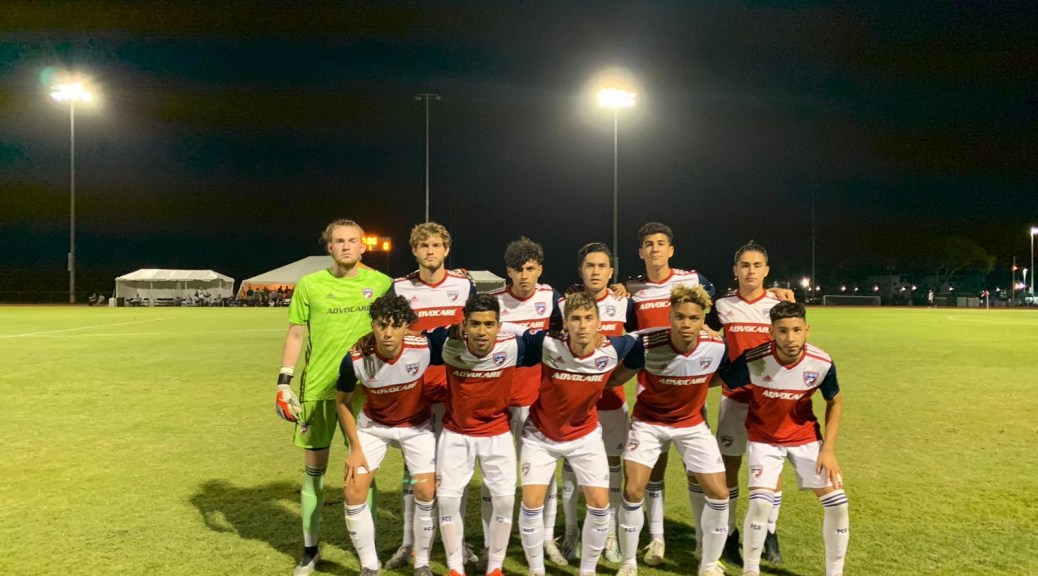
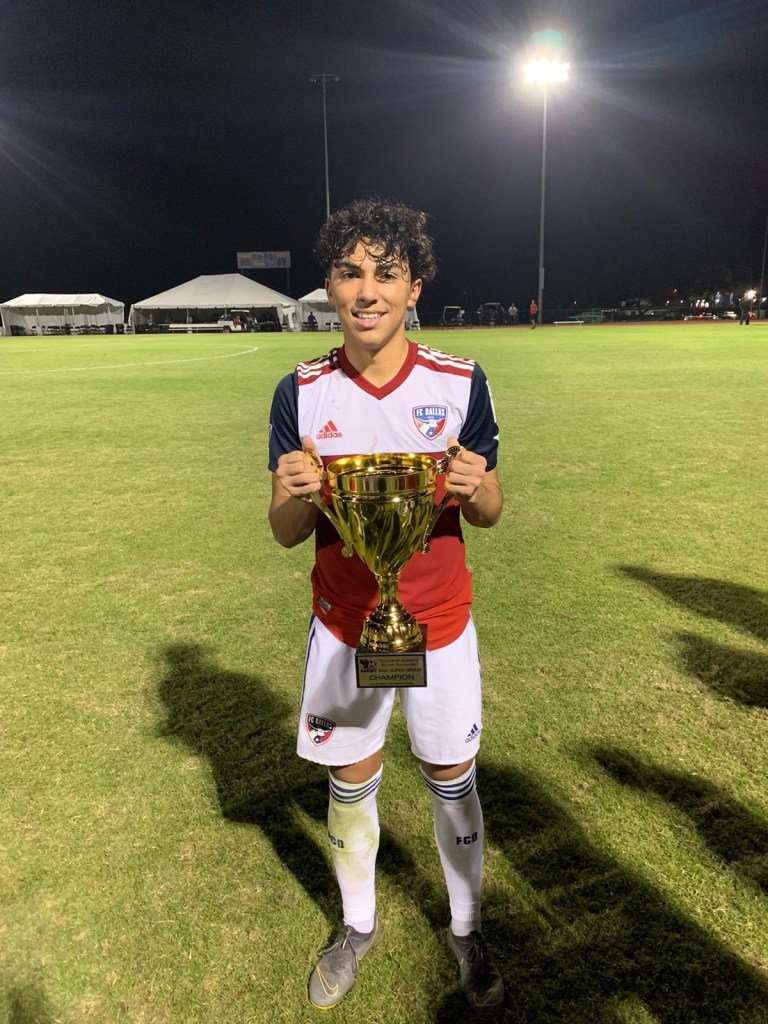
MAST Super Group Champions

The tournament did not start well for the team. However, anybody who knows a thing or two about out of town soccer tournaments knows that playing the host team for the first game is always challenging. You end up playing against their crowd, their fields, their weather, their rules, etc. You then factor in the long flight 24 hours earlier, returning from the holiday break, a fragile roster with depth issues and all bets are off. I must say, the scoreline (1-3) for the first game was deceiving. For those of us who watched the game, it had its moments of decent FCD soccer with SIMA gold elite (SIMA from here on) playing very direct and using their speed to create the more dangerous chances overall. It is important to note that going down 0-1 in the first five minutes of the match (on top of my pretexts given above) against a top quality opponent is like ice-skating uphill trying to come back. At the end of the match, the boys and the coaching staff quickly shifted their focus to the second game…

The quality of soccer improved in the second game against Valencia and the coaching staff finally learned their rules (ex. unlimited substitutions and reentries permitted). Furthermore, FCD did not fall victim of overconfidence and there were no early forced substitutions due to injuries (incredible player management by the club on the eve of a U20 MNT camp). Also, Valencia plays a different brand of soccer so it was easier to stick to a ball possession plan. Overall, Valencia was supposed to be the opponent to beat but my guess is that this was not their “A” team. I find it interesting that a Spanish team would fly 11 hours to come play a “meh” tournament in the middle of their season (according to their schedule, they are supposed to play a regular season game in a few hours). Anyway, the final score was a tie with us conceding a soft goal in the winding minutes of the match for the second consecutive game. We really could have used those two points to secure a smoother pathway to the championship game but hey, live and learn…

Given SIMA’s dominance in their first two matches, it was a “do or die” situation for FCD’s third game against Esporte Clube Jacuipense . On paper, the Brazilians appeared to be the least known and most flexible opposition and that was indeed the case. FCD had the majority of the opportunities with our GK and defense having very little to do throughout the game. FCD went up on the score in the first half with a PK and closed the deal in the second half off of another set piece. 2-0 was the final score and that in conjunction with the continued dominance of SIMA (undefeated in the first three matches) setup a must see rematch for the “championship” game between SIMA and FCD.

Keeping the score tied at zero in the first 20 minutes of the championship game was of utmost importance in order to start playing our game (possession and mental); however, that was almost achieved until a soft PK call was given to the host team around the 10th minute. After going down 0-1, our team realized that PK calls were going to be soft and we ended up benefiting from two in our favor; one of our players is a master of that art. The game quickly turned more intense and aggressive with players on each team earning a red card and some yellows earned in the process as well. This was a battle not just against SIMA, the crowd, the fields, but their long winning tradition. SIMA had never lost this tournament in the 9 years they had organized it. Good job players and staff for the collective and individual hardware…it was a “good ride”. Thank you.

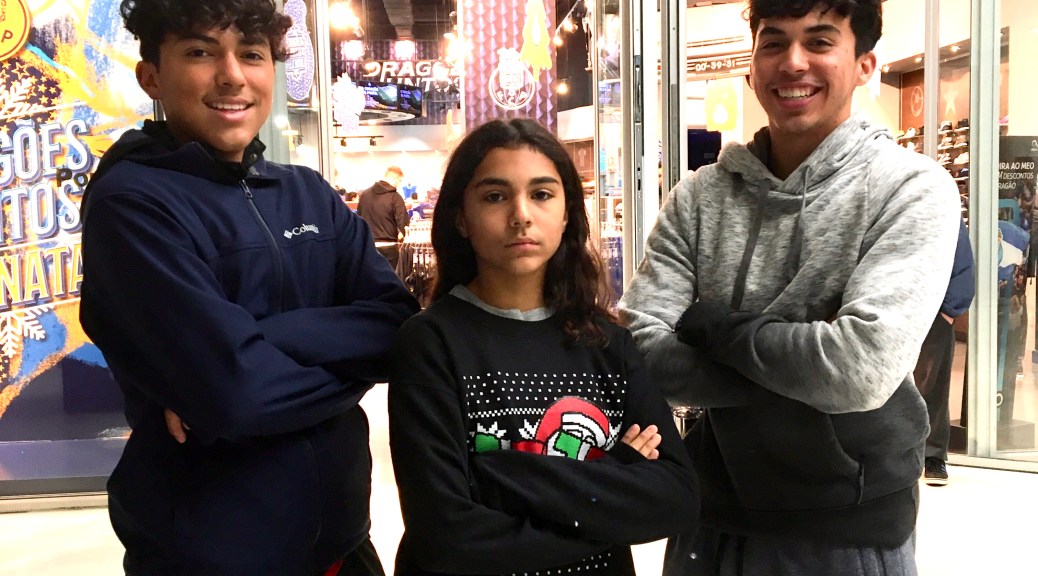
Johan , Jogo, and Joana Gómez