College soccer explained for players and parents (two amendments)

In the summer of 2021, I wrote an informative and comprehensive post titled: “College soccer explained for players and parents”. A little over two years have passed since its publication and recent events called for its review; I normally do not go back to amend my previous posts but the usefulness generated with it merited it. So, what events prompted me to re-read and update the post?
Well, it is that time of the year when college soccer begins to reach its climax and honestly, I have been watching a lot of it unfold since a few of our soccer friends are/were in it. On the D1 men’s side, the initial 48-school tournament is now down to the quarterfinals (aka Elite 8) while the D1 women’s bracket is now down to the final four. Not surprisingly, the NCAA D1 college cup will be played in Lynn Family Stadium in Louisville, Kentucky (also known as Lou City’s cathedral). In a way, we go full-circle and to commemorate it, we may make our way up to nostalgic Louisville to visit friends and watch a few games next week. Anyway, that current hype is what prompted me to revise my post in the first place…

So, without further ado, here are the two adjustments to my summer 2021 post.

Overtime changes

In the original post, I highlighted that regular season matches could not end in a tie. That rule changed the following season (2022) and now regular season matches CAN end in a tie after the 90 minutes of regulation. To determine a game winner in regular season games, no overtime is needed any more. However, as one would expect, if a winner is needed (ex. conference games, tournament games) overtime (OT) and penalty kicks (if the tie persists) will continue to be utilized. The reasoning behind the elimination of OT periods was to shorten the playing minutes that most college programs already undergo in a compact (August – November) season while equaling the playing time among all D1 soccer programs.

As explained in this NCAA article, another rule change that was introduced last season, which aligned with the elimination of the OT periods, was the abolition of the golden goal in OT periods. Currently, when OT periods are needed, two 10-minute OT halves must always be played in their entirety. This measure is supposed to improve the quality of soccer played by teams who in the past hesitated to play offensively fearing match ending counterattacks.

Name, Image, and Likeness (NIL)

Also, in my post from September 2021, I recommended prospective student-athletes not sign with an agent or receive any sort of financial remuneration. The idea was to avoid potential complications with the then-existent NCAA rule that prevented current (and prospective) student-athletes from playing or even being recruited if a financial advantage was proven to have occurred favoring the student-athlete (or the family).

See, in 1905, the NCAA was founded with amateurism as one of its core values. In other words, student-athletes could not get remunerated in any form while playing at the college level…until the summer of 2021. However, a lot changed in July 2021 in what continues to be a controversial and ambiguous NCAA rule change.

In June 2021, the supreme court ruled unanimously that the NCAA could not limit education-related payments to student-athletes (since non-athletes were making boat loads of money mostly online). Two core NCAA principles remained intact: No pay-for-play, and no quid pro quo. In summary, athletes are not supposed to receive compensation tied to performance, and recruits aren’t supposed to sign deals contingent on going to a certain school. The latter is a really nebulous topic as presented in this Athletic publication. However, NIL signings sky-rocketed and so did professional agent signings after the supreme ruling of NCAA vs Alton. Student-athletes are now able to receive money from monetized social media accounts, signing autographs, teaching camps or lessons and participating in advertising campaigns, among other forms of NIL usage. The ramifications of this change continue to have a domino effect and we haven’t seen the end of this rule change…

If you read through my original post, you will find that the “Program Reputation” section mentioned a soccer family friend whose son had committed to play D1 soccer for Georgetown. Ironically, that same friend called me last week to pick my brain about his son’s potential paths to football professionalism post college graduation. Unfortunately, Georgetown is no longer in the NCAA tournament, so we chatted about options to keep the dream alive based on the grim outlook his agent painted. In any case, that convo also contributed to the amendments of the original post.

I hope you have enjoyed reading the original post for the first time or re-reading it with its amendments. As always, reach out if you need any assistance, advice, or suggestions or if you have topics you’d like to read about. #theGomezway
What’s up with the FIFA 2030 World Cup?

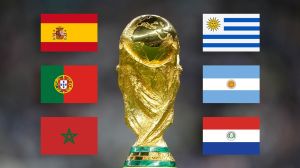
Last month, FIFA announced that the 2030 FIFA Men’s World Cup (WC), officially denominated as the centennial WC, will once again be jointly hosted by more than two countries. For the 24th edition of the quadrennial event, FIFA selected host nations which are scattered across multiple continents (3) and about 6000 miles apart. In a nutshell, the games will be played as follows:

  • Inaugural games (3) in Uruguay and one group game each in Argentina, and Paraguay
  • Rest of the games (101): Spain, Portugal, and Morocco

Below, we analyze, and hypothesize, as to the reasoning of such decision by FIFA.

Host nation requirements

FIFA is comprised of six confederations: Africa (AFO), Asia (AFC), Europe (UEFA), North America (CONCACAF), South America (CONMEBOL), and Oceania (OFO) whose member nations can submit bids to host a WC. FIFA has a list of requirements that a potential host nation need to have. Below is just a summary.

Infrastructure:

Unfortunately, only Argentina currently possesses one or two stadiums with the below requirements that FIFA could potentially approve. The three host countries do have a few stadiums that could be renovated by 2030 but that would cost money these nations do not have. Fortunately, they have over six years to attempt to be prepared and a governing body -FIFA- more than willing to bend their own requirements in exchange of some re-election votes.

  • Have at least 14 all-seater stadiums
  • Each of the 14 all-seater stadiums must have a capacity of 40,000 seats
  • 7 of the 14 stadiums must pre-exist prior to the bid submission
  • The opening and final match must take place in a 80,000-seat stadium
  • The semi-finals matches must take place in a 60,000-seat stadium
  • Have at least a pool of 72 suitable training sites for team base camps
  • Have four suitable venue-specific training site options per stadium
  • Have two suitable referee base camp training site options

In addition to the infrastructure requirements above, the FIFA council also enforces loosely documented requirements regarding broadcasting sites, competition-related event sites, as well as accommodation, requirements for sustainability, environmental protections, human rights, governmental support, and organizational model to be used. FIFA is used to turn a blind-eye on their documented requirements. Enforcing the host nation requirements resembles football refereeing a lot. It’s subject to interpretation…

FIFA’s confederation rotation policy

Along with the above requirements, FIFA has a policy of excluding from bid submission contention the confederation(s) where the most recent WC took place. At the time the selection of the 2030 WC was announced in October 2023, Qatar had hosted the 2022 WC; therefore, AFC was excluded. Also, since the 2026 WC was already scheduled to take place in Canada, Mexico and the United States, CONCACAF would also be excluded from bid submission contention. Therefore, the following confederations remained as viable candidates for the 2030 WC: AFO, UEFA, CONMEBOL, and OFO. It’s noteworthy that FIFA’s rotation policy has “somehow” historically excluded AFO (except for South Africa in 2010) so it was now time to pay favors to Africa. More specifically, Morocco had bid for a WC many times so it was long overdue.

Many speculate that with FIFA’s rotation system and the 2030 selection concluded, CONCACAF (which will host the 2026 WC), CONMEBOL, UEFA, and CAF (confederations due to host the 2030 WC), would be unable to bid for the 2034 WC, leaving the AFC and OFC as the sole candidates. This has led to accusations that FIFA selected the hosts only to ensure that Saudi Arabia, an AFC member with major human rights controversies (like Qatar in 2022) would have their bid uncontested. Since FIFA wants to make the 2034 decision in 2024, it would leave little time for other eligible members OFO (Australia and New Zealand) or China (AFC) to attempt to prepare a strong bid to co-host the 2034 WC along with Saudi Arabia.

Global reach

FIFA members will be the first ones to justify that awarding the 2030 WC to multiple nations across different continents will enhance the global appeal and reach of the tournament. Nothing can be further from the truth as the “beautiful game” is by far, the most popular and viewed sports event in the world. It really does not need any additional outreach to garner more appeal. In fact, one could argue that awarding the tournament to countries that lack the infrastructure to host the tournament is financially detrimental to the growth of the game. See attendance #’s in the “new” continents: Asia and Africa (lowest of the last 10 occurrences). South Africa is still recovering from the deep investment in WC infrastructure from 2010.

World CupTotal AttendanceAttendance/game
2018 – Russia3,031,76847,371
2014 – Brazil3,441,45053,772
2010 – South Africa3,167,98449,499
2006 – Germany3,367,00052,609
2002 – Japan/ S. Korea2,724,60442,571
1998 – France2,859,23444,676
1994 – USA3,568,56768,626
Attendance per WC.
Note: In 1998, the # of countries participating increased to 32

Political reasons

Like any of his predecessors whose career continuity depends on re-election, FIFA President Gianni Infantino is known to be a good populist diplomatic. Nothing can guarantee more votes from different continents than to spread the joy of hosting WC games among three unqualified countries: Argentina, Paraguay, and Uruguay. These three countries were allegedly selected as co-hosts nations to commemorate the 100th anniversary of the original WC in 1930 that took place in Uruguay.

Uruguay

The reason for Uruguay’s inclusion can be somewhat justified as the nation which hosted (and won) the first WC in 1930. Uruguay has qualified to 15 out a total 22 WC. It’s a regular attendee by its own merits. It has also won the WC twice in 1930 and 1950.

Argentina

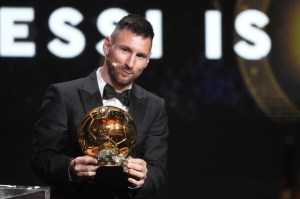
Argentina is the current men’s WC champion whose national team rosters probably the best footballer in history. It’s hard to exclude them especially since Argentina is a neighbor to Uruguay. In May 2023, FIFA President Gianni Infantino started hinting at a possible Argentinean favoritism when, for political reasons, FIFA stripped Indonesia the opportunity to host the U20 men’s WC and suddenly granted it to Argentina -whose team had failed to qualify in CONMEBOL. To magnify that perceived favoritism, many argued that Messi didn’t deserve the recently awarded 8th Ballon Do’r 2023 but was secretly favored in the votes due to winning the 2022 WC. Argentina has qualified to 19 WCs out a possible 22. It has won the WC three times in 1978, 1986, and 2022.

Paraguay

The original CONMEBOL bid to host the 2030 WC included Uruguay, Argentina, Paraguay and Chile. The only reason I can reason for the inclusion of Paraguay is to honor the original bid but if that were the reason, why exclude Chile? Other than that, I am unable to justify Paraguay’s inclusion; this country wouldn’t be able to host a WC on its own given its infrastructure so other than neighboring Uruguay and Argentina, this seems as a quid pro quo reason. Paraguay has qualified to 9 WCs out a possible 22 and has never won a WC. Don’t forget that host nations get an automatic invitation to the WC, this means that not only Argentina, but also Uruguay and Paraguay, are automagically qualified to the 2030 WC (another FIFA gift).

Economic reasons

Out of the three South American nations, no economy is hurting as much as the Argentinean. Read my post about my recent trip to Argentina. With the football infrastructure Argentina currently has, a new president, Javier Millei taking office in a few days and six and a half years to prepare, hopefully the country can benefit from an influx of tourists and the economy can recover (once and for all) from the recent lows the nation has experienced in the past ten years.

Be it what it may, we in the United States, will have an opportunity to travel a shorter distance to gelid South American countries during their winter to hopefully witness some familiar football faces who will start to shine in 2026 and may be consolidated by the 2030 WC. Until next time #theGomezway